
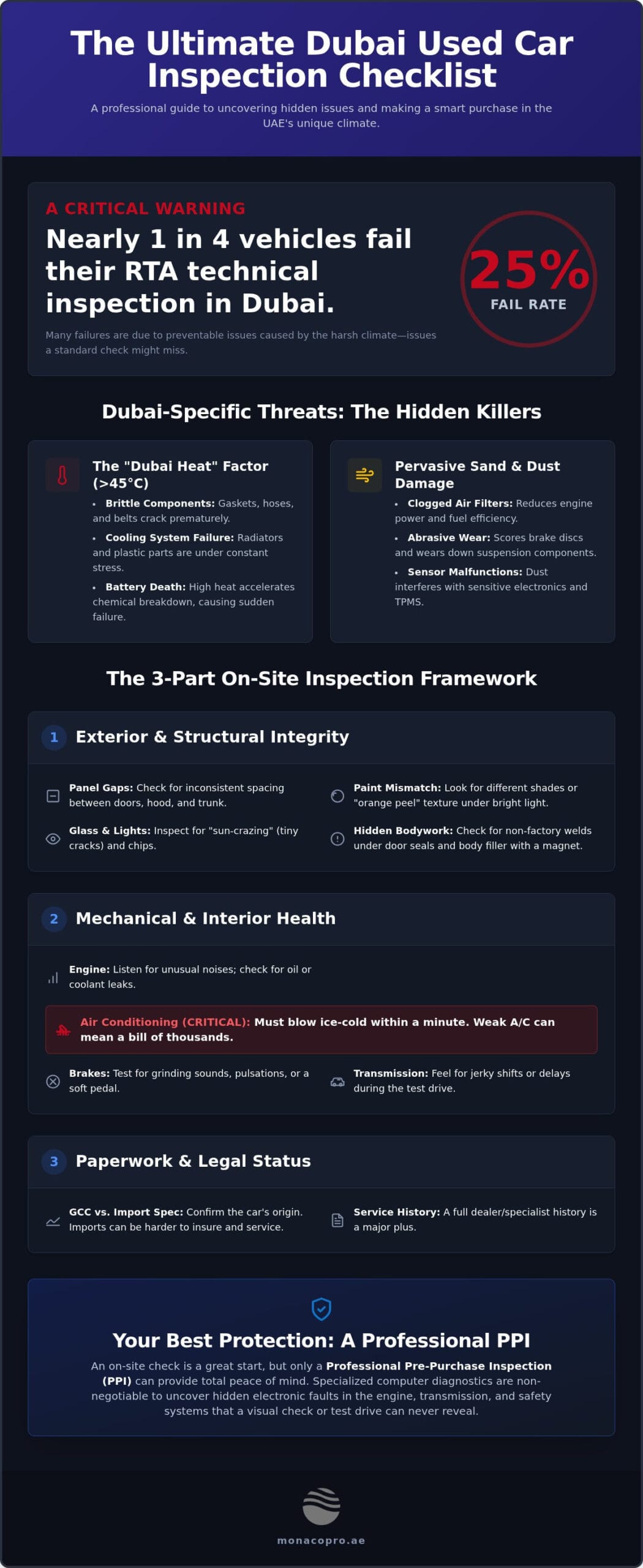
Nearly one in four vehicles fails its mandatory RTA technical inspection in Dubai, often because of preventable issues like fluid leaks or tires that have succumbed to the intense summer heat. It’s a statistic that highlights why simply glancing at a shiny exterior isn’t enough when you’re in the market for a pre-owned vehicle. You likely feel the pressure of choosing between a local GCC spec model and a tempting import, all while worrying if the air conditioning will survive a July afternoon or if there’s hidden structural damage beneath a fresh coat of paint. Using a comprehensive used car inspection checklist Dubai buyers can trust is the only way to ensure your investment is truly road-ready.
We understand that the process can feel overwhelming, but you don’t have to navigate it alone. This guide is designed to transform you into a savvy inspector by providing a professional, step-by-step framework for evaluating any vehicle on-site. You’ll learn how to identify critical red flags, understand the nuances of Dubai-specific wear, and gain the confidence that comes with a high-standard purchase decision. We’ll walk you through a complete physical assessment, explain why specialized computer diagnostics are non-negotiable, and provide a printable checklist for your next viewing.
Key Takeaways
- Identify how Dubai’s intense heat affects cooling systems and engine gaskets before you commit to a purchase.
- Master the art of spotting previous accidents by checking for inconsistent panel gaps and mismatched paint across the exterior.
- Utilize our professional used car inspection checklist Dubai to evaluate transmission performance and engine health during your test drive.
- Navigate the complexities of GCC specs versus imported models to ensure your vehicle is eligible for insurance and easy to maintain.
- Learn why a professional pre-purchase inspection is the final step to uncovering hidden electronic faults through specialized computer diagnostics.
Why a Specific Used Car Inspection in Dubai is Essential
While every vehicle requires a regular procedure mandated by governments to stay on the road, Dubai’s unique environmental challenges demand a much deeper look. The harsh desert climate acts like a permanent stress test for every mechanical component. A standard visual check isn’t enough to uncover the specific wear patterns found in the UAE. You need to look beyond the surface to find the true condition of a car that has lived through years of intense sun and abrasive dust.
The “Dubai Heat” Factor
Temperatures regularly exceeding 45°C create a punishing environment for any material made of rubber or plastic. Engine gaskets, drive belts, and cooling hoses become brittle and crack long before their expected service life ends. A car might look pristine on the outside, but its cooling system could be a ticking time bomb of plastic fatigue. High heat also accelerates chemical reactions inside batteries, often leading to sudden failure without warning. When using a used car inspection checklist Dubai buyers should prioritize these heat-sensitive zones to avoid immediate repair bills after purchase. It’s common to find that a perfectly functioning radiator in winter can fail the moment the summer humidity kicks in.
Spotting Sand and Dust Damage
Fine desert sand is pervasive. It finds its way into air filters, clogging them and forcing the engine to work harder, which kills fuel efficiency. Beyond the engine, sand acts as an abrasive on brake discs, scoring the metal and reducing stopping power. It also infiltrates suspension bushings and shock absorber seals, leading to premature leaks and a rougher ride. We often find that sand buildup in tight crevices around the engine bay or door seals is a clear indicator of a car that hasn’t been properly shielded from the elements. Fine dust can even interfere with sensitive electronic sensors and TPMS programming, causing phantom warning lights that are frustrating to diagnose later.
If you’re looking at a car that spent its life parked near Dubai Marina or JBR, salt air corrosion is a genuine risk. While modern paint protects the body, exposed undercarriage components can develop surface rust that eventually compromises structural integrity. Additionally, the local secondary market has a high volume of “repaired” accident cars. Some sellers perform cosmetic fixes that hide significant frame damage. This makes a professional used car inspection checklist Dubai essential for spotting mismatched panel gaps or overspray that suggests a hidden history. Taking these environmental factors into account is the only way to ensure your new purchase remains road-ready for years to come.
The Exterior and Structural Integrity Checklist
A flawless exterior can be deceiving. When you’re standing in front of a potential purchase, your eyes need to be trained for more than just surface scratches. Start with the panel gaps. These should be perfectly uniform across the entire vehicle. If the space between the hood and the fender is wider on one side than the other, it’s a clear indicator of a previous major accident. Similarly, check for paint thickness and color matching. Look at the car from different angles in bright daylight; mismatched shades or “orange peel” textures often reveal a low-quality respray. By following a technical used car inspection checklist Dubai buyers can avoid vehicles that have been poorly reconstructed after a collision.
Don’t forget to examine the glass and light housings. The intense UAE sun causes “sun-crazing,” which appears as tiny internal cracks in the plastic of the headlights or the laminate of the windshield. These aren’t just cosmetic issues; they can lead to RTA inspection failure if they obscure the light beam or compromise visibility. If you find yourself questioning the structural history of a vehicle, scheduling a pre-purchase inspection with a specialist can provide the definitive answers you need.
Detecting Hidden Bodywork
Evaluating the structural bones of a car requires a closer look at the A, B, and C pillars. These are the vertical supports that hold up the roof. Pull back the rubber door seals slightly to check for original spot welds. If you see jagged welding or fresh paint in these areas, the car has likely been involved in a rollover or side-impact crash. On steel-bodied cars, a simple magnet can help you find “bondo” or body filler; if the magnet doesn’t stick to a specific spot on a metal panel, there’s filler underneath. You should also inspect the chassis rails for any signs of straightening marks or clamps, which suggest the frame was pulled back into shape after a heavy impact.
Tyre and Wheel Health
Tyres have a strict shelf life in the UAE. RTA regulations generally forbid registering a vehicle with tyres older than five years, regardless of how much tread is left. You can verify this by reading the four-digit DOT code on the sidewall, where the first two digits represent the week and the last two represent the year of manufacture. Check for uneven tread wear patterns; if the inside of the tyre is more worn than the outside, the car likely has a wheel alignment or suspension issue. Modern road safety in Dubai also relies heavily on functioning TPMS sensors, which monitor tyre pressure in real-time to prevent blowouts in high-temperature conditions.
Mechanical and Interior Health: Beyond the Surface
Once you’ve cleared the exterior, it’s time to dive into the mechanical heart of the vehicle. A comprehensive used car inspection checklist Dubai buyers use must prioritize the engine and transmission, as these are the most expensive components to repair. Open the hood and look for coolant crusting, which appears as white or pinkish deposits around hose connections. This indicates a slow leak that could lead to catastrophic overheating. Check the engine oil for a milky texture; this suggests a blown head gasket, often a result of the extreme thermal stress common in the UAE.
During your test drive, pay close attention to the transmission. It should shift between gears without any hesitation or jarring thumps. If the car feels like it’s slipping or struggling to find a gear, walk away. This is frequently a sign of worn clutch packs or transmission fluid that has been cooked by the heat. These mechanical nuances are easy to miss if you’re only looking at the dashboard, so stay focused on the physical feedback the car provides.
The Critical Engine and AC Check
In a city where temperatures regularly cross 40°C, the air conditioning isn’t a luxury; it’s a safety requirement. Turn the AC to its maximum setting and wait. It should blow ice-cold air within sixty seconds. Listen for any clicking or grinding noises from the compressor, which might signal an impending failure. While the car is idling, observe the exhaust for different smoke colors:
- Blue smoke: Indicates the engine is burning oil.
- White smoke: Suggests coolant is entering the combustion chamber.
- Heavy black smoke: Usually points to fuel system or sensor issues.
Ensure the cooling fans kick in immediately as the engine warms up. If they don’t engage promptly, the car will likely overheat the moment you get stuck in heavy Dubai traffic.
Interior and Upholstery Standards
Dubai’s UV index is notoriously high, and it takes a heavy toll on the cabin. Inspect leather seats for dry rot or deep cracks that feel brittle to the touch. These are signs of a car that was parked frequently in direct sunlight without protection. Test every electronic function, from the sunroof to the infotainment system, as heat can warp delicate circuit boards over time. A common local issue is the sagging headliner, where the adhesive fails and the fabric hangs down. While some sellers attempt quick fixes, look for uneven surfaces or staples that indicate a poor repair. If the interior looks neglected, it’s a strong sign the mechanical maintenance was likely ignored too. Following a detailed used car inspection checklist Dubai ensures you don’t miss these subtle indicators of a lemon.
The Paperwork and Legal Checklist for UAE Buyers
A vehicle that passes every mechanical test can still become a financial burden if the legal documentation isn’t in order. Your used car inspection checklist Dubai must include a rigorous verification of the Chassis Number (VIN). You’ll find this 17-digit code on the dashboard near the windshield, the driver’s side door jamb, and stamped directly onto the engine firewall. These numbers must match perfectly. If you see signs of tampering or fresh paint around these stamps, it’s a major red flag for a stolen or “cloned” vehicle. You should also ask for the RTA technical inspection certificate. While this mandatory test costs AED 170 and confirms basic roadworthiness, remember that it only checks safety essentials like lights and brakes; it doesn’t guarantee engine longevity.
Understanding GCC Specifications
The distinction between GCC specs and American or Japanese imports is the most critical part of your paperwork check. GCC specification vehicles are specifically engineered with heavy-duty radiators, enhanced air filtration systems, and more powerful air conditioning compressors to handle 50°C summers. You can identify these via the silver plate on the driver’s door pillar. Non-GCC cars are often salvaged vehicles from overseas that have been cosmetically repaired. Buying one is a gamble. Most UAE insurance providers won’t offer comprehensive coverage for imported cars, or they’ll charge significantly higher premiums. Reselling a non-GCC car in Dubai is also much harder, as savvy buyers know they aren’t built for the local climate.
History and Ownership Records
Transparency is key when evaluating a car’s past. Use the RTA “Telewash” service or the Ministry of Interior (MOI) portal to check the vehicle’s accident history using the VIN. This reveals if the car has been involved in major reported collisions. You must also verify that there are no outstanding traffic fines or active bank mortgages on the vehicle, as ownership cannot be transferred until these are cleared. The transfer fee for a used light vehicle is AED 350, and you’ll need to open a traffic file for AED 220 if this is your first purchase. Check the service booklet to see if the car was agency-maintained or serviced at reputable third-party garages. A consistent service history is a strong indicator of a reliable seller. To ensure you aren’t missing any hidden legal or mechanical traps, book a professional pre-purchase inspection to get a definitive report before you pay the deposit.
Why a Professional PPI at MonacoPro is Your Best Protection
A DIY used car inspection checklist Dubai buyers use is an excellent first step for filtering out obvious lemons. However, even the most eagle-eyed buyer has physical limitations. You can’t see the true state of the suspension bushings or check for hairline chassis fractures without a hydraulic lift. At our Umm Ramool workshop, we provide the technical depth required to confirm a car’s road-readiness. We remove under-trays to spot hidden oil seepage and inspect the integrity of the brake lines, ensuring you don’t inherit a vehicle with looming safety issues that a simple test drive would never reveal.
Our experts look specifically for “stress points” that only become apparent under professional scrutiny. We evaluate the underbody for signs of salt-air corrosion or sand-blasting damage that can compromise the structural integrity over time. This professional oversight turns a stressful negotiation into a transparent transaction. You’ll have a clear understanding of the car’s condition before any money changes hands. It’s about moving from a place of anxiety to a position of absolute confidence.
Advanced Diagnostics and Specialist Tools
Modern vehicles are complex electronic systems. A seller might clear a dashboard warning light right before your viewing, but our specialized OBD-II scanners can access the “freeze frame” data stored in the engine control unit. This allows us to see if critical faults were recently wiped or if the car has a history of intermittent sensor failures. We specialize in both European and Asian brands, understanding the unique electronic quirks that each manufacturer faces in the UAE climate. Our diagnostic tools also verify the health of your TPMS sensors and ABS modules, ensuring that every safety system is fully operational. We don’t just look for current problems; we look for the electronic ghosts that indicate future trouble.
Booking Your Inspection at MonacoPro
Securing your investment is easy and fits seamlessly into your buying process. Simply coordinate with the seller to bring the car to our facility in Umm Ramool. Our technicians will perform a deep-dive assessment and provide you with a comprehensive “Full-Service” report. This document translates technical data into clear, actionable advice, highlighting any immediate repairs or future maintenance needs. It acts as your ultimate protection against hidden mechanical failures and can even serve as a powerful tool during price negotiations. Book your pre-purchase inspection today to ensure your next car is a reliable partner on the road.
Secure Your Investment with Absolute Confidence
Buying a pre-owned vehicle in the UAE doesn’t have to be a gamble. By applying a systematic used car inspection checklist Dubai buyers can easily filter out high-risk vehicles and focus on those that have truly been maintained for the local climate. Remember that a clean exterior often hides heat-stressed cooling systems or sand-damaged suspension components. Verifying the service history and GCC specifications remains your best defense against the hidden costs of imported salvage cars that haven’t been adapted for desert heat.
While your initial DIY check provides a great foundation, the final step should always involve a professional eye. Our expert mechanics in Umm Ramool provide detailed structural and mechanical reports that look beyond the surface. We include comprehensive computer diagnostics to uncover any cleared fault codes, giving you total peace of mind before you sign the paperwork. Book a Professional Pre-Purchase Inspection at MonacoPro today. You’re just one step away from driving home in a car you can truly depend on.
Frequently Asked Questions
What is the most important thing to check when buying a used car in Dubai?
The most critical priority is verifying the vehicle’s ability to handle extreme thermal stress, specifically the cooling system and air conditioning efficiency. While aesthetics matter, a used car inspection checklist Dubai must focus on internal components like the radiator, cooling fans, and engine gaskets. These parts often fail prematurely due to 45°C+ summer temperatures. Ensuring the car has been maintained for local conditions prevents immediate, costly repairs that could leave you stranded in traffic.
Can I trust the RTA technical inspection alone?
You shouldn’t rely solely on the RTA inspection because it’s a basic roadworthiness test rather than a comprehensive health check. It focuses on safety essentials like lights, brakes, and emission levels to ensure the car is legal for the road. It won’t uncover hidden engine sludge, transmission hesitations, or electronic fault codes that haven’t triggered a dashboard light yet. A deeper technical assessment is necessary to understand the vehicle’s long-term reliability and true value.
What is the difference between GCC spec and American spec cars?
GCC specification cars are engineered with heavy-duty radiators, larger compressors, and superior air filtration to withstand the intense heat and dust of the UAE. American or Japanese imports are often salvaged vehicles that were built for milder climates. These imports frequently lack the necessary cooling capacity, leading to overheating in Dubai. Additionally, non-GCC cars are significantly harder to insure and have a much lower resale value in the local secondary market.
How much does a professional pre-purchase inspection cost in Dubai?
The cost of a professional pre-purchase inspection varies depending on the number of points checked and the depth of the diagnostic scan. Market rates generally reflect the level of detail provided, from basic mechanical checks to highly technical 100+ point inspections. Investing in this service is a minor expense compared to the potential cost of replacing a transmission or engine. It provides the technical clarity needed to negotiate a fair price with the seller.
How do I check if a car has been in an accident in the UAE?
You can verify a vehicle’s accident history by entering its Chassis Number (VIN) into the RTA “Telewash” or Ministry of Interior (MOI) portals. These official databases track all reported accidents and insurance claims filed within the UAE. Beyond digital records, look for physical signs like mismatched paint shades on body panels or inconsistent gaps between the doors and fenders. These indicators suggest the car has undergone structural repairs that might not appear on basic digital reports.
Should I buy a used car that has no service history?
Purchasing a vehicle without a verifiable service history is a high-risk move that usually indicates neglect. Regular maintenance records prove the owner performed essential oil changes and cooling system flushes, which are vital for longevity in Dubai. If the history is missing, you have no way of knowing if the car has been serviced at proper intervals. In these cases, using a used car inspection checklist Dubai alongside a professional diagnostic scan is mandatory to confirm the engine’s health.
Is it worth buying a used car with high mileage in Dubai?
A high-mileage car can be a great value if it has a documented history of preventative maintenance and highway usage. In Dubai, many cars accumulate high kilometers quickly due to long commutes between emirates. These highway miles are often easier on the engine than low-mileage cars that spend all their time in stop-and-go city traffic. Focus on the condition of the suspension and cooling system rather than just the number on the odometer to determine the true value.
What are the red flags during a test drive?
Critical red flags include any hesitation during gear shifts, vibrations through the steering wheel at high speeds, or unusual grinding noises when braking. Pay close attention to how the car handles bumps; excessive bouncing suggests worn suspension components. The air conditioning should also blow cold air consistently even while the car is idling. If you notice a heavy feeling in the steering or the car pulls to one side, it’s a sign of alignment or structural issues.