
A rough ride is only part of the warning. The symptoms of bad shock absorbers can include repeated bouncing after a bump, body roll in corners, a nose that dips during braking, clunking noises, or fluid leaking from a shock. These changes can affect how steadily your tyres stay in contact with the road, so they’re worth taking seriously.
If you’ve noticed one of these symptoms of bad shock absorbers, it’s reasonable to wonder whether the shocks are to blame. The same signs can also point to other suspension or steering issues, and wear may develop gradually enough to go unnoticed during everyday driving.
This guide explains how worn shock absorbers can affect noise, braking, and steering, and what to look for during a bounce test and visual inspection. You’ll also learn when a sign warrants a professional suspension assessment, helping you make a more informed decision about your vehicle’s handling and comfort.
Key Takeaways
- Clunking, fluid leaks, body roll, and a nose that dips under braking can point to worn shocks, though other suspension parts may cause similar symptoms.
- Notice how the vehicle settles after a bump; continued bouncing can be a useful warning sign.
- Look for visible leaks or damage, but remember that an external check alone may not reveal the full condition of the suspension.
- Pay attention to changes in tyre contact, steering precision, and ride stability, then arrange a professional assessment if these signs persist.
Noises, braking distance, and steering-wheel vibrations
Bad shocks can reduce tyre contact with the road, making steering less precise and the ride less controlled. Under braking, worn dampers may let the front dip and can increase stopping distance.
Noises and Steering-Wheel Vibrations
Knocking or clunking over bumps can occur when worn shocks allow excessive suspension movement. Vibration through the steering wheel on a smooth road can also point to worn shocks, struts, or a steering stabilizer.
These signs matter because they may accompany changes in tyre contact and vehicle control. Vibration over a rough road can be normal, while worn suspension bushings may cause similar vibration when driving or braking. Note whether the sound or vibration occurs on smooth roads, over bumps, or while turning.
Nose-Dive and Braking Deterioration
Nose-dive is the noticeable downward movement of the vehicle’s front end when braking. Worn shocks may struggle to control suspension movement, allowing the front to dip and affecting how firmly the tyres meet the road.
Reduced tyre contact can contribute to longer stopping distances, making braking feel less consistent than before. Notice whether the front dips more than usual during an ordinary stop or the car feels less settled as it slows. Braking changes can also involve other components, so this symptom alone doesn’t identify the cause.
Effects on Handling and Ride Comfort
Shocks control the impact and rebound of suspension springs, helping the tyres stay in contact with the road. As they wear, the vehicle may bounce more after a bump or feel less composed through a corner.
That extra movement can make steering feel less precise and reduce passenger comfort. For example, repeated bouncing after a road undulation may make it harder to hold a steady line. Worn shocks can also let the vehicle roll or sway in a turn, changing how confidently it responds to steering input.
Because wear can develop gradually, compare your vehicle’s current braking, steering, and ride behaviour with what feels normal. A combination of front-end dipping, clunks, and reduced control warrants a suspension assessment.
What Are the Symptoms of Bad Shock Absorbers?
A shock absorber controls spring movement; a strut also supports the vehicle’s structure and often carries a spring. This difference affects the repair: a strut assembly and a separate shock absorber are not interchangeable components.
Repair starts by identifying whether the fault lies in the damper, a control arm bushing, or another suspension part. Worn control arm bushings can affect tyre alignment, handling, and vehicle control. Replacing a bushing addresses looseness at that joint, while replacing a shock restores damping. A technician assesses the parts together because movement in one worn component can affect the rest of the suspension.
Replacement timing depends on road conditions, driving style, vehicle load, age, and mileage. In UAE conditions, worn shock absorbers are commonly found between 60,000 and 80,000 km. Manufacturers generally recommend inspecting them at around 80,000 km, while vehicle owners are advised to consider replacement every 50,000 to 100,000 kilometers. These figures describe different guidance: inspection helps assess condition, while replacement depends on wear.
Both shocks on the same axle should be assessed together. If one has deteriorated, replacing its counterpart can keep damping more balanced from side to side. After suspension work, a wheel alignment helps address any change in wheel positioning; alignment and balancing are separate checks. A wheel alignment and balancing service is relevant when replacement or bushing work affects alignment, or when tyre wear points to an alignment issue.
Replacement cost depends on the vehicle, the parts required, and labour, with a price provided after a quote request. The vehicle’s make and model determine the suitable shock type, while the repair scope affects the work involved. Matching parts to the vehicle helps restore controlled suspension movement.
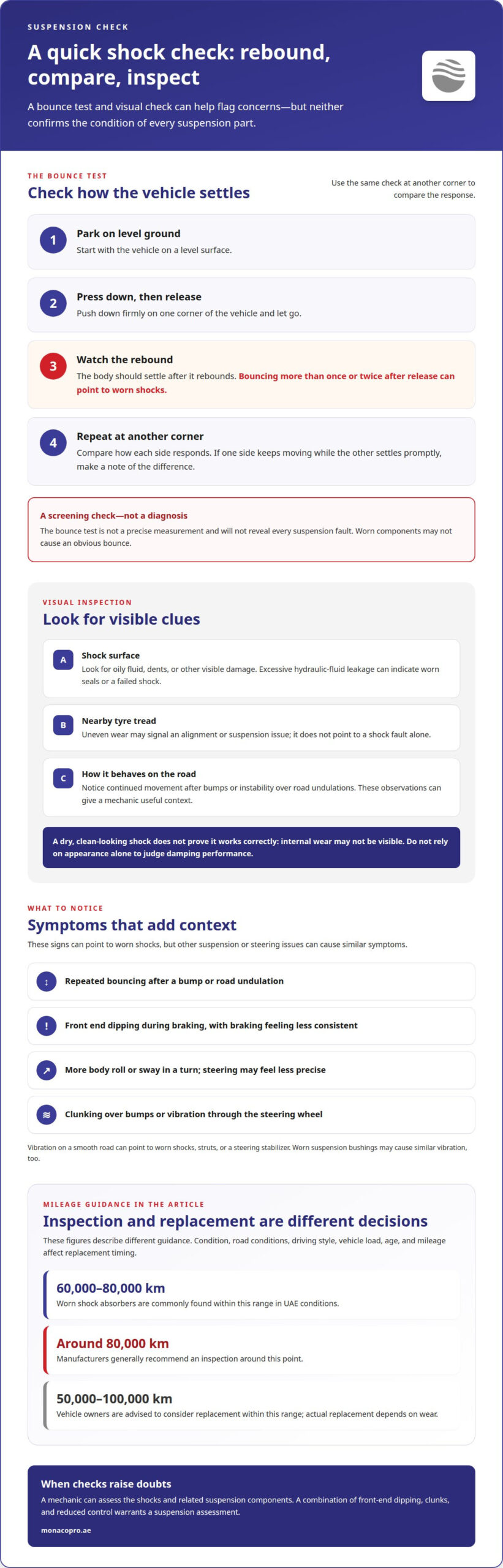
Bounce test and visual inspection
A bounce test offers a quick indication of how well a shock controls suspension movement. It can’t confirm the condition of every damper, so combine it with a visual check for leaks or damage.
Park the vehicle on level ground, then press down firmly on one corner and release it. Watch how the body settles. Effective shocks should stop the movement after the vehicle rebounds; continued bouncing suggests damping may have weakened. In this test, bouncing more than once or twice after release can point to worn shock absorbers.
Repeat the check at another corner and compare the response. If one side keeps moving while the other settles promptly, note the difference for a mechanic. The test is a screening step, not a precise measurement, and won’t reveal every suspension fault. A vehicle can also have worn components that don’t cause an obvious bounce during this check.
For a visual inspection, look at the visible shock absorber surfaces for oily fluid, dents, or other damage. Excessive hydraulic-fluid leakage can indicate worn seals or a failed shock. A dry, clean-looking surface doesn’t prove the unit works correctly, because internal wear may not be visible. Don’t rely on appearance alone to judge damping performance.
Also check nearby tyre tread for uneven wear, which may signal an alignment or suspension issue rather than a shock fault alone. During a drive, notice whether the vehicle continues to move after bumps or feels unstable over road undulations. These observations give a mechanic useful context alongside the bounce test and visual findings.
A mechanic can inspect the shocks and related suspension components to assess their condition. This is especially useful before buying a used vehicle, when a pre-purchase inspection can help identify visible leaks, damaged parts, or handling concerns. If a bounce test or visual check raises doubts, a professional assessment can distinguish worn shocks from other causes.
Common symptoms of worn shock absorbers
You may suspect worn shocks when several changes appear together: repeated bouncing, body roll, unstable handling, or uneven tyre wear. No single sign proves the cause, but a pattern across driving conditions gives you a clearer reason to arrange an inspection.
Watch how the vehicle behaves through a corner. Worn dampers can struggle to control weight transfer, allowing the body to roll or sway excessively. During acceleration, excessive rear squat can also indicate that shocks or struts aren’t controlling suspension movement effectively. At 100-120 km/h, a vehicle with worn dampers may feel floaty over road undulations and need frequent small steering corrections.
Tyre tread can provide another clue. If worn shocks let the wheels bounce instead of maintaining steady road contact, the tyres may develop cupping or scalloped wear. Uneven tread can also result from alignment problems, so the pattern doesn’t identify a shock fault by itself. Compare the tread across the vehicle and relate it to changes in stability or ride behaviour.
Check for excessive hydraulic-fluid leakage around a shock or strut, since leaking fluid can indicate worn seals or failure. Listen for knocking when the suspension moves over a bump, and note whether the sound occurs during cornering or acceleration. Worn shocks may also contribute to wear in other suspension components, so a clunk can have more than one possible source.
Consider the signs together rather than relying on one symptom. For example, a floaty ride, scalloped tyre tread, and visible leakage present a stronger reason for a suspension assessment than a single isolated noise. A technician can inspect the dampers and related parts to identify the source of excessive movement. Arrange a suspension assessment if these symptoms persist or affect vehicle stability.
MonacoPro Auto Garage
MonacoPro Auto Garage provides suspension service in Dubai for drivers who notice persistent bouncing, unstable handling, or other signs of worn dampers. A professional assessment can help distinguish shock absorber wear from issues involving related suspension components, so the repair addresses the cause rather than just one symptom.
If braking changes accompany suspension concerns, disc and brake service can address brake-system issues. Tyre replacement and wheel alignment and balancing are also relevant when uneven tread or alignment concerns appear alongside handling changes. The right work depends on the vehicle’s symptoms and inspection findings.
If these signs are affecting your vehicle, contact MonacoPro Auto Garage to discuss your concerns.
Make your next maintenance decision with confidence
Recognizing symptoms of bad shock absorbers is a useful starting point, but the next step is understanding what your vehicle needs. A professional assessment can help distinguish suspension wear from another cause and guide a practical maintenance decision.
MonacoPro Auto Garage also offers battery replacement, oil changes, and car computer diagnostics in Dubai for other vehicle maintenance needs. These services address separate concerns, while a suspension assessment focuses on handling and damper condition.
If you’ve noticed a change in how your vehicle drives, contact MonacoPro Auto Garage to discuss the issue and your next step. A clear assessment can help you move forward with greater confidence.
Frequently Asked Questions
What Happens When They Fail?
When shock absorbers fail, the suspension loses some control over spring movement, which can make the vehicle less stable and comfortable. During a lane change or turn, it may respond less predictably; over repeated bumps, the body can keep moving after the wheels hit the road. Reduced tyre contact can also affect steering and braking performance, so arrange an assessment if handling changes noticeably.
What are the most common symptoms of bad shock absorbers?
Common symptoms include a vehicle that feels unsettled after bumps, excessive body movement through turns, and visible fluid around a damper. Tyre tread may show irregular wear, while suspension noises can appear over uneven surfaces. These clues are more useful together than alone. For example, new instability combined with a leaking shock gives stronger reason for an inspection than a brief rattle by itself.
Can bad shock absorbers cause uneven tire wear or longer stopping distances?
Yes. Worn dampers can allow a tyre to bounce instead of maintaining steady contact, contributing to uneven tread patterns such as cupping. Less consistent road contact can also affect braking and may increase stopping distance. However, uneven wear can also come from alignment or other suspension issues. If the vehicle pulls, braking feels different, or tread wear appears irregular, have the cause assessed.
What causes shock absorbers to wear out, and how long do they last?
Shock absorbers wear through repeated suspension movement, with wear influenced by road surfaces, driving style, vehicle load, age, and mileage. Frequent potholes, rough roads, or regularly carrying heavy cargo can add stress. There isn’t one lifespan that applies to every vehicle: a car driven on smoother roads with lighter loads may age differently from a heavily loaded vehicle used on rough surfaces.
Should shock absorbers be replaced in pairs or all four at once?
Replacing shocks in axle pairs helps keep damping more even between the left and right sides of that axle. It doesn’t automatically mean all four need replacement. The condition of each damper, the vehicle’s handling, and the inspection findings guide the decision. For example, if only one axle shows wear, a mechanic can assess whether the shocks on the other axle still perform properly.
How can you test shock absorbers at home safely?
Park on level ground, switch off the engine, and keep clear of traffic before checking. Press down firmly on one vehicle corner, release it, and observe how quickly the body settles. Compare corners, but don’t crawl beneath the vehicle or touch hot or moving parts. This bounce check is only a basic indication; a clean exterior doesn’t rule out internal wear, so a professional inspection provides a fuller assessment.