
A nitrogen-filled tyre can be topped up with regular air if nitrogen isn’t available. This lowers the nitrogen concentration, but the priority is keeping the tyre at the recommended pressure. Nitrogen inflation uses nitrogen instead of regular compressed air, and the benefits of nitrogen in tyres in the UAE include reduced moisture inside the tyre and potentially steadier pressure over time. Whichever gas you use, check pressure at least every two weeks and before longer trips, with tyres cold.
Choosing nitrogen doesn’t mean you must use it for every top-up. This guide explains what nitrogen inflation changes, how it compares with regular air, and how moisture may relate to corrosion inside the wheel and TPMS sensors. You’ll also learn when topping up with air makes sense, how to follow your vehicle manufacturer’s pressure recommendation, and why regular checks matter in UAE driving conditions. Nitrogen can be an option, but it doesn’t replace routine tyre care.
Key Takeaways
- Nitrogen may help tyres hold pressure more consistently, but it doesn’t remove the need for routine pressure checks.
- Fuel-efficiency benefits depend on maintaining the vehicle maker’s recommended tyre pressure, not simply choosing nitrogen.
- Moisture in compressed air may contribute to internal wheel corrosion; a TPMS warning can also point to a pressure or sensor issue.
- If a tyre is damaged or no longer suitable for use, tyre replacement is the practical next step rather than relying on a different inflation gas.
What is Nitrogen Tyre Inflation?
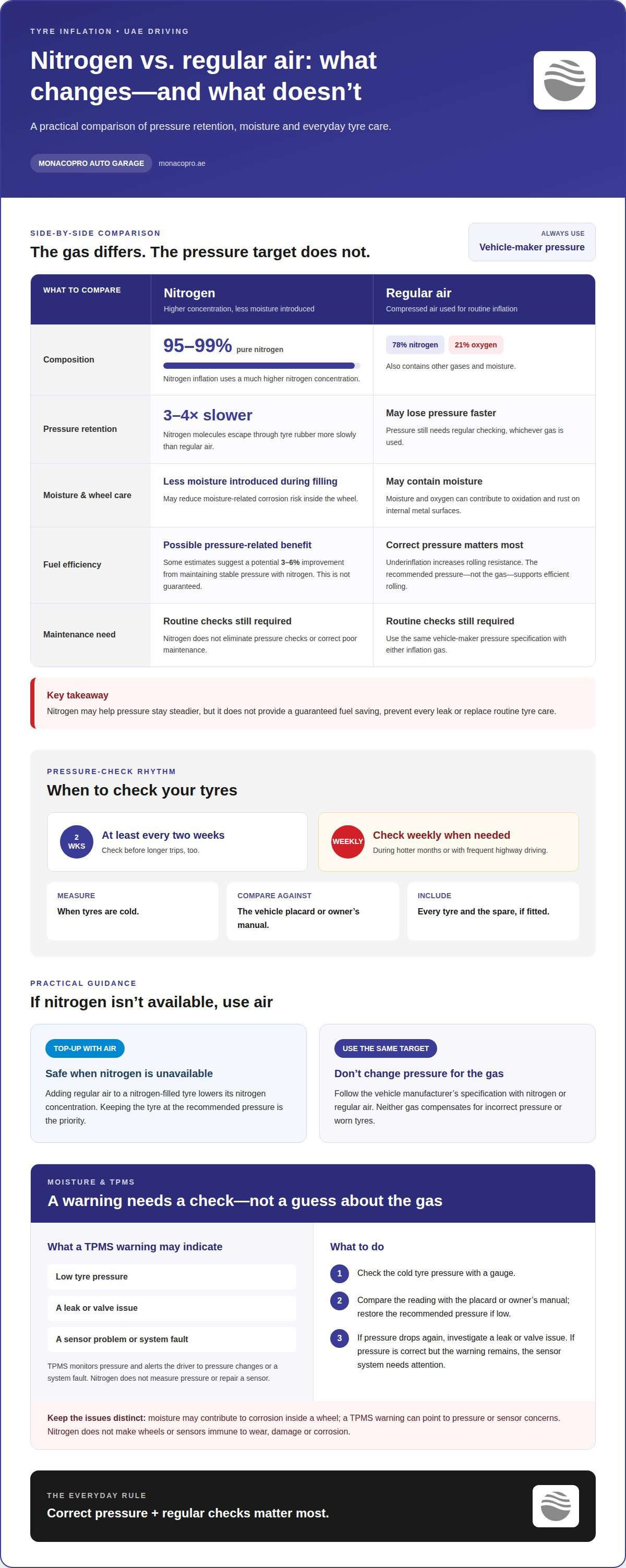
Nitrogen inflation replaces ordinary compressed air with gas that is typically 95-99% pure nitrogen. For UAE drivers, the benefits of nitrogen in tyres can include slower pressure loss and less moisture inside the tyre. These advantages don’t remove the need to monitor pressure or follow the vehicle manufacturer’s specifications.
Tyre Pressure Retention and Durability
Nitrogen molecules escape through tyre rubber 3-4 times slower than regular air, so pressure may remain steadier between checks. Compressed air contains oxygen and moisture; oxygen can react with rubber and contribute to oxidation. The benefits of nitrogen in tyres for UAE drivers may include supporting more even wear, but tyre life also depends on correct pressure, wheel alignment, driving style, rotation intervals and road conditions. Nitrogen can’t correct poor maintenance.
Nitrogen and Compressed-Air Inflation
Regular air contains 78% nitrogen and 21% oxygen, alongside other gases and moisture. Nitrogen inflation uses a higher concentration of nitrogen and less moisture, which can make pressure more predictable as temperature changes. Both options still require the vehicle’s recommended pressure. A nitrogen-filled tyre can also be topped up with regular air if needed, although this dilutes the nitrogen concentration.
Use the pressure listed on the vehicle placard or in the owner’s manual, not a different target based on the inflation gas. In the UAE, check tyre pressure when the tyres are cold, at least every two weeks and before longer trips. During hotter months or with frequent highway driving, check weekly. Check every tyre, including the spare if fitted.
Does nitrogen make driving safer or reduce blowout risk? Correct tyre pressure supports grip, stability and handling. Underinflated tyres can overheat quickly, increasing blowout risk. Nitrogen doesn’t eliminate that risk, so regular pressure checks remain essential.
How much does nitrogen tyre inflation cost in the UAE? Whether it’s worthwhile depends on your driving habits and maintenance routine.
What Is The DIfference Between Nitrogen and Air in Tyres?
The practical comparison is less about the gas itself and more about tyre pressure, rolling resistance and routine maintenance. For Dubai driving, maintaining the correct pressure is key to handling and fuel efficiency. The benefits of nitrogen in tyres in the UAE depend on keeping that pressure consistent.
Fuel Efficiency and Rolling Resistance
Rolling resistance is the energy a vehicle uses to move its tyres against the road. Underinflated tyres increase resistance, making the engine work harder and potentially reducing fuel efficiency. Nitrogen doesn’t reduce rolling resistance by itself; maintaining the manufacturer’s recommended pressure does. Check the vehicle placard or owner’s manual, and use that specification with either inflation gas.
Fuel Efficiency and Mileage
Stable pressure helps tyres roll efficiently and wear more evenly. Nitrogen-filled tyres may lose pressure more slowly than tyres filled with regular air. That difference may help limit pressure-related efficiency losses, but it doesn’t establish a guaranteed fuel saving for every vehicle or journey. Driving style, traffic, load and tyre condition also affect mileage.
Some estimates place the potential fuel-efficiency improvement from maintaining stable pressure with nitrogen at around 3-6%. Treat this as a potential benefit, not a promised result. In Dubai, stop-start traffic and highway journeys place different demands on tyres, while temperature changes can also affect pressure. A regular refill or pressure check matters more than choosing nitrogen and then neglecting maintenance.
What are the disadvantages or risks of using nitrogen in car tyres? Nitrogen doesn’t remove the need to monitor pressure, and refilling may be less convenient if nitrogen isn’t available. Topping up with regular air is safe, though it lowers the nitrogen concentration.
Correct pressure supports vehicle stability, grip and braking response. Neither nitrogen nor compressed air can compensate for incorrect pressure, worn tyres or a mechanical issue. If you’re considering the benefits of nitrogen in tyres in the UAE, follow the vehicle manufacturer’s wheel and tyre specifications, and treat changes in handling or braking as reasons to inspect the tyres.
Moisture, corrosion and TPMS sensors
Moisture in compressed air can contribute to corrosion inside a wheel, while dry nitrogen reduces the moisture introduced during filling. Petrol-station compressed air may contain moisture and other gases. Oxygen can react with moisture inside the tyre assembly, contributing to oxidation and rust on metal surfaces. This is an internal wheel-care consideration, not a reason to neglect pressure maintenance.
A TPMS sensor monitors tyre pressure and alerts the driver when pressure changes or the system detects a fault. Nitrogen doesn’t measure pressure, prevent every leak or repair a damaged sensor. Moisture-related corrosion inside a wheel and a TPMS warning are separate issues, even if they occur in the same assembly. A warning may relate to low pressure, a leak, a valve issue or a sensor problem, so the inflation gas alone won’t identify the cause.
For a nitrogen-filled tyre, maintain the correct pressure and respond to a warning by checking it with a gauge. Compare the cold tyre reading with the vehicle placard or owner’s manual. If the reading is low, restore the recommended pressure and monitor whether it drops again. Repeated pressure loss points to an issue that inflation gas can’t resolve, such as a leak or valve problem. If pressure is correct but the TPMS warning remains, the sensor system needs attention rather than another refill.
Nitrogen can reduce moisture introduced during filling, but it doesn’t make wheels or TPMS components immune to wear, damage or corrosion. Its practical benefit relates to conditions inside the tyre assembly; it doesn’t replace inspection or correct pressure. In Dubai, temperature changes and frequent driving make regular checks important for tyres inflated with either nitrogen or air. Treat pressure readings and TPMS alerts as separate information: one shows the measured pressure, while the other signals a system status that needs investigation.
Topping up nitrogen-filled tyres with air
Yes, you can top up a nitrogen-filled tyre with regular air if nitrogen isn’t available. The tyre remains safe to use, but the added air lowers its nitrogen concentration. The immediate priority is restoring the correct pressure, not preserving a particular gas mixture while driving on an underinflated tyre.
In Dubai, use a tyre service that provides nitrogen inflation when you want a nitrogen refill. If nitrogen isn’t available, use regular air rather than continuing a journey with pressure below the vehicle manufacturer’s recommendation. The same principle applies before a highway trip, when correct pressure supports handling and stability.
After a top-up, compare the pressure with the vehicle placard or owner’s manual. Measure when the tyres are cold, and check each tyre rather than assuming all four need the same adjustment. Include the spare if your vehicle has one. In the UAE, check at least every two weeks and before longer trips. Check more frequently during hotter months or if you often drive on highways.
There’s no need to remove all the air and start again after a regular-air top-up. The mixture will contain a lower concentration of nitrogen, but you can still inflate the tyre to the recommended pressure. Use nitrogen at the next refill if it’s available; otherwise, regular air remains practical for everyday driving. Consistent pressure matters more than maintaining a pure nitrogen fill.
If pressure keeps dropping after inflation, repeated top-ups won’t address the cause. A leak or valve issue can affect either type of filled tyre, so a recurring loss deserves inspection. For related wheel care, arrange wheel alignment and balancing to address another factor that can affect tyre wear.
MonacoPro Auto Garage: Tyre Replacement
MonacoPro Auto Garage provides tyre replacement when a tyre is damaged, worn or no longer holding pressure reliably. Nitrogen can support pressure retention, but it can’t repair tyre damage or resolve repeated pressure loss caused by a fault. Replacement is the appropriate next step when an inspection shows the tyre should no longer be used.
When weighing nitrogen against regular air, prioritise a suitable tyre inflated to the vehicle manufacturer’s recommended pressure. If a tyre needs replacing, replacement addresses its condition more effectively than another top-up. Wheel alignment and balancing can also help address tyre wear and vehicle handling.
For tyre replacement in Dubai, contact MonacoPro Auto Garage to discuss your vehicle’s needs.
Make Your Next Tyre Decision With Confidence
If you’re weighing the benefits of nitrogen in tyres in the UAE, consider the tyre’s condition as well as the inflation gas. Note recurring pressure changes or a TPMS warning, and describe them clearly during an inspection. This helps identify whether the concern involves the tyre, a sensor or another vehicle system.
When a tyre is damaged or no longer suitable for use, MonacoPro Auto Garage provides tyre replacement. The garage also offers battery replacement, oil changes and car computer diagnostics for other maintenance needs.
Contact MonacoPro Auto Garage to discuss your vehicle’s tyre needs and decide on a practical next step. A clear maintenance plan can help you drive with greater confidence.
Frequently Asked Questions
Why Choose Nitrogen Over Regular Air?
Nitrogen may suit drivers who value slower pressure loss and reduced moisture inside the tyre assembly. For Dubai drivers who check pressure consistently, the difference may matter less than choosing an inflation gas that’s convenient to maintain. Either way, follow the vehicle manufacturer’s pressure specification. Nitrogen is an option for managing tyre pressure, not a substitute for checking tyre condition.
What Are Nitrogen-Filled Tyres, and Why Are They Important?
Nitrogen-filled tyres contain a higher concentration of nitrogen than tyres inflated with ordinary compressed air. Their practical appeal is reduced moisture and potentially steadier pressure. This may suit drivers looking to reduce pressure-related adjustments. It doesn’t make tyres maintenance-free: leaks, valve issues and normal permeability can still cause pressure loss.
Does Nitrogen Make Tyres Last Longer?
Nitrogen alone doesn’t determine tyre lifespan. Correct inflation can support more even wear, while alignment, rotation, driving style and road conditions also affect tyre life. For example, uneven tread wear may call for an alignment assessment, not simply a change in inflation gas. Follow the vehicle manufacturer’s tyre specifications and address unusual wear early.
First, What’s Inside Your Tyres?
Ordinary compressed air contains mostly nitrogen, along with oxygen, smaller amounts of other gases and moisture. Nitrogen inflation changes the mixture by increasing the nitrogen concentration and reducing moisture. This distinction matters because an air-filled tyre doesn’t contain only oxygen. Both methods use gas mixtures, but their composition differs.
How to Enhance the Life of Car Tyres?
Follow the vehicle manufacturer’s pressure recommendation and include pressure checks in your maintenance routine. Rotate tyres as recommended for your vehicle, and have alignment assessed if tread wear looks uneven or the car pulls to one side. Smooth driving also helps limit unnecessary wear. These steps address practical influences on tyre life; switching inflation gases alone can’t correct worn tread or poor alignment.
Is Paying Extra for Nitrogen Worth It for Normal City Driving in Dubai?
For many everyday city journeys, regular air is practical if you maintain the correct pressure. Nitrogen may appeal if you value reduced moisture or potentially slower pressure loss, but it doesn’t remove the need for checks. Consider how consistently you monitor pressure and whether nitrogen fits your routine. Proper inflation matters more than the gas choice.