
Your dashboard shouldn’t be a source of constant anxiety, yet a persistent tyre pressure warning light can make even a routine commute feel uncertain. Many drivers assume a quick top-up at the station will clear the alert, but modern vehicle safety standards often require more than just air. If your warning light stays on after inflating your tyres, you’re likely facing a technical software handshake issue that a simple reset won’t fix.
It’s frustrating to feel confused by the complex terminology of relearning versus programming, especially when a sensor error could lead to a failed vehicle inspection. We understand that you want your car to be as reliable as it is safe. Our goal is to help you master the technical nuances of tpms sensor programming so you can maintain peak performance without the stress of dashboard errors.
This guide provides a clear roadmap for successful sensor calibration and explains exactly how to distinguish between different service requirements. We’ll explore the professional workflow used to sync new sensors with your vehicle’s computer, ensuring you drive away with total confidence and a clear display. By focusing on precision and accuracy, you can ensure your safety systems are always working exactly as intended.
Key Takeaways
- Distinguish between writing vehicle-specific protocols to a blank sensor and the ECU recognition process to ensure your safety systems communicate accurately.
- Identify the specific scenarios, such as aftermarket sensor installation or battery failure, that necessitate professional tpms sensor programming to clear dashboard alerts.
- Learn how a methodical diagnostic scan and precise protocol selection from a specialized database guarantee a seamless “software handshake” with your car’s computer.
- Understand how to resolve common calibration hurdles like signal interference from electronic accessories or incorrect frequency settings that prevent successful synchronization.
- Discover why combining sensor calibration with professional wheel alignment and balancing provides a comprehensive solution for vehicle stability and tyre longevity.
Understanding TPMS Sensor Programming vs. Relearning
Many vehicle owners encounter a persistent tyre pressure light and assume a quick visit to the air pump will solve the issue. However, modern safety systems are sophisticated. A Tire-pressure monitoring system (TPMS) relies on a complex digital handshake between the wheel sensors and the engine control unit (ECU). Understanding the difference between programming and relearning is the first step toward a permanent fix.
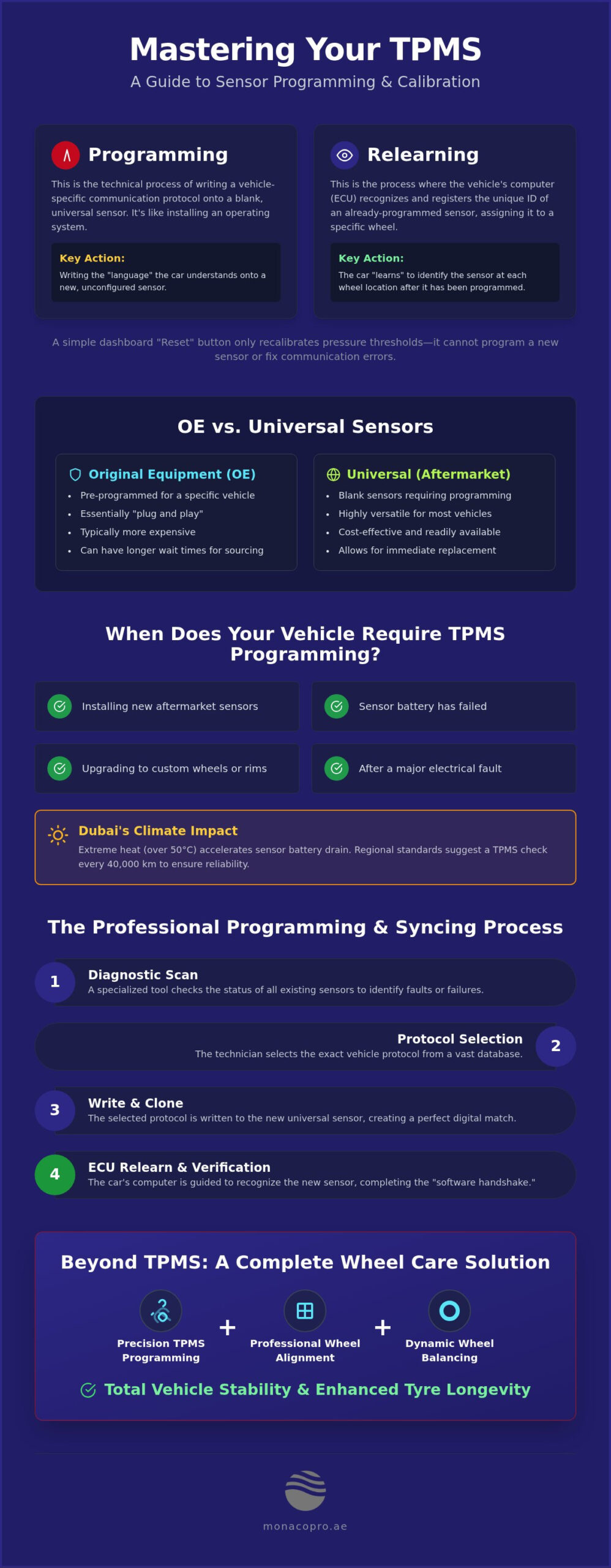
TPMS sensor+ programming is the technical act of writing a specific vehicle’s communication protocol onto a blank, universal sensor. Think of it as installing an operating system on a new computer. Without this step, the sensor is essentially silent; it doesn’t know how to speak the vehicle’s language. Relearning is a separate process where the car’s computer “meets” the sensors. Once a sensor is programmed with the correct protocol, the ECU needs to recognize its unique ID and assign it to a specific wheel location.
Most failed DIY repairs occur because drivers conflate these two steps. If you install a blank sensor without programming, no amount of relearning will make the car recognize it. The sensor ID acts as a digital fingerprint within the safety system, allowing the ECU to monitor individual tyre health with pinpoint accuracy. This precision is vital for maintaining stability and braking performance.
The Role of Universal vs. OE Sensors
Original Equipment (OE) sensors are manufactured with a fixed protocol for a specific make and model. They are essentially “plug and play” but can be more expensive and harder to source for specific luxury models. Universal sensors, on the other hand, offer incredible flexibility. These aftermarket units are blank slates that can be configured for almost any vehicle through specialized tpms sensor programming tools.
- OE Sensors: Pre-programmed, brand-specific, and typically more costly.
- Universal Sensors: Versatile, require professional software mapping, and reduce wait times for replacements.
For high-end cars, universal sensors are often the preferred choice because they allow for immediate replacement without waiting for model-specific parts to arrive. The key is ensuring the technician uses high-caliber diagnostic equipment to map the protocol correctly, ensuring the aftermarket hardware behaves exactly like the original part.
Why a Simple Reset Button Isn’t Enough
The “TPMS Reset” button located in your cabin or infotainment system serves a very limited purpose. It tells the car that the current tyre pressure is the “new normal” and recalibrates the pressure thresholds. It does not fix communication gaps or hardware failures. If a sensor is dead or unprogrammed, the reset button is useless. Protocol Mapping is the digital foundation of TPMS, ensuring the sensor and the vehicle speak the same language. For a detailed walkthrough of what each reset method can and cannot achieve, our guide on how to reset TPMS light systems for Dubai drivers covers the full range of manual and professional procedures.
When Does Your Vehicle Require TPMS Sensor+ Programming?
Identifying the exact moment your vehicle requires technical intervention is key to avoiding unnecessary downtime. While a simple top-up of air handles minor fluctuations, several specific scenarios demand professional tpms sensor programming. The most common instance occurs during tyre replacement when you choose to install brand-new aftermarket sensors. Because these units often arrive as blank hardware, they must be configured to your car’s specific make and model protocols before the ECU can track them.
The Impact of Dubai’s Climate on Sensor Longevity
The UAE’s unique environment presents specific challenges for sensitive electronics. Extreme ambient temperatures frequently exceed 50°C during summer months; this intense heat significantly accelerates the lithium-ion battery drain within your wheel units. While sensors in milder climates might last a decade, regional conditions often shorten this lifespan. 2026 maintenance standards now suggest a comprehensive sensor check every 40,000 kilometers for vehicles operating in the Gulf. Additionally, fine sand and dust can occasionally obstruct the sensor’s pressure port, leading to erratic data transmission.
Beyond battery life, seasonal tyre swaps or upgrading to custom wheels and rims will require a fresh round of tpms sensor programming. If you’ve experienced a major electrical fault or a battery disconnect that triggered a ‘Lost Sensor’ error, the digital handshake between the components may need to be restored. Following a professional TPMS programming guide ensures that the new hardware is correctly mapped to the vehicle’s safety computer.
Symptoms of a Sensor Needing Programming
Recognizing the warning signs can save you from a failed vehicle inspection. If your dashboard light flashes for 60 to 90 seconds before turning solid, the system is likely indicating a hardware communication failure rather than just low pressure. You might also notice inaccurate readings on your digital display or a warning light that refuses to clear despite perfect inflation levels. For those experiencing these persistent alerts, a specialized TPMS sensor+ programming service can identify whether the issue is a dead battery or a protocol mismatch.
The Professional TPMS Programming Process: A Step-by-Step Guide
Professional tpms sensor programming isn’t a matter of guesswork; it’s a structured sequence that ensures hardware and software are perfectly aligned. The process begins with an initial diagnostic scan. Technicians use a specialized handheld tool to ping each wheel, identifying which specific sensor ID is failing to report or providing erratic data. Once the culprit is found, the technician selects the exact vehicle protocol from a frequently updated database. This step is critical because 2026 models often feature updated security protocols that require precise software versions to communicate correctly.
After selecting the correct protocol, the tool transmits data wirelessly through the tyre sidewall to the new sensor. This digital handshake prepares the hardware for the final integration. It’s vital to distinguish between TPMS Programming vs. Relearning at this stage. Programming sets up the internal software of the sensor, while the relearn procedure tells the car’s computer to accept this specific ID. To conclude the service, the system is validated through an OBDII verification or a short drive cycle to confirm the dashboard remains clear of alerts.
Tools of the Trade: Professional vs. Consumer Grade
Many 2026 luxury vehicles use secure gateways that block basic consumer scanners. Using an incompatible firmware version with a DIY tool carries a high risk of “bricking” the sensor, rendering it permanently unusable. MonacoPro utilizes precision diagnostic tools specifically designed for high-end European and electric vehicle brands. This level of equipment ensures that the tpms sensor programming is completed without compromising the car’s sensitive electronic architecture or triggering secondary fault codes.
The ‘Cloning’ Method vs. New ID Creation
Technicians generally choose between two primary methods based on the vehicle’s needs. Cloning involves copying the unique ID from an old, dying sensor onto a new programmable unit. This is highly efficient because the vehicle doesn’t realize a change occurred, often eliminating the need for a manual relearn. New ID creation is necessary when the original sensor is missing or when you’re setting up a second set of wheels for performance driving. For long-term system stability, cloning is often the most reliable route as it maintains the original factory configuration within the ECU.
- Cloning: Best for direct replacements to maintain existing ECU settings.
- New ID: Essential for fresh wheel sets or when the original sensor is physically destroyed.
- Drive Cycle: A 10-minute drive at speeds over 30 km/h is usually required to finalize the sync.
Common TPMS Programming Failures and Troubleshooting
Troubleshooting tpms sensor programming requires a keen eye for technical details that go beyond simple air pressure. One of the most frequent roadblocks technicians encounter is a frequency mismatch. Most vehicles operate on either 315MHz or 433MHz. If the wrong frequency is selected within the diagnostic tool database during setup, the sensor will remain invisible to the car’s computer. Additionally, the market is currently flooded with low-cost, non-branded sensors that frequently arrive with dead internal batteries. These “dead on arrival” units look identical to high-quality hardware but fail the moment they are installed, leading to significant frustration for the driver.
ECU memory limitations also play a significant role in modern troubleshooting. Some vehicle computers are designed to store only one set of sensor IDs at a time. If you are swapping between factory rims and custom aftermarket sets, the system may reject the new data because the memory slots are already occupied. This requires a professional wipe and rewrite of the ECU’s TPMS module to accept the new configuration and ensure the safety system functions correctly.
Why Your TPMS Light is Still On
If your dashboard light persists after a service, the sensor might still be in “Sleep Mode.” Manufacturers ship sensors in a dormant state to preserve battery life during transit and storage. Failing to “wake” the sensor with a specialized trigger tool before attempting tpms sensor programming is a common oversight that leads to failed sync attempts. Software version mismatches between the programming tool and the vehicle’s specific model year can also cause the digital handshake to fail. It’s also a reality that car vibration repair is often misdiagnosed as a TPMS issue because physical tyre imbalances can sometimes trigger erratic sensor readings or dashboard warnings. If you’re unsure whether your warning light reflects a pressure issue or a sensor fault, the step-by-step process for how to reset your TPMS light correctly in Dubai can help you determine the right course of action before booking a professional service.
Electronic Interference in Modern Vehicles
Modern car cabins are packed with electronics that can disrupt sensitive radio frequencies. High-powered aftermarket phone chargers, dash cams, and even metallic window tints can act as a shield, blocking the low-frequency signal sent from the wheel to the receiver. If you experience a persistent “Sensor Missing” error, try unplugging interior accessories to see if the signal returns. Using high-quality, shielded sensors is essential in these high-tech environments to maintain a stable, interference-free connection. Signal interference from other electronic devices or metallic window tints is a leading cause of intermittent warning lights in luxury vehicles.
If your dashboard warnings won’t go away despite your best efforts, our experts can perform a full car computer diagnostic to pinpoint the exact cause of the communication failure.
Precision TPMS and Wheel Care at MonacoPro Dubai
Maintaining vehicle safety in a fast-paced environment requires a holistic approach to wheel maintenance. At MonacoPro, we provide comprehensive tpms sensor programming as an integrated part of our expert tyre services. Professional calibration is essential for Dubai’s high-speed road networks, where even a minor pressure variance can impact handling and fuel efficiency. We’re committed to using only high-grade, compatible sensor hardware to ensure your car’s electronic architecture remains stable and reliable. By focusing on precision, we remove the stress of recurring dashboard alerts and help you maintain peak performance.
The MonacoPro Difference in Umm Ramool
Our facility in the central automotive hub of Umm Ramool is staffed by expert technicians who understand the specific needs of Dubai drivers. We utilize advanced computer diagnostics that go beyond basic code reading to identify the root cause of any sensor failure. This precision allows us to manage every technical detail, providing a stress-free service experience designed for maximum efficiency. Whether you’re driving a luxury saloon or a high-performance SUV, our team ensures a seamless handshake between your new sensors and the vehicle’s computer. We value your time and prioritize a professional workflow that delivers results without unnecessary delays.
Total Wheel Health: More Than Just Pressure
A persistent TPMS alert can sometimes be a symptom of a larger mechanical issue. Uneven tyre wear caused by poor wheel alignment and balancing can put undue stress on sensor stems or lead to erratic pressure readings. We believe in the synergy between sensor health and mechanical precision. By addressing these factors together, we help you avoid the premature failure of expensive components and ensure a smoother ride. This comprehensive oversight is what sets a professional garage apart from a basic tyre shop. When selecting where to have this work done, consulting a resource like our guide to choosing the best wheel alignment garage in Dubai can help you identify a workshop equipped with the latest 3D alignment technology and the expertise to handle your vehicle’s specific requirements.
During a sensor replacement, we often recommend a full car repair checkup to verify the condition of your suspension and braking systems. This proactive strategy identifies underlying alignment or suspension issues before they escalate into costly repairs. Booking your precision TPMS calibration in Dubai with an “Efficient Expert” ensures your vehicle stays in peak condition for the road ahead. We handle the technical complexities so you can enjoy a safe, quiet, and reliable driving experience.
Driving with Confidence and Precision in 2026
Mastering your vehicle’s safety systems starts with understanding the digital handshake between your wheels and the dashboard. Successful tpms sensor programming is the essential foundation that standard resets simply cannot provide. By distinguishing between protocol mapping and the final relearn procedure, you ensure your car’s ECU receives accurate, real-time data for every kilometer driven.
Whether you’re battling the effects of Dubai’s extreme heat on sensor batteries or upgrading to custom rims, precision is your best defense against persistent alerts. At MonacoPro, we manage these technical complexities for you. Our facility in Umm Ramool combines expert computer diagnostics with specialized wheel care and comprehensive safety inspections to keep your journey smooth and secure. It’s time to move past the frustration of dashboard warnings and embrace a higher standard of vehicle maintenance.
Don’t let a flashing warning light compromise your peace of mind or your vehicle’s performance. Schedule Your Professional TPMS Programming at MonacoPro Today and experience the reliability of expert calibration. We’re here to ensure your drive is as safe as it is seamless.
Frequently Asked Questions
Can I drive with a faulty TPMS sensor in Dubai?
Driving with a faulty sensor is possible but highly discouraged for safety reasons. In the extreme heat of Dubai, tyre pressure can fluctuate rapidly, increasing the risk of a blowout. A non-functional system also means you won’t receive warnings about slow punctures. a persistent warning light may result in a failed RTA vehicle inspection, making a professional diagnostic check essential for legal and safety compliance.
How long does it take to program a new TPMS sensor?
Professional tpms sensor programming typically takes between 15 and 30 minutes per vehicle. The duration depends on whether the technician is cloning existing IDs or performing a completely new relearn procedure. This service is often performed alongside a tyre replacement or wheel alignment to maximize efficiency. Our specialized tools in Umm Ramool ensure the digital handshake is completed quickly, allowing you to return to the road with a clear dashboard.
Will my TPMS light turn off automatically after I inflate my tyres?
In many cases, the light will clear after driving for 10 to 20 minutes at speeds above 30 km/h. This is known as a drive cycle. If the light continues to flash or remains solid despite correct inflation, it indicates a communication error. This usually means a sensor battery has failed or the system requires a technical reset to recognize the current pressure levels accurately.
Is it possible to program a TPMS sensor without a special tool?
It isn’t possible to program a universal aftermarket sensor without a specialized diagnostic tool. While some older vehicles allow for a manual relearn using button sequences, the actual installation of vehicle-specific protocols onto a blank sensor requires professional hardware. Attempting to bypass this step often leads to persistent errors. Expert intervention ensures the sensor speaks the correct language for your car’s specific safety computer.
Why did my TPMS light come on after a wheel alignment?
While a wheel alignment doesn’t directly change sensor data, the physical movement of the wheels can sometimes trigger a dormant fault. If a sensor battery was already weak, the vibration or repositioning might cause it to stop communicating. At MonacoPro, we integrate sensor checks with our wheel alignment and balancing service to ensure that your safety system and mechanical components are working in perfect harmony.
Do all cars use the same frequency for TPMS sensors?
No, vehicles generally operate on two distinct frequencies: 315MHz and 433MHz. Most North American models utilize 315MHz, while European and many newer 2026 international models use 433MHz. Selecting the incorrect frequency is a primary reason why tpms sensor programming fails. Our diagnostic tools automatically identify the correct frequency for your specific make and model to ensure a successful and permanent software connection.
Can a dead car battery cause TPMS programming errors?
A weak or dead vehicle battery can disrupt the communication between the sensors and the ECU. Low voltage often causes the car’s computer to lose its stored memory or trigger “Lost Sensor” fault codes. Before performing any electronic diagnostics, it’s vital to ensure your car’s primary battery is healthy. This prevents ghost errors and ensures that the new sensor IDs are stored correctly in the system’s memory.
How much does professional TPMS programming cost in the UAE?
The investment for this service depends on the type of sensors required and the complexity of your vehicle’s electronic architecture. Factors such as whether you choose universal or OE-specific hardware will influence the final requirement. We provide comprehensive assessments at our Umm Ramool facility, ensuring you receive high-caliber parts and precision calibration. This approach guarantees long-term reliability and safety on Dubai’s roads without the risk of recurring alerts.