
A vibrating steering wheel does not automatically mean poor alignment. The signs of bad wheel alignment include a car that pulls to one side, a steering wheel that sits crooked on a straight road, and uneven tyre wear. Wheel alignment adjusts tyre angles, including camber, caster and toe, to match the vehicle manufacturer’s specifications.
Steering changes or vibration can suggest an alignment issue, but the cause varies: wheel imbalance is a more common source of vibration than misalignment. This guide explains what alignment adjusts, how to read steering and tyre-wear clues, and when to arrange a check. It also compares alignment-related symptoms with wheel-balance vibration, explains why suspension condition matters, and outlines what affects alignment costs in the UAE. Use these details to identify the pattern and decide what your car needs, rather than assuming every vibration has the same cause.
Key Takeaways
- Alignment sets tyre angles to the vehicle maker’s specifications, helping the tyres meet the road as intended.
- A car that pulls to one side or has a crooked steering wheel on a straight road may need an alignment check.
- Uneven tread wear can point to an alignment issue, but tyre pressure and rotation can also affect wear patterns.
- Consider an alignment check after a pothole impact, a crash, new tyres, or suspension work, and follow your vehicle’s maintenance guidance.
- Steering-wheel vibration can have different causes: wheel imbalance is more common than misalignment, so identifying the pattern matters.
What Is a Wheel Alignment?
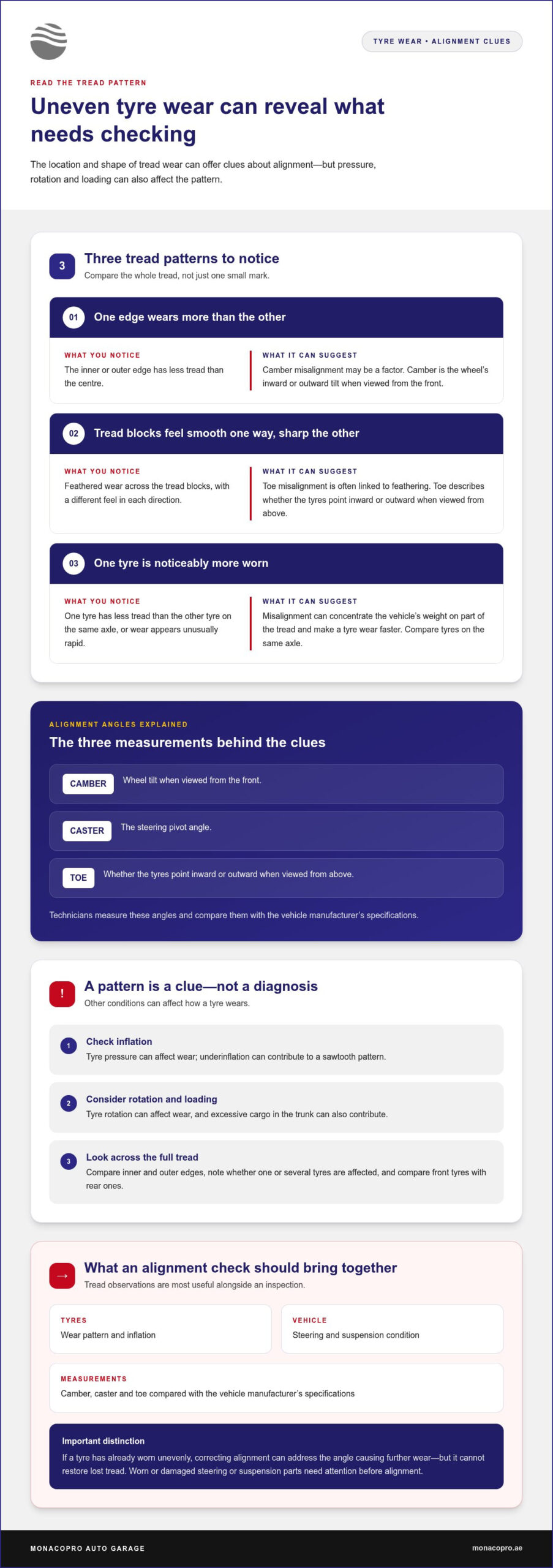
A wheel alignment adjusts a vehicle’s steering and suspension angles so its tyres meet the road as intended. Technicians measure camber, caster and toe, then compare those angles with the vehicle manufacturer’s specifications. Camber describes a wheel’s tilt when viewed from the front, caster relates to the steering pivot angle, and toe describes whether the tyres point inward or outward when viewed from above.
Correct angles help the vehicle travel in the intended direction and respond predictably through turns. Potholes, rough roads and curb impacts can knock alignment out of position. Wear in suspension joints and rubber components can also change how the wheels sit. Checking the steering wheel on a straight, flat road can reveal clues, but it cannot measure camber, caster or toe.
Can poor alignment cause steering-wheel vibration or loose handling? Yes. Misaligned wheels can affect steering response and contribute to vibration, although wheel imbalance is a more common cause. A loose or unresponsive feel can also point to worn or damaged steering or suspension components, which need attention before alignment.
- Off-center or crooked steering wheel: If the vehicle travels straight on a level road but the steering wheel sits at an angle, the wheel alignment may be off.
- Drifting with the wheel centered: If the vehicle wanders left or right while you’re aiming straight, it may be pulling instead of holding its direction.
- Loose steering response: If a small steering input feels delayed or the vehicle feels less settled through a curve, alignment or suspension condition may be involved.
- Steering-wheel vibration: Shaking can accompany alignment trouble, but imbalance can produce a similar symptom. The pattern and inspection findings help distinguish them.
These signs of bad wheel alignment do not identify the exact cause on their own. A crooked steering wheel and a pull to one side, for example, suggest a different pattern from vibration without steering drift. Tyre pressure, tyre condition and suspension wear can also affect how a vehicle tracks, so technicians assess these alongside alignment measurements.
Alignment readings provide the clearest evidence. A technician checks the steering and suspension, examines tyre wear and inflation, and measures the angles against the vehicle manufacturer’s specifications. Worn or damaged components need repair before alignment; adjusting angles alone will not correct a faulty part. This matters when the steering feels loose, because accurate adjustment depends on sound steering and suspension components.
What Does Tire Wear Mean to My Car’s Alignment?
Uneven tread wear can show how a tyre meets the pavement and whether alignment needs inspection. The location and shape of the wear can help distinguish alignment symptoms from pressure, rotation or loading issues.
Uneven and Rapid Tire Wear
Misalignment can make one tyre wear faster by concentrating the vehicle’s weight along part of the tread. Compare tyres on the same axle: noticeably less tread on one tyre or uneven wear may indicate alignment is a factor. Continued driving can wear tyres faster and permanently damage them; worn areas may also be more susceptible to punctures or blowouts.
Wear on One Side of a Tire
Wear concentrated on the inner or outer edge, with less wear in the centre, can point to camber misalignment. Camber is the wheel’s inward or outward tilt when viewed from the front. Compare both edges across the tyre rather than judging a small patch. A tread-wide pattern offers a more useful clue than a single mark and helps identify what needs closer inspection.
Uneven Tire Wear Patterns
Feathered wear feels smooth in one direction and sharp in the other across the tread blocks, and is often linked to toe misalignment. A sawtooth-like pattern can have several possible causes, so it should be considered alongside other signs of tyre wear. Since alignment is not the only possible cause, checking inflation and wear across each tyre helps narrow down what is affecting contact with the pavement.
Read the tread from the inner edge to the outer edge. Inner-edge wear, for example, differs from feathering across tread blocks, even if both look uneven at first. Note whether the pattern appears on one tyre or several, and compare the front tyres with the rear ones. These observations help a technician interpret the wear alongside alignment measurements, tyre inflation, steering and suspension condition.
Excessive wear can also reflect too much cargo in the trunk, so consider how the vehicle is loaded. Tyre pressure matters too: underinflation can contribute to a sawtooth pattern, while correct pressure helps maintain alignment. Tyre rotation can affect wear as well. If a tyre has already worn unevenly, correcting alignment can address the angle causing further wear, but it cannot restore lost tread.
If you see an edge-worn or feathered tread pattern, a wheel alignment and balancing service can help assess alignment alongside tyre condition and inflation.
Vehicle pulling to one side
A car pulling left or right while you steer straight can indicate that its wheels are not tracking evenly. Notice whether it keeps drifting on a straight stretch of road, rather than reacting briefly to a bend or road surface. A steady pull means you are making ongoing steering corrections to maintain direction. Describe that repeated effort during an alignment check.
Check the steering wheel’s position as the vehicle travels straight on a flat road. If it sits off-centre while the car moves straight, alignment angles may be uneven. A steering wheel that does not return to centre after a turn is another clue. These observations help distinguish a consistent tracking problem from a temporary correction during a turn.
Consider what happened before the pull began. Potholes, rough pavement or a curb impact can knock alignment out of place. A new pull after one of these impacts gives useful context for an inspection. Wear in ball-and-socket joints and rubber suspension components can also affect alignment over time, so a change may develop without one obvious impact.
Alignment is not the only system to consider. Worn or damaged suspension parts can affect how the vehicle tracks and holds its direction. Faulty components need attention before technicians adjust alignment angles. Otherwise, the measurements may not reflect how the vehicle sits once the suspension is working correctly.
A thorough alignment check compares measured wheel angles with the vehicle manufacturer’s specifications. The inspection also considers steering and suspension condition, tyre wear, inflation and size. These details help explain why the vehicle is pulling, rather than focusing on one symptom alone. Uneven tread and a crooked steering wheel, for example, offer different clues from a pull with no visible tyre wear.
Pay attention to how the car behaves when braking or turning, too. Reduced handling can make a pull harder to manage, especially at higher speeds or in wet conditions. A vehicle that drifts while you hold the steering wheel straight needs attention, since maintaining direction may require continual correction. Do not dismiss a change simply because the vehicle still responds to steering input.
Note the direction of the pull, whether the steering wheel sits off-centre, and whether potholes or curb impacts preceded the change. These details help focus the inspection. Worn or damaged suspension components need repair before alignment adjustment. If those parts are sound, correcting the measured angles can address misalignment and help the tyres meet the pavement properly.
Alignment costs and recommended check intervals
Alignment guidance varies, so your vehicle manufacturer’s maintenance schedule is the best starting point. A general recommendation is to have wheel alignment checked around every 6,000 miles or at the first sign of misalignment. Some manufacturer guidance recommends checking annually, while other guidance recommends every 10,000 miles. Treat these as different schedules, not requirements to combine.
Driving conditions can make an earlier check sensible. Potholes, rough roads, a crash or a sizable bump can affect alignment angles, so consider an inspection after an impact. New tyre installation and suspension component replacement are also reasons to check alignment. After suspension modifications or specialized vehicle upfitting—such as installations managed by Tim Halpin Equipment Corp—inspect alignment because changed geometry can affect how the tyres meet the road.
You can also build checks into routine maintenance. Dedicated log book servicing from specialists such as Veloce Tuning often covers steering and suspension inspections alongside regular upkeep, while another common recommendation is to check alignment at every other oil change. If the vehicle has not had alignment work in the past year, consider having it checked. These are practical prompts, not replacements for the vehicle manufacturer’s schedule or a check prompted by symptoms.
An alignment check measures wheel angles, including camber, caster and toe, against the vehicle manufacturer’s specifications. It may also include inspection of steering and suspension parts, tyre wear, inflation and size. Worn or damaged suspension components need repair before alignment. Otherwise, adjusting angles alone will not address the underlying problem.
Alignment costs in the UAE depend on the vehicle, the work required and whether worn suspension parts need repair first. The price varies by case and is provided after a quote request; vehicle specifications, the adjustment required and any necessary repairs are key cost factors. A check and a completed alignment service are different: the first measures and assesses, while the second adjusts angles when needed.
Use symptoms to decide whether to bring the check forward. A car that pulls to one side, a steering wheel that sits off-centre or uneven tyre wear can justify an earlier inspection. If there are no symptoms, follow the manufacturer’s interval and use routine maintenance, such as every other oil change, as a reminder. After new tyres or suspension work, include an alignment check rather than relying only on the usual schedule.
Alignment versus wheel-balance vibrations
Steering-wheel vibration can point to wheel imbalance or alignment issues, but the symptoms differ. Vibration can have several causes, including wheel imbalance and misalignment. Alignment problems more often affect direction, steering response or handling, such as when a vehicle pulls while the wheel is held straight. Neither symptom alone identifies the cause, so note when vibration starts and what the vehicle does alongside it.
Wheel-balance vibration commonly appears within a speed band between 55 and 70. For example, if shaking becomes noticeable within that band and changes outside it, imbalance is a useful possibility to investigate. The vibration may be felt through the steering wheel or vehicle, depending on where it originates. A consistent speed pattern gives a technician a practical clue, but it isn’t a measurement of alignment.
Alignment-related symptoms are not limited to a particular vehicle speed. Wheel angles affect how a car tracks, so it can pull to one side or feel difficult to keep straight at different speeds. Look for a steering wheel that sits crooked on a straight road or a vehicle that drifts while you hold the wheel centred. These handling changes suggest a different pattern from vibration tied to a speed range.
Compare the symptoms before choosing a service. If vibration appears within a particular speed range without pulling, wheel balance deserves attention. If the vehicle consistently wanders, the steering wheel is off-centre or tyres show uneven wear, alignment deserves inspection. If both patterns occur, a technician can assess balance and alignment instead of assuming one adjustment will address both.
The distinction matters because each service addresses a different issue. Wheel balancing corrects uneven weight distribution around a wheel and tyre assembly. Alignment adjusts wheel angles to match the vehicle manufacturer’s specifications. Balancing will not correct misaligned angles, and alignment will not resolve an imbalance. Continued driving with misalignment can wear tyres faster and permanently damage them, so persistent pulling or uneven tread needs timely attention.
Describe the vibration in practical terms: whether it occurs within the 55 to 70 speed band, whether it changes as speed changes, and whether the car also pulls or feels difficult to steer. Include any uneven tyre wear you’ve noticed. These details help narrow the inspection toward balance, alignment, or both, instead of treating every vibration as the same problem.
If vibration or steering symptoms persist, arrange a wheel alignment and balancing assessment to identify which adjustment the vehicle needs.
MonacoPro Auto Garage: Battery Replacement
MonacoPro Auto Garage provides tyre replacement when uneven wear leaves a tyre needing replacement. A new tyre addresses damaged or worn rubber, while alignment concerns require attention to the wheel angles themselves. Keeping these issues distinct helps you choose the right next step instead of expecting a tyre change to correct alignment.
MonacoPro Auto Garage also provides car computer diagnostics for electronic vehicle faults and battery replacement when the battery needs attention. These services address different concerns from uneven tyre wear, so use them when those specific symptoms arise. For tyre replacement or another relevant maintenance need, contact MonacoPro Auto Garage to discuss your vehicle.
Make Your Next Maintenance Decision With Confidence
When your vehicle’s steering or tyre wear changes, note what you have noticed and when it began. That information gives an inspection a clearer starting point and helps distinguish an alignment concern from another vehicle issue. The signs of bad wheel alignment deserve attention when they persist, especially if they affect your confidence behind the wheel.
MonacoPro Auto Garage can help with vehicle maintenance beyond alignment, including Battery Replacement, Oil Change, and Car Computer Diagnostic when those are the services your vehicle needs. Each addresses a different concern, so choose the next step based on the symptoms you’re experiencing.
Contact MonacoPro Auto Garage to discuss your vehicle’s maintenance needs. A considered next step can help you move forward with greater confidence.
Frequently Asked Questions
How Long Can You Drive With Bad Alignment?
There is no fixed safe driving period with bad alignment. Continued driving can wear tyres faster and permanently damage them, while poor handling can make the vehicle harder to control. If the car starts pulling or its steering response changes, arrange an inspection rather than waiting for the next routine service. Until then, avoid unnecessary driving, especially where maintaining a steady direction or responding quickly matters.
How Do I Know If I Need an Alignment or a Balance?
Look at the symptom pattern: vibration within a particular speed range points more toward wheel balance, while a persistent pull or off-centre steering suggests alignment. Imbalance is a more common cause of vibration than misalignment. If you notice both shaking and directional drift, describe each symptom separately during an inspection. This helps distinguish whether the wheels need balancing, alignment adjustment or assessment for another issue.
What Are the Signs of Bad Alignment?
Common clues include a steering wheel that sits crooked while driving straight, a vehicle that consistently drifts or tyres with uneven tread. Consider how the symptoms appear together. A car that pulls and needs continual steering correction, for example, presents a different pattern from one with vibration alone. Note when the change began and whether it followed an impact to give the inspection useful context.
What Affects Car Alignment?
Impacts from potholes, rough roads or curbs can shift wheel angles. Alignment can also change as ball-and-socket joints and rubber suspension parts wear over time. Tyre condition, inflation and size matter during an inspection because they affect how the vehicle sits and tracks. Excess cargo in the trunk can contribute to uneven tyre wear, so note unusual loading when describing a change.
What Can I Do to Help Maintain My Alignment?
Keep tyres at the correct air pressure and follow the vehicle manufacturer’s maintenance guidance. Drive carefully over rough surfaces and avoid striking curbs where possible. After a strong pothole impact, a crash, new tyre installation or suspension work, arrange an alignment check. These habits will not prevent every change, but they can help you catch symptoms early and reduce avoidable stress on tyres and suspension components.
What Causes a Bad Alignment?
Sudden impacts and gradual wear are common causes. A pothole, rough road or curb strike can move alignment angles, while wear in suspension joints and rubber components can alter them over time. Poor driving habits and environmental factors can contribute too. If the vehicle changes direction after an impact, note what happened and when; that history helps connect the new symptom with a possible cause.
What Does Driving With Bad Alignment Feel Like?
The vehicle may feel as though it resists holding a straight line, requiring repeated steering corrections. During a turn, steering can feel less predictable, and handling may feel reduced while braking. You may notice these changes more clearly on a straight stretch or through a curve. If the car becomes difficult to control, arrange an inspection promptly instead of continuing to drive as usual.
What Are the Most Common Signs of Bad Wheel Alignment?
The most recognisable clues are a vehicle pulling to one side, a crooked steering wheel on a straight road and uneven tyre wear. Steering-wheel vibration can occur too, but wheel imbalance is a more common cause. Focus on the combination: pulling with an off-centre wheel differs from vibration that appears only within a speed range. Share those details during an inspection.