
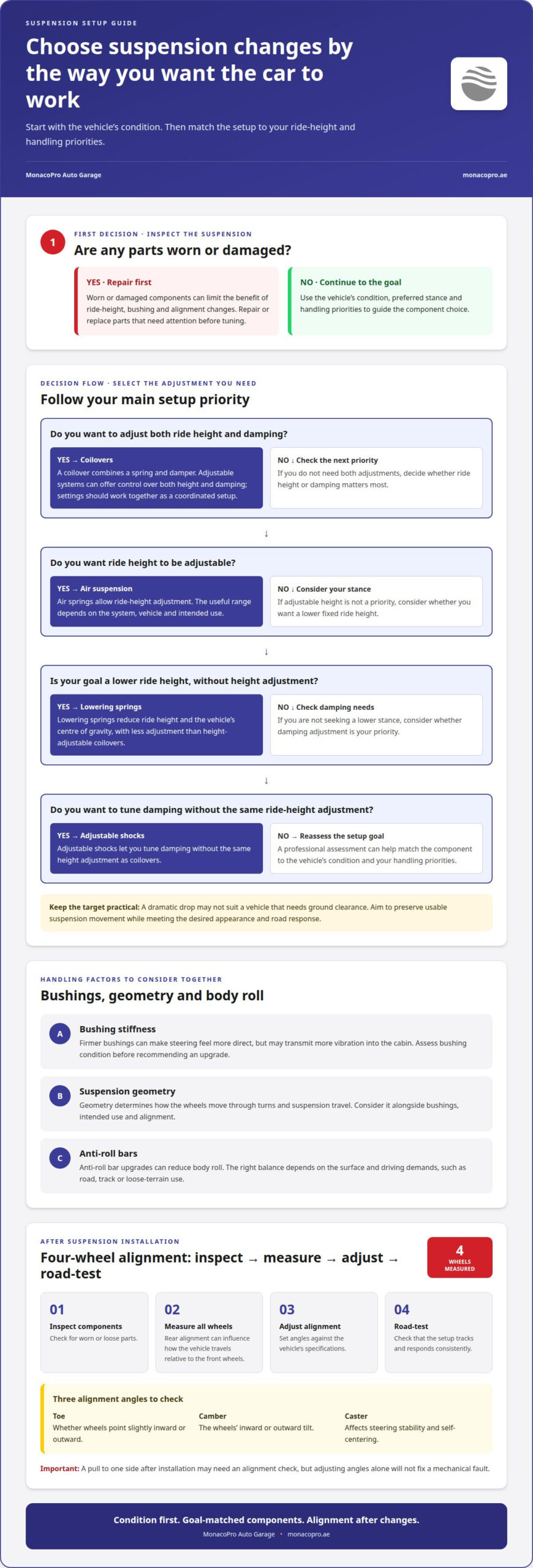
The biggest handling improvement may come from repairing worn suspension parts, not lowering the car. Effective performance suspension tuning in Dubai starts with an inspection: damaged components can undermine changes to ride height, bushings and alignment.
A lower stance can change how a car feels, but it is not automatically the best setup for every vehicle or driving need. The right changes depend on the suspension’s condition and how you want the car to respond on the road.
This guide explains which upgrades can make a noticeable difference, how ride height and handling choices work together, and why inspection, repairs and alignment belong in the same plan. You’ll also learn what suspension service involves and how a professional assessment can identify a practical next step for your vehicle.
Key Takeaways
- Match adjustable ride height and damping to the way you use the car, rather than choosing a setup for appearance alone.
- Consider bushings and suspension geometry together, since firmer components can change both steering response and ride comfort.
- Plan a four-wheel alignment after suspension changes to bring the setup into line with the vehicle’s needs.
- Start with an inspection: worn or damaged parts can limit the benefit of upgrades and may need repair or replacement first.
Air suspension and adjustable ride height
A professional considers your vehicle’s condition, preferred stance and handling priorities before recommending a suspension setup. Coilovers combine adjustable ride height and damping, while lowering springs or adjustable shocks suit different goals.
Air suspension changes ride height through air springs, allowing adjustment rather than fixing the vehicle at one height. The useful range depends on the system, vehicle and intended use. A professional considers how the selected height affects suspension movement and whether the setup suits your everyday driving needs.
Coilover System Options
A coilover kit combines a spring and damper in one assembly. Adjustable systems can offer control over ride height and damping, so each adjustment needs to be assessed separately. Changing height alters the vehicle’s stance; changing damping affects how firmly the suspension controls movement. The right choice balances both aims instead of treating every available adjustment as necessary.
During an assessment, the professional considers the suspension’s condition and your preferred handling feel. Coilovers may suit drivers who want to adjust both height and damping. The settings should work together as a coordinated setup, not as isolated changes.
Ride-Height Adjustment
Ride-height adjustment determines how high the vehicle sits and changes the suspension’s working position. Lowering springs reduce ride height and the vehicle’s centre of gravity, but offer less adjustment than height-adjustable coilovers. Air suspension provides adjustable height through air springs. Each option should be considered in light of the vehicle’s intended use and suspension condition.
The professional first establishes your preferred stance, then evaluates whether the selected components can support it. A dramatic drop may not suit a vehicle that needs practical ground clearance. The target should preserve usable suspension movement while delivering the desired appearance and road response.
Choosing a Suspension Setup
How can a professional help you choose between coilovers, lowering springs and adjustable shocks? They assess your vehicle, desired ride height, handling priorities and need for adjustment. Coilovers suit drivers seeking height and damping control; lowering springs reduce ride height, while adjustable shocks let you tune damping without the same height adjustment.
For example, a driver focused on a lower stance may consider springs, while someone seeking control over both height and damping may consider coilovers. Firmer dampers can provide more control, but the overall setup still needs to suit the vehicle. The decision is not simply about which part offers the most adjustment; it is about matching the component to your goal and the vehicle’s condition.
Bushing upgrades and suspension geometry
Bushings connect suspension components while allowing controlled movement. Their condition and stiffness affect how accurately the vehicle responds to steering, braking and uneven surfaces. Worn bushings can affect suspension performance, so a professional can assess their condition before recommending upgrades.
For a tailored setup, the professional considers how you use the vehicle, its existing suspension condition and your desired handling response. Firmer bushings can make steering feel more direct, but may also transmit more vibration into the cabin. Anti-roll bar upgrades can reduce body roll, while suspension geometry determines how the wheels move through turns and suspension travel.
How should a setup suit Dubai roads, desert driving or track use? It depends on the surface and driving demands: a road-focused vehicle needs a different balance of comfort and control from one used on track or loose terrain. Engine output alone does not determine the suspension setup.
Are suspension modifications legal in Dubai, and what RTA approvals are required? Requirements depend on the specific modification and vehicle, so there is no single approval answer for every bushing or geometry change. Establish the applicable requirements for the work before installation.
How much does suspension tuning cost in Dubai? The price depends on the case and is given after a quote request; factors include parts, labour, vehicle condition and any related repairs. Turnaround also depends on the work scope, parts and whether inspection identifies repairs that should come first.
Dubai’s heat and varied road surfaces make the component material, condition and intended use relevant to the setup. A professional considers those factors alongside alignment and wheel movement rather than choosing parts based on stiffness alone.
Warranty terms depend on the parts and work included. Aftercare should address the installed components and any follow-up inspection needed to assess handling or unusual noise. Brake upgrades should also be considered as part of the vehicle’s overall performance plan, not as a substitute for correcting suspension wear.
For a suspension assessment that considers bushings and geometry together, explore professional suspension care.
Four-wheel alignment after installation
After suspension installation, a professional inspects the components, measures all four wheels, adjusts alignment and road-tests the vehicle. This sequence helps ensure the setup tracks correctly and responds consistently.
Ride-height changes can alter wheel angles, so the previous alignment may no longer suit the vehicle. A technician checks toe, camber and caster against the vehicle’s specifications. Toe describes whether wheels point slightly inward or outward; camber is their inward or outward tilt. Caster affects steering stability and self-centering. Correct settings depend on the vehicle and its suspension configuration.
Four-wheel measurement matters because rear alignment can influence how the vehicle travels relative to the front wheels. For example, a car that pulls to one side after coilover installation may need an alignment check, but the technician should also inspect for worn or loose components. Adjusting angles alone will not fix a mechanical fault.
Once alignment is set, a road test helps assess steering response, tracking and unusual vibration. If the vehicle still pulls or the steering wheel sits off-centre, the professional reviews the measurements and checks the suspension installation. This test connects workshop adjustments with how the car behaves on the road.
For a well-planned setup, treat alignment as part of the installation, not an optional finishing touch. The professional considers the intended ride height and use, then selects settings that suit those priorities within the vehicle’s specifications. A track-focused setup may call for different handling characteristics from a comfort-focused road car, so one setting will not suit every driver.
Aftermarket components can also affect what adjustments are available. The technician identifies the installed parts, confirms that fasteners and mounting points are secure, and then completes alignment. A wheel alignment and balancing service can address alignment needs after suspension work. The final road test provides a useful check that the vehicle’s steering and tracking feel consistent after adjustment.
Suspension inspection, repair and replacement
Suspension tuning should begin with an inspection, not an assumption that firmer parts will solve every handling concern. An automotive technician checks dampers, springs, control arms, bushings, joints and mounting points for leaks, damage, looseness or uneven wear. For example, a leaking damper needs attention before a new setup can be assessed fairly.
The inspection also connects symptoms with possible causes. A knock over a road imperfection can prompt checks of links, joints and mounts; uneven tyre wear can point to alignment issues or worn components. The technician considers when the noise occurs, how the vehicle steers and whether its ride height looks consistent. These observations help distinguish a repair need from a tuning preference.
Repair is the practical next step when a component is damaged or worn. Replacement may be appropriate when a part can no longer function as intended, while tuning adjusts the behaviour of serviceable components. If a vehicle feels unsettled because a damper has lost control, changing spring rates without addressing the fault can leave the underlying issue unresolved.
After repairs or replacement, the professional reviews the complete setup. They confirm the parts fit the vehicle, inspect fasteners and mounting points, then assess whether alignment is needed. A tyre worn on one shoulder, for example, deserves attention alongside suspension checks rather than an isolated adjustment. This sequence connects the original symptom with the finished work.
Ask for a clear explanation of the findings, the affected components and why each proposed repair supports the handling goal. That gives you a basis to decide whether to restore the current suspension first or proceed with upgrades. For a professional assessment, arrange a suspension inspection before choosing new components.
MonacoPro Auto Garage: Suspension Service
MonacoPro Auto Garage provides suspension service in Dubai for drivers who need an assessment, repair or help addressing a change in handling. If your vehicle pulls, knocks over uneven surfaces or feels unsettled, a suspension inspection can help identify whether worn or damaged components need attention before further tuning.
Describe the symptoms and explain how you want the vehicle to feel. That context helps focus the assessment on the suspension concern and relevant repairs. After suspension work, wheel alignment can help ensure the wheels are set appropriately for the revised setup.
By addressing the condition of the suspension before choosing changes, you can make a more informed decision about the work your vehicle needs. Contact MonacoPro Auto Garage to discuss your suspension service.
Set a Clear Direction for Your Next Drive
Choose a handling goal before committing to further changes. Decide whether you want a more composed daily drive, a lower stance or sharper responses, and mention any noises or steering concerns during your assessment. That gives the suspension specialist a practical starting point and keeps the next decision focused on your vehicle. Thoughtful performance suspension tuning in Dubai begins with knowing what you want to improve, not simply adding parts.
Suspension work is part of the wider picture of vehicle care. MonacoPro Auto Garage also offers battery replacement, oil changes and car computer diagnostics alongside suspension service. Keeping related maintenance needs in view helps you plan care around the vehicle instead of treating each concern in isolation.
Take the next step by sharing your handling priorities and arranging a discussion about suspension service. Contact MonacoPro Auto Garage to get started. With a clear goal and a professional assessment, you can move toward a setup that feels better suited to your drive.
Frequently Asked Questions
What gives the biggest improvement?
Repairing a worn or damaged part often makes the clearest difference when it is causing the handling problem. For example, replacing a leaking damper may address poor body control more effectively than adding stiffer components. If the suspension is in sound condition, the best change depends on your goal, such as reducing body roll or adjusting ride height.
Will lowering affect ride quality?
Lowering can make the ride firmer, especially if the selected springs and dampers are not matched to the vehicle. Reduced ground clearance can also make steep ramps and speed humps more challenging. For a daily-driven car in Dubai, consider comfort and the routes you regularly use alongside stance. A professional can assess whether the components suit those priorities.
What performance suspension tuning services are available in Dubai?
The right work depends on the vehicle’s needs. MonacoPro Auto Garage provides suspension service for suspension concerns, as well as wheel alignment and balancing for related wheel setup needs. These services may be relevant after a handling change or when the vehicle shows symptoms such as uneven tyre wear. An assessment helps identify what work fits the issue.
Which Dubai workshops specialize in performance suspension tuning?
MonacoPro Auto Garage provides suspension service in Dubai, with wheel alignment and balancing also available. The workshop is in Umm Ramool, offering local support for drivers with suspension concerns. Describe the handling change or noise you have noticed so the team can understand what assessment is relevant to your vehicle.
How can I tell whether my car needs suspension tuning or replacement?
Unusual knocking, fluid leaking from a damper, uneven ride height or a change in steering can signal a component problem. Tuning adjusts a functioning setup to meet a handling goal; replacement addresses a part that is damaged or no longer working properly. An inspection helps distinguish between those needs before parts are selected.
What are the risks of lowering or stiffening a car’s suspension?
A lower or stiffer setup can reduce ride comfort and ground clearance, and may not suit your regular roads. Poorly matched components can also create an unbalanced feel or leave handling concerns unresolved. For instance, a car that scrapes on a ramp may need a different ride-height choice. Match modifications to the vehicle’s condition and everyday use.