
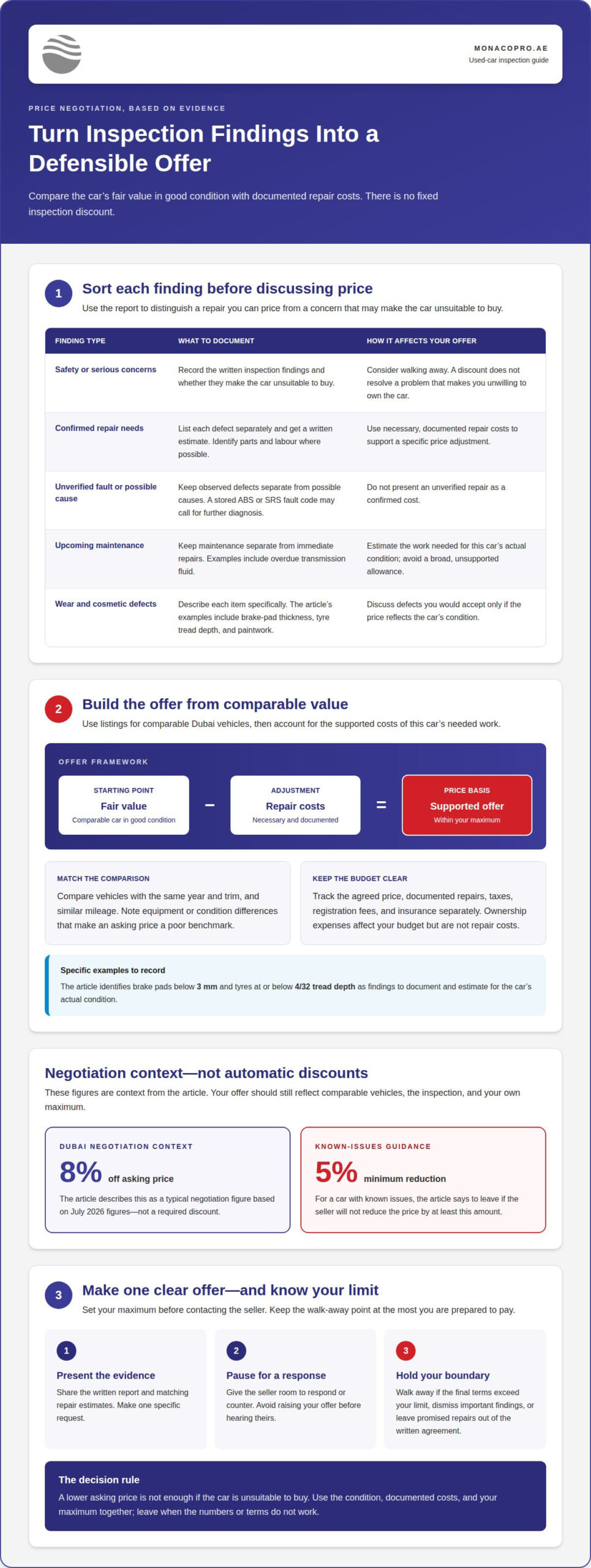
There’s no fixed percentage to deduct after a used car inspection. To understand how to negotiate a used car price after an inspection, compare the car with similar vehicles in Dubai, then subtract the documented cost of the repairs it needs from its fair market value in good condition. Use the inspection findings as evidence, not as a reason to make an arbitrary low offer.
It’s reasonable to want a clear basis for your offer, especially when the report identifies work you may need to pay for after purchase. This guide explains how to sort findings by urgency, use repair estimates to set your maximum offer, and present it calmly. You’ll also learn how to respond if the seller would rather arrange repairs or won’t adjust the price. The aim is a practical decision based on the car’s condition and likely costs, so you can negotiate with confidence or walk away when the numbers don’t add up.
Key Takeaways
- Separate urgent safety concerns from upcoming maintenance and cosmetic defects to judge whether the car is worth pursuing.
- Use written repair estimates to support a clear offer, rather than relying on a general request for a lower price.
- Use vehicle history alongside inspection findings to explain how past damage or repairs affect your offer.
- Decide your limit before negotiating, and be ready to walk away if the seller’s terms don’t reflect the car’s condition.
Negotiate Used Car Price with an Inspection Report
Use the inspection report to distinguish negotiable defects from reasons to reject the car. In Dubai, base your offer on documented findings, comparable vehicles, and a firm walk-away price.
-
Identify Findings That May Warrant Walking Away
First, identify findings that affect safety or make the car unsuitable to buy. Serious concerns about the vehicle’s condition may be grounds to leave the deal, rather than negotiate a discount. Separate those concerns from defects you would accept if the price reflected them.
If the inspection indicates that the car isn’t worth buying, don’t let a seller’s discount distract you from that conclusion. Use the written findings to explain your decision calmly. A lower asking price won’t resolve a problem that makes you unwilling to own the vehicle.
-
Set an Opening Offer and Maximum Price
Set your maximum before contacting the seller. Start with the fair market value of a comparable car in good condition, then account for documented repairs. You can open below that limit to leave room for a counteroffer, while keeping your figure grounded in evidence. Compare vehicles with the same year, trim, and mileage.
In Dubai, buyers typically negotiate about 8% off a used car’s asking price, based on July 2026 figures. Treat that as context, not a required discount; condition and repair needs should shape your offer. Keep your walk-away point at the maximum you’re prepared to pay, not the seller’s preferred figure.
-
Use Silence and a Willingness to Walk Away
Make one clear offer and support it with the written inspection findings. Then pause. Give the seller room to respond or counter, and avoid raising your offer before hearing theirs.
If the seller rejects your offer, ask whether they’ll lower the price or address the documented issues. Keep your maximum in mind. The seller’s urgency or confidence doesn’t change the inspection report, so don’t accept terms that exceed your limit.
-
Decide When to Walk Away
Walk away when the inspection indicates the car isn’t worth buying, or when the seller won’t offer fair terms for known issues. In Dubai, the guidance for a car with known issues is to leave if the seller won’t reduce the price by at least 5%. Consider the report and your maximum together.
End the discussion politely if the seller’s final position exceeds your limit or dismisses important findings. You can also walk away if promised repairs aren’t included in the written agreement. Another car may fit your budget better than a deal that fails your criteria.
Turning inspection findings into documented repair costs
There’s no fixed reduction for inspection findings. Base your adjustment on documented repair needs, then subtract those costs from the fair value of a comparable car in good condition.
-
Document Identified Defects
Turn each inspection finding into a written item that describes its location, condition, and likely repair. For example, record brake-pad thickness separately from tyre tread depth instead of writing “brakes and tyres need attention.” Specific details give you and the seller a shared basis for discussing the car.
Keep photos with the inspection report, and distinguish observed defects from possible causes. A stored ABS or SRS fault code, for example, supports a request for further diagnosis but doesn’t establish the repair required. Don’t present an unverified repair as a confirmed cost.
-
Estimate Repair and Maintenance Costs
Request a written estimate for each confirmed repair, with parts and labour identified where possible. Match each estimate to the report: worn suspension bushings, a leaking gasket, and overdue transmission fluid are separate jobs, not one general “maintenance” allowance.
Separate immediate repairs from upcoming maintenance. Brake pads below 3 mm or tyres at or below 4/32 tread depth are specific findings to document; estimate the work needed for this car’s actual condition. Don’t treat a broad estimate as a final bill or add repairs the inspection didn’t identify.
-
Set a Budget for Additional Costs
Before buying, list the agreed purchase price, documented repairs, taxes, registration fees, and insurance. These costs affect your total budget even if the seller accepts a lower price. Keep repair estimates separate from ownership expenses to see which costs support your offer.
For example, if a report identifies an immediate repair and upcoming maintenance, record them as separate budget lines. Buyers can then decide whether the combined cost fits their limit. Leave no promised repair outside the written agreement with the dealer or seller.
-
Assess the Price Reduction From Inspection Findings
Calculate the adjustment using written estimates: subtract necessary, documented repair costs from the fair value of a comparable car in good condition. The amount inspection findings should reduce the price is therefore based on the supported cost of needed work, not a universal percentage.
Present the report and estimates together, then make one clear request. For a more complete record of vehicle condition before purchase, a pre-purchase inspection can help identify findings to discuss.
How much below asking price should I offer on a used car?
In Dubai, start with comparable listings and the vehicle’s documented history, not a fixed discount. The asking price is a starting point; your offer should reflect evidence about this specific car.
-
Support an Offer With Vehicle History and Listings
Compare the vehicle with Dubai listings for the same year and trim and similar mileage. Differences in equipment or condition can make an asking price a poor benchmark, so note the details that explain each comparison.
Use the vehicle history report alongside the inspection. Documented accident history, mechanical condition, tyre wear, and paintwork can strengthen your reasoning. In Dubai, a used car with a minor accident history sells for about 9% less than a comparable car with a clean history, based on July 2026 figures. Treat that as context, not an automatic deduction.
-
Make an Opening Offer Below Market Value
Choose an opening figure below your assessed market value, while keeping it close enough to support a serious discussion. Dubai buyer guidance suggests starting about 12-13% below the asking price. Use this as a negotiation starting point, not a rule; the vehicle’s condition and comparable listings should influence your figure.
Before making an offer, decide the highest amount you’re willing to pay. A clear limit helps you respond to a counteroffer without changing your position impulsively. Keep your opening figure and maximum separate in your notes.
-
Base a Clear Offer on Documented Issues
Put your offer in writing and link it to specific evidence. For example, identify documented paintwork or tyre wear, then explain how it affects your valuation compared with similar listings. Avoid asking for a round-number reduction without a reason the seller can assess.
Present one figure alongside the relevant history and inspection evidence. If the seller counters, compare the amount with your prepared limit and the vehicle’s condition. This keeps the discussion focused on the car, not an unsupported percentage.
Negotiating after a pre-purchase inspection
After the inspection, negotiate from the report, not assumptions. Tell a private seller which findings affect your offer, what adjustment you propose, and why.
-
Prepare to Negotiate After the Inspection
Organize the inspection report into specific points before discussing the purchase. In Dubai, use written findings about accident history, mechanical condition, tyre wear, and paintwork to explain why you’re changing the asking price.
Match each concern to supporting evidence. For example, link a tyre-wear finding to the relevant inspection notes instead of making a broad claim about the car. Keep mileage and condition distinct: mileage helps you compare similar cars, while the inspection describes this car’s current state.
If the report identifies a repair, present its written estimate alongside the related finding. Keep the documents together so your request stays clear and focused.
-
State Your Offer to a Private Seller
“I’d like to adjust the purchase price to account for that work.” This keeps the discussion focused without criticizing the seller or treating the report as a personal judgment.
Private sellers may price closer to their bottom line, but documented findings can still support your offer. State your figure and give the seller time to consider it. If they won’t lower the price, discuss whether they’ll address the reported repairs or include agreed extras, such as accessories.
Put any accepted price, promised repair, or extra in writing before signing. If inspection findings need clearer documentation, arrange a pre-purchase vehicle inspection before finalizing your offer.
MonacoPro Auto Garage: Pre‑Purchase Inspection
MonacoPro Auto Garage provides pre-purchase inspections in Dubai to help you understand a used car’s condition before agreeing on a price. Choose an inspection when you want findings to inform your offer, support a repair-cost discussion, or help you decide whether to proceed.
A clear assessment can help distinguish issues that need attention from findings that affect the car’s value. If the report points to a specific concern, services such as car computer diagnostics or tyre replacement can address that area. The inspection gives you practical information for your negotiation, while the decision about the seller’s terms remains yours.
Contact MonacoPro Auto Garage to arrange a pre-purchase inspection.
Make Your Next Decision With Confidence
Knowing how to negotiate a used car price after inspection means entering the discussion with a clear basis for your offer and a firm limit. Decide whether the seller’s response makes the car a sensible purchase, not simply whether you can secure a discount. If the inspection raises concerns that need attention, use the findings to plan your next step.
MonacoPro Auto Garage supports vehicle care in Dubai with services such as battery replacement, oil changes, and car computer diagnostics. These services address specific maintenance and diagnostic needs, while a pre-purchase inspection can inform your decision before you commit to buying.
Contact MonacoPro Auto Garage to discuss your vehicle inspection needs. Take the next step with a clear view of the car’s condition and your priorities.
Frequently Asked Questions
Does accident history affect used car prices in Dubai?
Yes. In Dubai, a used car with a minor accident history sells for about 9% less than an otherwise comparable car with a clean history, based on July 2026 figures. Treat this as a comparison point, not a guaranteed reduction. The impact depends on the recorded damage, repair quality, and current condition. Compare vehicles with similar trim and mileage before judging the difference.
Does the trim level matter when negotiating a used car price?
Yes. Dubai figures from July 2026 indicate a base-trim used car sells about 7% less than a fully loaded version of the same model. A semi-loaded version sells about 4% less. Compare vehicles with the same trim before linking a price difference to inspection defects. Equipment affects market value independently of repairs, so another trim’s asking price may not be a fair benchmark.
How much can I negotiate off a used car in Dubai?
There’s no fixed discount for every Dubai used-car purchase. Buyers typically negotiate about 8% off the asking price, while the top quarter of negotiators get close to 13%, based on July 2026 figures. These figures describe market outcomes, not a guaranteed discount. Use comparable listings to establish a baseline, then support your specific offer with the car’s condition and inspection evidence.
Should I ask the seller to fix the problems or reduce the price?
Either option can work, depending on the defect and your preference. A price reduction lets you arrange the work yourself; seller-performed repairs may suit you if the scope and completion are clearly agreed. Before signing, put the chosen solution in writing, including which problems will be repaired or how the price will change. Don’t rely on verbal promises.
What if the seller refuses to negotiate after the inspection?
Keep your prepared maximum in mind and decide whether the car still makes sense at the seller’s price. If the findings make the vehicle unsuitable, or the seller’s terms leave you uncomfortable with its condition, walk away. Explain your position briefly and politely. A refusal to lower the price doesn’t mean you must accept a deal that no longer fits your criteria.
How do I negotiate a used car price after a mechanic’s inspection?
Use the inspection report to make a focused offer: identify the finding, show its repair estimate, and state the price you’re prepared to pay. For example, link a documented tyre defect to the estimate for replacement tyres instead of asking for an unexplained discount. Keep your evidence and offer together in writing, then assess the seller’s response against your budget and the vehicle’s condition.