
The better finish isn’t always the better protection. For drivers comparing ceramic coating vs polishing in Dubai, polishing reduces surface defects such as swirl marks and minor scratches, while ceramic coating adds a protective layer over the clear coat. A coating won’t correct existing paint damage, so visible defects are usually addressed before protection is applied.
Both services can improve a car’s appearance, especially under Dubai’s strong sun, heat and dusty conditions. The difference is what happens after the shine: polishing refreshes the paint but doesn’t provide ongoing protection on its own, while ceramic coating is designed to help protect the finish and make routine care easier.
This guide explains how each process works, what each can and can’t do, and how both compare with paint protection film for stone-chip protection. You’ll also find a practical decision guide based on your car’s paint condition, driving habits and maintenance preferences, so you can choose a finish that suits your priorities.
Key Takeaways
- Polishing can improve paint clarity by correcting surface defects, but it doesn’t provide ongoing protection on its own.
- Ceramic coating adds a protective layer over the clear coat; it won’t repair scratches or other damage already in the paint.
- For stone-chip protection, paint protection film serves a different purpose from either polishing or ceramic coating.
- Dubai’s heat, sun and dust make regular, careful washing important for maintaining your car’s finish.
- Choose based on your paint’s current condition, how you use the car and the level of upkeep you prefer.
PPF VS CERAMIC COATING VS POLISHING: WHAT REALLY PROTECTS THE VALUE OF EUROPEAN CARS IN DUBAI?
For a European car in Dubai, polishing refreshes the paint, ceramic coating adds surface protection, and PPF helps guard against stone chips. Ceramic-coating warranty duration, coverage and maintenance conditions vary by detailing shop.
Ceramic Coating Durability
Ceramic coating forms a thin layer over the clear coat, adding resistance to water, UV exposure, chemicals, and everyday grime. In Dubai, a typical coating lasts 2-3 years, while professional applications can vary with product, preparation, and care. It enhances the finish, but it won’t remove existing scratches or stop stone chips.
Follow the curing and washing instructions carefully. Initial curing takes around 24-48 hours, and the recommended guidance is to avoid washing for the first 7 days. After that, regular gentle washing helps preserve the coating’s water-repellent performance. Bird droppings, sap, and road grime should be removed promptly because prolonged contact can affect the finish.
UAE Service Costs and Product Durability
In Dubai, coating costs depend on the product, vehicle size, paint condition and preparation required. Paint correction may be needed before application, adding work when the exterior has visible swirls or scratches. Compare the preparation and aftercare included, not just the coating label: a coating can’t conceal defects sealed beneath it.
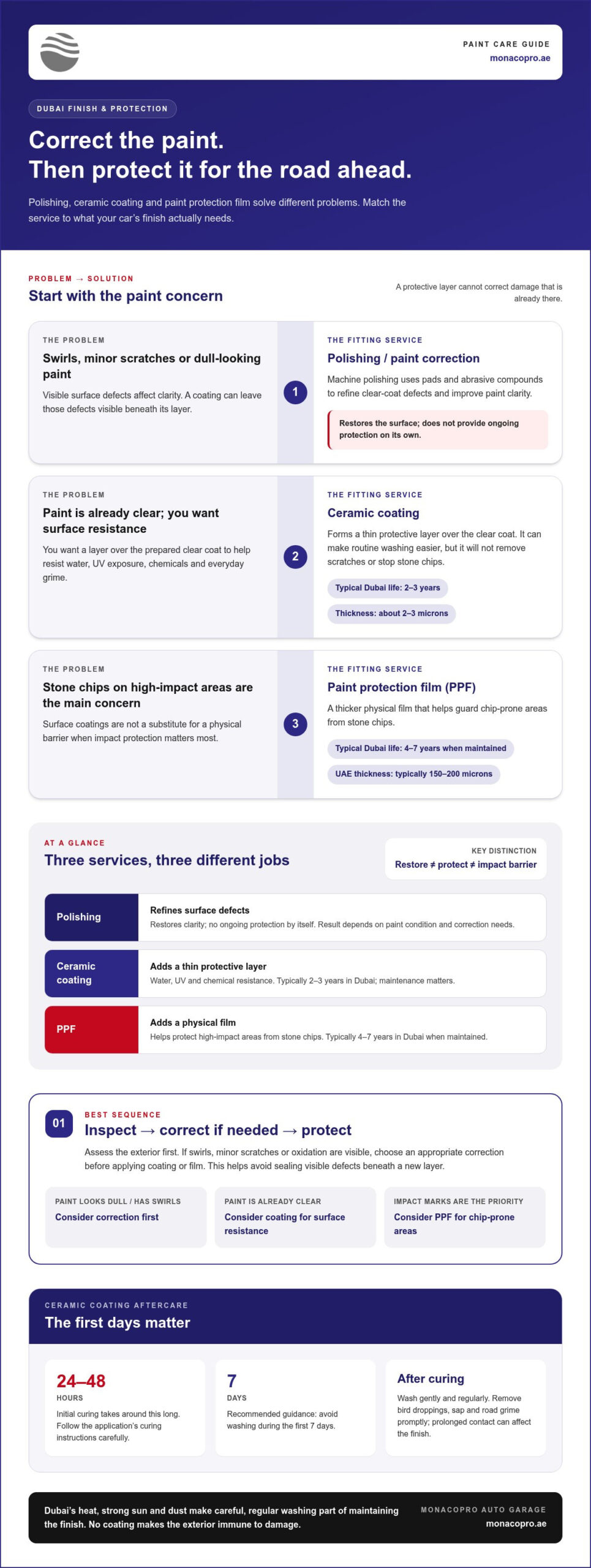
PPF is a thicker physical film, typically 150-200 microns in the UAE, compared with ceramic coating at about 2-3 microns. Well-maintained PPF can last 4-7 years in Dubai, while ceramic coating commonly lasts 2-3 years there. Polishing has no comparable protection lifespan because it corrects paint rather than forming a durable protective layer.
| Option | Main purpose | Protection focus | Durability consideration |
|---|---|---|---|
| Polishing | Refines surface defects | Restores clarity, no ongoing protection by itself | Result depends on paint condition and correction needs |
| Ceramic coating | Adds a thin protective layer | Water, UV, and chemical resistance | Typically 2-3 years in Dubai; maintenance matters |
| PPF | Applies a physical film | Helps protect high-impact areas from stone chips | Typically 4-7 years in Dubai when maintained |
Dubai’s heat, dust and strong sun make maintenance part of the protection plan. A coating can make washing easier, but it doesn’t make the exterior immune to damage. Sand can still mark paint, and a coating isn’t a substitute for film when stone-chip resistance is the priority. On a European car, consider which panels face the most road debris and whether the paint needs correction first.
Choose polishing for visible defects, coating for ongoing surface resistance, and PPF for chip-prone areas. If you want a cleaner finish and added resistance, coating may suit your needs; if preventing impact marks matters most, PPF is the more relevant option.
Polishing and paint correction as restoration rather than protection
Polishing and ceramic coating serve different purposes. Polishing uses a machine and abrasive compounds to refine clear-coat defects, while ceramic coating adds a protective layer over the finish. For example, polishing can reduce visible swirl marks; coating helps protect the prepared surface but doesn’t restore damaged paint.
Ceramic coating doesn’t remove scratches. It is applied after preparation, so existing defects may remain visible beneath the coating. A scratch that catches the eye needs assessment before a protection layer is applied, because coating over a defect won’t correct it.
Paint correction is a measured restoration process, not simply a gloss treatment. A suitable sequence includes inspecting the exterior, identifying swirls, minor scratches or oxidation, then selecting the polishing approach. Machine polishing uses pads and abrasive compounds to remove a fine layer of clear coat, refining the surface and improving clarity. The amount of correction depends on the defect and paint condition.
Preparation matters before applying ceramic coating or paint protection film. Correcting visible defects first prevents them from being sealed beneath a new layer. A typical detailing plan may include paint decontamination followed by machine polishing, with the correction tailored to the vehicle. A coating-only approach suits paint that already looks clean and even; correction adds restorative work when defects are visible.
The three methods work differently on a European car’s exterior. Polishing reduces surface imperfections. Ceramic coating adds a thin layer that supports water and chemical resistance, but doesn’t provide the physical impact protection of film. PPF forms a thicker barrier, making it the relevant option for paint exposed to stone chips. Each addresses a different concern, so combining methods can make sense when the paint needs both correction and protection.
For resale, presentation matters, but no finish guarantees a higher sale value. Owners expecting to sell within the next couple of years may find a targeted paint refresh worthwhile, especially when swirl marks or fading affect the car’s appearance. Deep damage needs a different assessment from light surface defects; polishing removes clear coat, so correction should match the paint’s condition rather than aim for maximum shine.
A practical decision starts with the paint. If the finish looks dull or shows swirls, consider correction first. If the paint is already clear and the goal is ongoing surface protection, coating may be the next step. If stone-chip exposure is the priority, consider PPF. A paint polishing service can be a relevant step when the goal is refreshing the finish rather than adding a protective barrier.
Protection against Dubai UV exposure, heat, sand, and road debris
Dubai’s climate exposes paint to intense sun, high temperatures, airborne sand and road debris. A ceramic coating helps resist UV exposure and chemicals, while its hydrophobic surface encourages water to bead. It doesn’t create a hard shield against impacts. Polishing alone offers no lasting environmental protection unless wax or sealant follows.
What are the risks of polishing car paint too often? Machine polishing removes a fine layer of clear coat, so repeated correction gradually reduces the paint available for future work. Use it to address visible defects, not as a routine substitute for washing or protective care.
Heat makes prompt cleaning especially useful. In Dubai, bird droppings can etch a ceramic coating within 30 to 60 minutes when panel temperatures reach 45°C. Remove droppings, sap, and road tar promptly rather than letting them sit on the exterior. Summer temperatures can exceed 45°C, so a parked car’s paint may face intense heat.
UV exposure also affects the choice of finish. Dubai’s UV index is described as 8 to 11 for nine months of the year. Ceramic coating can resist UV rays, but it doesn’t prevent every mark or replace careful washing. Use clean wash media and avoid rubbing dry sand across the paint, which can create swirl marks.
- New car: Preserve the existing finish with coating, or use PPF on areas exposed to flying stones.
- Daily-driven car: Match protection to parking and route conditions; PPF is the relevant choice for impact-prone panels.
- Used car: Correct visible scratches or swirl marks before applying coating or film, so defects aren’t sealed underneath.
PPF is the only one of these three methods that protects paint against stone chips. It’s often fitted to the front bumper, hood, side mirrors and doors, where road debris can strike. Modern PPF can also have self-healing properties, allowing minor scratches to disappear with sunlight or warm water. Ceramic coating supports surface resistance; it isn’t a substitute for physical film.
Humidity adds a practical after-washing consideration: dry panels and crevices rather than leaving droplets to evaporate. This helps reduce water marks on a luxury car’s finish. On a polished surface without added wax or sealant, remember that the refreshed appearance is temporary, not ongoing protection.
Choose based on the paint’s condition and its main exposure: polishing refreshes, coating helps resist environmental contamination, and PPF addresses impacts. For example, a daily-driven European car exposed to highway debris may need film on vulnerable panels, while a garaged car may prioritise a clean finish and easier washing.
Maintenance and choosing a specialist
Coating durability depends on more than the application itself. In Dubai, regular washing and prompt removal of contaminants help keep the surface clean. Bird droppings, tree sap and road tar can stain paint or reduce coating effectiveness if left in contact. Remove them promptly rather than scrubbing dry debris across the finish.
During the initial curing period, follow the coating’s care instructions. Initial curing takes around 24-48 hours, and the recommended guidance is to avoid washing for the first 7 days. These are separate milestones: curing begins after application, while the first wash should wait until the stated period has passed.
Washing technique matters, too. Use pH-neutral shampoo and avoid harsh chemicals that can affect ceramic coatings or paint protection film. Hand washing is preferable to automatic car washes, whose high-pressure brushes and strong detergents can harm protective surfaces. Dry the car carefully so remaining water and dirt don’t leave marks.
A simple care routine can support protection between professional inspections:
- Remove bird droppings, sap, and road tar promptly.
- Wash with pH-neutral shampoo instead of harsh chemicals.
- Use a SiO2 maintenance spray every two to three months to replenish the coating’s hydrophobic top layer.
- Arrange an annual inspection for a car with ceramic coating or paint protection film.
The SiO2 spray supports the coating’s top layer; it doesn’t repair paint defects or replace washing. An annual inspection can help identify changes in water behavior, surface condition, or film edges. Those checks are useful for distinguishing normal dirt buildup from wear that may need attention.
When comparing detailing specialists, focus on the work process as well as the product. Proper paint preparation matters: correcting defects before coating helps avoid sealing them beneath the protective layer. High-quality materials and clear warranty terms for ceramic applications are also useful selection criteria. Read the stated coverage and maintenance conditions to understand what the warranty addresses.
Plan the appointment around preparation and curing, not just the time spent applying a product. Paint correction can add work when the exterior has swirl marks or oxidation, while a coating also needs its initial curing period. A vehicle that needs polishing before protection therefore follows a different process from one with paint ready for coating.
For PPF, care also means checking the film’s visible condition and keeping its surface clean. Avoid harsh chemicals and abrasive automatic brushes, which can damage paint protection film. Whether the car has coating or film, consistent washing and annual inspection help you monitor durability without treating either finish as maintenance-free.
Choosing between polishing and ceramic coating in Dubai
Start with the vehicle’s paint condition, then decide what you want the finish to do. For drivers comparing ceramic coating vs polishing in Dubai, the key question is whether the paint needs restoration or protection. Polishing addresses visible surface defects; ceramic coating protects prepared paint and can make routine cleaning easier. Neither replaces paint protection film when stone chips are the main concern.
Inspect the paint in good light before choosing a service. Swirl marks, dullness or light scratches may point to polishing or paint correction. A coating won’t remove these defects, so applying it first can leave them visible beneath the layer. If the clear coat already looks even, polishing may add little value.
Next, consider how the vehicle is used. A car parked outdoors and driven regularly faces different exposure from one kept in covered parking. A coating can help resist UV rays, chemicals and grime, while its hydrophobic surface can make washing easier. The benefit depends partly on maintaining the finish, so consider the care routine you can realistically follow.
Polishing is the more direct choice when appearance is the priority. It can refresh paint and reduce surface-level defects, but it removes a fine layer of clear coat and doesn’t provide ongoing protection by itself. Repeated correction shouldn’t become a default cleaning step. Choose it to address visible paint concerns, with the process matched to the car’s condition.
Protection needs also vary with driving exposure. Ceramic coating supports resistance to environmental contamination, but it isn’t a physical barrier against stone chips. Paint protection film is more relevant for impact-prone panels. For some vehicles, a combined approach makes sense: correct the paint, apply film to exposed areas, and use coating where easier cleaning is a priority.
Use this decision guide:
- Choose polishing when swirls, minor scratches, or dullness are the main concerns.
- Choose ceramic coating when the paint is in good condition and you want added surface protection.
- Correct first, protect second when visible defects need attention before coating or film application.
- Consider PPF when protection against stone chips is the main priority.
Ownership plans matter, too. If you expect to sell the vehicle soon, a targeted refresh may suit you better than protection intended for longer-term ownership. Drivers keeping a car for several years may place more value on a coating’s surface resistance and easier cleaning. Make your ceramic coating vs polishing in Dubai decision by considering paint condition, parking, driving exposure and upkeep.
If polishing fits your goal, explore paint polishing options to refresh your vehicle’s exterior.
MonacoPro Auto Garage: Battery Replacement
MonacoPro Auto Garage is a practical next step for drivers managing vehicle maintenance alongside paint care. Ceramic coating and polishing address the exterior, while battery replacement can help resolve battery-related starting issues. The garage also offers oil changes, car computer diagnostics and tyre replacement, so you can address these maintenance needs in one place.
Turn to MonacoPro Auto Garage when your car needs battery replacement or another of these listed maintenance services. For paint decisions, use the guide above: polishing refreshes paint, while ceramic coating adds a protective layer to prepared surfaces. Keeping those needs distinct helps you choose the right work for each concern.
Contact MonacoPro Auto Garage to discuss your vehicle’s maintenance needs.
Make your next paint-care decision with confidence
Let the condition of your car’s finish guide the next step, not the promise of a particular product. Record what you see, such as dullness, visible marks or a clear and even surface, then decide whether restoration or ongoing protection better matches your priorities. This makes the ceramic coating vs polishing in Dubai decision more practical: you’re choosing a care plan for your vehicle, not simply a glossy result.
Think ahead to how you’ll maintain that finish. Set a washing routine you can follow consistently, and base your next paint-care decision on the car’s actual condition. If other maintenance needs arise alongside exterior care, MonacoPro Auto Garage can help you plan the appropriate next step for your vehicle.
Contact MonacoPro Auto Garage to discuss your vehicle’s needs. A considered plan can make car care feel more straightforward, so you can move forward with confidence.
Frequently Asked Questions
Which Should You Choose in Dubai’s Climate?
Choose polishing when the paint needs a visual refresh, and coating when you want added protection for prepared paint. For ceramic coating vs polishing in Dubai, consider the car’s current finish, where it’s parked and how often you drive. For example, a vehicle with visible swirls may need correction first, while a well-kept car may be ready for a protective layer. Stone-chip concerns call for a different solution.
Can I wash the car afterwards?
Yes, but wait 7 days before washing after ceramic coating. During that time, avoid getting the vehicle wet and follow the application care instructions. Once the waiting period has passed, wash gently with pH-neutral shampoo and clean wash materials. For example, rinse loose dust away before washing rather than wiping a dusty panel, which can leave marks. Avoid harsh chemicals and automatic brushes.
How long does it take?
Timing depends on the vehicle’s condition and the work required. A straightforward polish differs from paint correction involving widespread defects, and coating preparation can add further steps. Initial ceramic-coating curing takes around 24-48 hours, with washing delayed for 7 days. If you’re planning around work or travel, allow for preparation and curing rather than treating application as the entire process.
How much does car polishing cost in Dubai?
The cost depends on the vehicle and the work required, and is provided after a quote request. Factors include vehicle size, paint condition, visible defects and the extent of correction. A light refresh differs from correcting deeper or widespread marks. When considering polishing, describe the finish you want improved and the defects you can see, so the scope reflects the actual paintwork.
How much does ceramic coating cost in Dubai?
The cost depends on the vehicle, coating product, paint condition and preparation required, with pricing provided after a quote request. Paint correction can add work if the surface has swirls or scratches. Ask what preparation and aftercare the quoted scope covers. This helps you compare the work involved, rather than judging a coating by its name or advertised appearance alone.
How long does ceramic coating last in Dubai’s heat and sand?
Ceramic coating typically lasts 2-3 years in Dubai, with care affecting durability. Dust and sand make washing technique especially relevant: remove loose particles before contact washing, and don’t wipe a dry, dusty panel. Promptly clear bird droppings, sap, and road tar from the finish. The coating helps resist environmental exposure, but it can’t prevent every scratch or impact mark.
How should a car be prepared before ceramic coating?
Start with a thorough wash and paint inspection, then identify swirls, scratches, oxidation and other visible defects. Correct defects before applying the coating so they aren’t left visible underneath. For example, a car with noticeable swirl marks may need machine polishing, while paint already in good condition may need less correction. A clean, properly prepared surface supports an even application.
How long must ceramic coating cure before driving or washing?
Initial curing takes around 24-48 hours, but the recommended wait before washing is 7 days. These periods serve different purposes, so don’t assume the initial cure means washing is appropriate. Follow the application care instructions during curing, and keep the finish away from water and contaminants as directed. After the waiting period, resume gentle washing with pH-neutral shampoo.