
Brake noise is a warning worth understanding, even when the car still seems to stop normally. Effective brake noise troubleshooting starts by matching the sound to its likely cause: a sharp squeal can come from a worn pad, vibration or light rotor rust, while grinding can signal severe wear and metal-on-metal contact. A pad wear indicator may squeal when the pad wears below 3 mm.
It’s understandable to hope a brief squeak will disappear on its own. Sometimes moisture-related surface rust causes noise that fades after the first stops, but persistent sounds, pulling, vibration, or reduced stopping power need prompt attention. The sound alone can’t confirm what’s wrong: pads, rotors, calipers, and brake hardware can all contribute.
This guide explains how to distinguish common brake sounds from warning signs, why lubrication and caliper slides matter, and how damaged or incorrectly fitted hardware can create noise. You’ll also learn what a professional inspection checks, so you can understand the likely cause and choose the right next step for your vehicle.
Key Takeaways
- A brief squeak can have a different cause from persistent noise; maintenance and driving habits can help reduce avoidable brake wear.
- Grinding, pulling, vibration, or reduced stopping power can signal a more serious braking problem that needs prompt attention.
- Caliper slides and pad contact points need suitable lubrication so the caliper can move and release correctly.
- Missing shims, loose clips, or damaged hardware can let brake components shift, creating noise and uneven wear.
WHAT IS BRAKE NOISE?
Brake noise comes from friction and vibration as the pads meet the rotors. The sound can help point to wear, debris, or a fitting problem.
Common Brake Sound Types
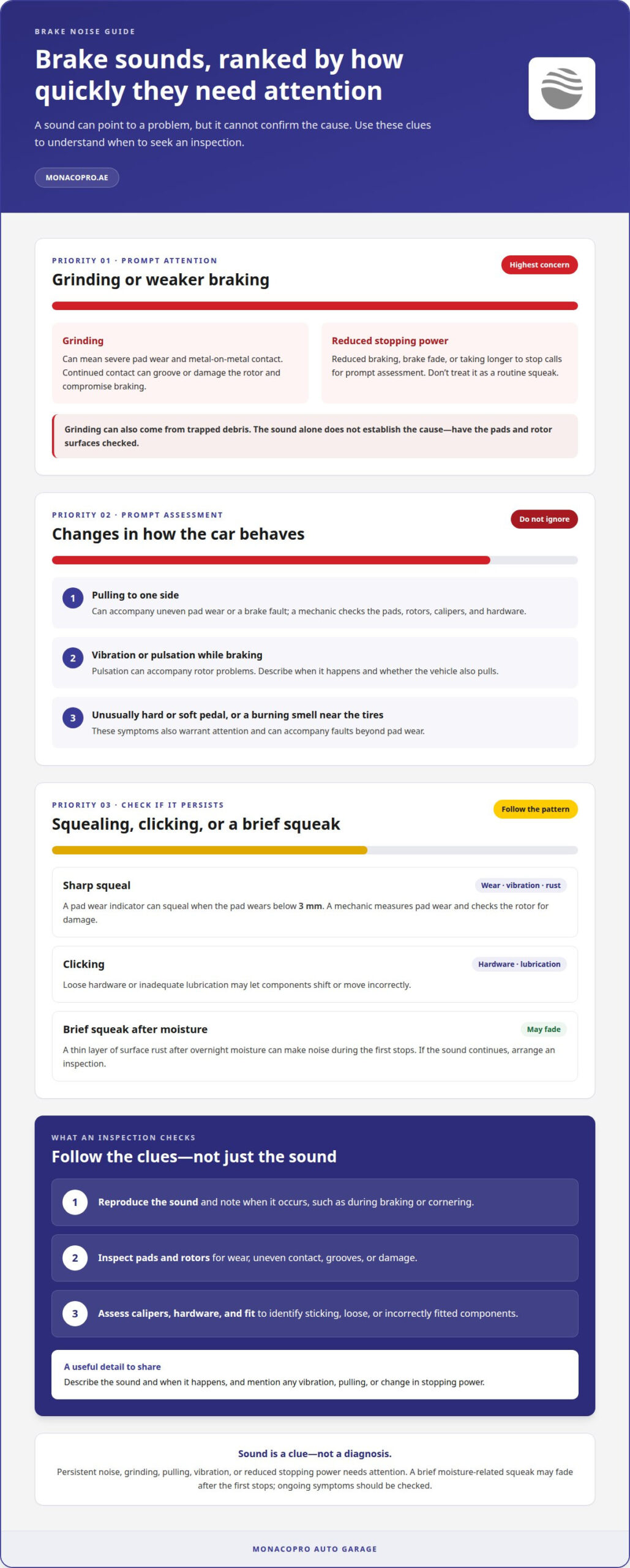
Squealing is a high-pitched sound that can point to pad wear, vibration, or surface rust. Grinding can indicate severe pad wear and metal-on-metal contact. Clicking may come from loose hardware or inadequate lubrication, while pulsation during braking can accompany rotor problems.
A mechanic troubleshoots the problem in sequence: reproduce the sound, inspect the pads and rotors, then assess the calipers, hardware, and fit. This matters because one sound can have several causes, and replacing a pad alone may not resolve the underlying issue.
Pad Wear Indicators and Squealing
A pad wear indicator is designed to make contact and produce a sharp squeal as the pad wears down, typically below 3 mm. That sound is a warning, not simply a nuisance. A mechanic measures pad wear and inspects the rotor for damage, since continuing to drive on worn pads can allow further contact and rotor damage.
Brake pads wear through friction, making them a frequent source of noise. If squealing continues beyond a brief, moisture-related episode, an inspection can distinguish a wear indicator from another cause.
Pad Material and Squeak Causes
Brake-pad friction material can vibrate against the rotor and create a squeak. Pads with high metal content or inferior materials may be more prone to noise. A mechanic checks pad condition and fit, along with the shims and caliper clips, before choosing a remedy. Correctly fitted, noise-minimizing pads can help reduce recurring squeaks.
After overnight moisture, a thin layer of rust on the rotors may cause temporary squealing during the first stops. Regular brake and wheel cleaning can remove dust or debris. Avoiding aggressive braking helps limit heat that can glaze pads and rotors. If the sound continues, a professional inspection can identify damaged parts or incorrectly fitted hardware.
Danger signs including grinding and reduced braking
Arrange an inspection promptly if you notice grinding, pulling, vibration, or reduced stopping power. Ask the mechanic to assess the pads, rotors, calipers, and hardware, then explain what is causing the sound or change in braking.
Grinding and Worn Brake Pads
Grinding can mean the brake pads are so worn that metal components contact the rotors. This contact can damage the discs and compromise braking, so grinding needs prompt attention rather than continued driving.
A mechanic checks pad wear on both sides of the axle and looks for uneven contact, rotor grooves, and caliper problems. If one side wears faster, the vehicle may pull during braking. Lubrication won’t resolve grinding caused by worn pads or damaged rotors; the underlying fault needs to be identified.
Metal-on-Metal Grinding
A harsh, low-pitched grind is a serious warning that pad material may have worn away, allowing metal to contact the rotor. Continued contact can deepen grooves and cause further damage, turning a pad-wear issue into a more extensive repair.
Grinding can also result from trapped debris, so the sound alone doesn’t establish the cause. A mechanic inspects the pads and rotor surfaces for damage, checks caliper movement, and assesses whether components need replacement. If the car takes longer to stop, don’t treat the noise as a routine squeak.
Reduced Braking and Mechanic Inspection
Reduced stopping power, brake fade, or a vehicle pulling to one side calls for prompt assessment of the braking system. An unusually hard or soft pedal, or a burning smell near the tires, also warrants attention. These symptoms can accompany faults beyond pad wear.
Ask the mechanic to inspect pad condition, rotor damage, caliper operation, and loose brake components. Describe when the noise occurs, such as during braking or cornering, and whether the car vibrates or pulls. These details help focus the inspection without assuming every sound comes from the same part.
For persistent grinding or reduced braking, arrange a professional brake inspection before the damage progresses.
Brake lubrication and caliper slides
Worn pads, damaged rotors, or a sticking caliper can all cause brake noise. A mechanic checks these parts together, then determines whether lubrication, repair, or replacement will address the cause.
Slider Pins and Brake Drag
Caliper slider pins let the caliper move as the brake pads contact and release from the rotor. If the pins are dry, poorly lubricated, or seized, the caliper may not release fully, leaving the pads dragging against the disc.
That drag can cause continuous noise and uneven pad wear. A mechanic checks the pins’ movement and condition, then cleans and re-lubricates affected pins with suitable high-temperature brake grease. Lubricant belongs on designated moving points, not on the pad friction surface or rotor.
During brake noise troubleshooting, the mechanic also checks pad wear across the axle. Tapered wear can point to sticking slides, a distorted caliper, or excessive clearance. Identifying the cause helps prevent a replacement pad from wearing unevenly again.
Sticking Guides, Pistons, and Caliper Checks
A sticking caliper guide or piston can prevent the brake from applying or releasing evenly. You may notice persistent noise, pulling during braking, or uneven wear across the pads on the same axle.
For a complete check, a mechanic inspects the caliper, piston movement, slider pins, pads, rotors, and related hardware. They also examine pad contact points for wear and confirm that components move and fit correctly. A seized pin can keep a pad against the disc, while a piston that doesn’t retract fully can cause drag and heat.
Caliper maintenance involves more than applying grease: the mechanic identifies which surfaces need lubrication and checks for damaged or seized parts. High-temperature brake grease is used on appropriate caliper slides and pad contact points. Regular inspections can reveal caliper-related uneven wear or vibration before these issues progress.
If inspection finds worn pads or a damaged rotor, lubrication alone won’t fix the problem. The mechanic determines whether the affected components need service or replacement, then checks that the caliper moves correctly as the brakes apply and release.
Damaged or improperly installed brake hardware
Damaged, loose, or incorrectly fitted brake hardware can let the pads shift and cause rattling, squealing, or vibration. A mechanic checks the pads, rotors, calipers, shims, and clips together because these symptoms can have several causes.
Repair cost depends on the cause, the parts needed, and the work involved; the price in AED is provided after a quote request. A professional identifies the fault first, then selects suitable replacement parts or repair work.
Damaged Pad Back Plates
A brake-pad back plate supports the pad, and damage can affect its fit and contact with the braking system. Incorrect assembly or excessive force during fitting can damage the plate, leading to irregular wear, noise, vibration, or judder.
A mechanic inspects the back plate alongside the pad, rotor, and caliper. If the plate is damaged, replacing the affected component can help restore a correct fit. The mechanic also checks related hardware, since a bent or loose part can allow movement even when the pad itself appears serviceable.
Component Replacement and Repair Options
Professional brake-noise repairs start with inspection, not automatic parts replacement. A mechanic examines the pads, rotors, calipers, shims, and anti-rattle clips, then checks for loose, missing, undersized, or incorrectly installed hardware. Suitable inspection and fitting tools help assess component condition and install the correct parts.
Loose or missing clips can let pads rattle inside the caliper bracket, while damaged shims can contribute to squeaking. A piston that fails to retract fully may damage anti-noise features and contribute to overheating. The mechanic replaces worn or damaged parts as needed and checks that the hardware fits and moves correctly.
After fitting replacement pads or hardware, the mechanic assesses the rotor surfaces for damage and checks for vibration or noise. Deep grooves or a warped rotor may need attention beyond clip or shim replacement. Replacing a faulty component promptly helps limit further damage to adjoining brake parts.
For a professional assessment of damaged or incorrectly fitted brake hardware, book a brake inspection.
MonacoPro Auto Garage: Disc & Brake Service
MonacoPro Auto Garage provides disc and brake service for drivers in Dubai experiencing persistent squealing, grinding, vibration, or reduced braking. A professional assessment can identify whether the cause involves worn pads, rotor damage, caliper movement, or brake hardware, so the repair addresses the underlying issue rather than just the sound.
During brake noise troubleshooting, share when the noise occurs, whether braking feels different, and whether the vehicle pulls or vibrates. These details help guide the inspection. If you notice grinding or reduced stopping power, arrange an assessment promptly instead of continuing to drive with an unresolved braking concern.
Contact MonacoPro Auto Garage to discuss your brake concerns and arrange Disc & Brake Service.
Make Your Next Drive a More Informed One
Use the inspection to get a clear picture of your vehicle’s brake condition and any work it needs. Sharing when the sound occurs and how the car feels gives the mechanic useful context, while a clear explanation of the findings helps you make an informed repair decision. Good brake noise troubleshooting should do more than quiet the drive: it should help you understand what caused the concern.
For other vehicle needs in Dubai, MonacoPro Auto Garage also offers battery replacement, oil changes, and car computer diagnostics. Considering these requirements together can help you plan maintenance around your vehicle rather than treating each concern in isolation.
Ready to discuss your vehicle’s braking concern? Contact MonacoPro Auto Garage and take the next step with confidence.
Frequently Asked Questions
What Causes Brake Problems?
Brake problems can develop through friction-related wear, damaged components, or parts that don’t move correctly. For example, a sticking caliper can cause uneven pad wear, while rotor damage can contribute to vibration. A soft or spongy pedal may point to air in the brake lines, a fluid leak, or a failing master cylinder. A mechanic considers pedal feel, noise, and vehicle behaviour together to locate the fault.
What are the most common causes of noisy brakes?
Common causes include worn pads, vibration between the pad and rotor, trapped debris, surface rust, and loose or incorrectly fitted brake hardware. The circumstances can help narrow the possibilities: noise after overnight parking may differ from a rattle that continues over uneven roads. A mechanic checks the friction surfaces and mounting hardware together because several small issues can create similar sounds.
How can I tell whether brake noise is normal or a sign of a serious problem?
Brief squeaking during the first stops after a damp night can come from light rotor rust and may fade as the brakes are used. Persistent noise, grinding, pulling, vibration, or a change in stopping performance calls for professional inspection. A squeal that continues for more than a couple of days should also be assessed, particularly if it doesn’t fade after moisture-related rust clears.
Why do brakes squeal after rain, car washing, or overnight parking?
Moisture can leave a thin layer of rust on the rotors while a vehicle is parked, including overnight or after wet conditions. Contact between the pads and that surface may cause temporary squeaking during the first stops. If the sound fades, moisture-related rust may be the cause. Noise that persists after the brakes have been used, or returns in dry conditions, calls for inspection.
Is it safe to drive with noisy brakes, and when should I stop driving?
A brief squeak without any change in braking can have a temporary cause, but grinding or reduced stopping power needs prompt attention. Stop driving if braking feels impaired, the pedal changes unexpectedly, the car pulls sharply, or a burning smell appears. Arrange professional help rather than continuing a journey with these symptoms. Persistent noise also warrants inspection before it causes further component damage.
Can brake noise be fixed at home, and what tools and parts are needed?
The material recommends professional inspection to identify the cause; it gives no home-repair tool or parts list. Regularly cleaning the brakes and wheels can remove dust or debris that may cause squeaking.