
What if the most vital safety feature in your vehicle isn’t the airbags or the collision sensors, but a column of hydraulic liquid that might be boiling under your hood right now? In the middle of a Dubai summer, road temperatures frequently hit 50°C, putting immense thermal stress on your car’s internal systems. Many drivers focus on tyre pressure or engine oil, yet they often overlook the very fluid that ensures they can stop in an emergency. A professional brake fluid change Dubai service is the only way to prevent vapor lock and maintain total control when it matters most.
It’s completely normal to feel a sense of unease when your brake pedal feels slightly spongy in heavy traffic or when you’re unsure if your car will pass the more stringent 2026 RTA safety inspections. We understand that conflicting advice on service intervals can be frustrating. This guide promises to clear that confusion, showing you how to restore maximum stopping performance and regain confidence behind the wheel. You’ll get an expert breakdown of DOT 4 versus DOT 5.1 fluids and a clear roadmap for keeping your braking system in peak condition for the year ahead.
Key Takeaways
- Understand how Dubai’s humidity and extreme heat degrade hydraulic fluid, leading to dangerous vapor lock during sudden stops.
- Learn why a complete brake fluid change Dubai service is superior to a simple top-up for maintaining long-term hydraulic health.
- Identify the critical differences between DOT 4 and DOT 5.1 fluids to ensure your vehicle uses the highest boiling point protection available.
- Recognize early warning signs like a ‘mushy’ brake pedal so you don’t ignore potential system failure.
- Discover how professional computer diagnostics at MonacoPro Auto Garage ensure your ABS and TPMS systems are fully integrated with your brake maintenance.
The Science of Stopping: Why Brake Fluid Matters in Dubai
Brake fluid acts as an incompressible hydraulic medium. When you press the brake pedal, this liquid transfers that physical force directly to the calipers to stop your car. Because liquids don’t compress under pressure, the response is immediate and firm. However, this entire system relies on the fluid maintaining its liquid state to function correctly. The Science of Stopping: Why Brake Fluid Matters involves understanding how these chemical properties change under the extreme environmental pressures found in the UAE.
In a high-traffic environment like Dubai, your brakes generate incredible friction and heat. Frequent stopping on Sheikh Zayed Road during peak hours pushes temperatures at the brake rotors well beyond what most drivers realize. If the hydraulic fluid isn’t in top condition, the entire chain of command from your foot to the wheels breaks down. This is why a regular brake fluid change Dubai service is a matter of critical safety rather than just a luxury or routine check.
Moisture Contamination: The Silent Brake Killer
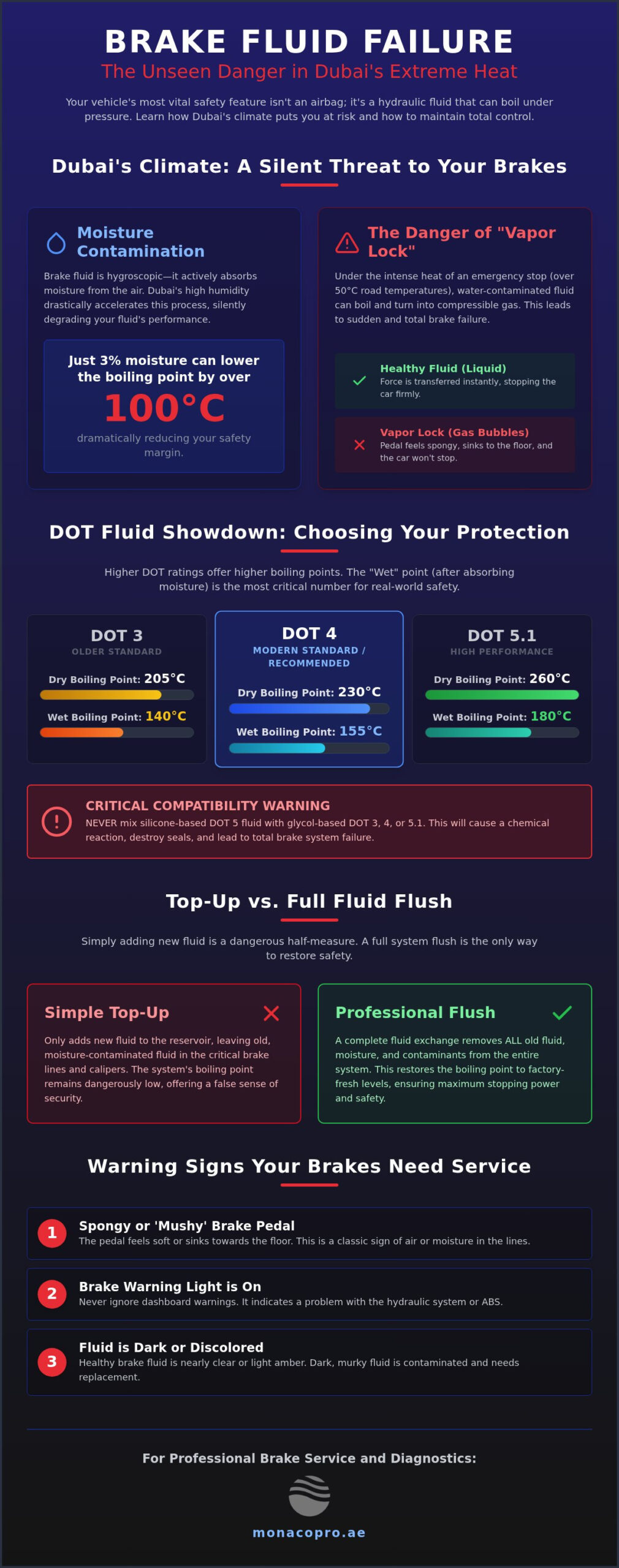
Most brake fluids are hygroscopic, meaning they actively absorb moisture from the surrounding air. While many drivers assume the braking system is completely airtight, water vapor molecules eventually permeate through rubber hoses and seals over time. Dubai’s coastal location significantly accelerates this process due to high humidity levels. Even a small amount of water causes massive problems for your stopping power. Research indicates that just 3% moisture content can lower a fluid’s boiling point by over 100 degrees Celsius, dramatically reducing your safety margin.
High-Heat Performance in the UAE Summer
During the UAE summer, ambient temperatures often hover around 45°C, but the road surface and engine bay get much hotter. This baseline heat means your brakes start at a much higher temperature before you even touch the pedal. When you perform an emergency stop from high speeds, the kinetic energy converted into heat can push degraded, water-heavy fluid past its boiling point. If this happens, your safety is at immediate risk.
Vapor lock is the conversion of liquid brake fluid into gas under extreme heat. Unlike liquid, gas is highly compressible. When vapor lock occurs, your brake pedal may sink to the floor without slowing the vehicle because you’re simply compressing air bubbles instead of moving the brake pads. Scheduling a brake fluid change Dubai ensures your system remains filled with pure, high-boiling-point liquid that can withstand the most demanding summer conditions.
Choosing the Right Fluid: DOT 3, 4, and 5.1 Compared
Selecting the correct hydraulic medium is a technical decision that directly impacts your vehicle’s safety margin in the desert heat. The Department of Transportation (DOT) rating system categorizes fluids primarily by their boiling points. For Dubai drivers, the most critical metric is the distinction between “dry” and “wet” boiling points. The dry boiling point refers to fresh fluid from a sealed container, while the wet boiling point measures performance after the fluid has absorbed 3.7% water by volume. Understanding these technical thresholds is key to recognizing the 5 Signs Your Car Needs a Brake Fluid Change, as degraded fluid loses its heat resistance rapidly.
It’s vital to note a major compatibility warning: never mix DOT 5 with any other rating. DOT 5 is silicone-based and is generally reserved for classic cars or specific military vehicles. Mixing silicone-based fluid with glycol-based versions like DOT 3, 4, or 5.1 will cause a chemical reaction that destroys brake seals and leads to total system failure. Most modern vehicles in the UAE use glycol-based systems, making compatibility between 3, 4, and 5.1 possible, though upgrading is always preferred over mixing. If you’re unsure which specification your manufacturer recommends, the expert team at MonacoPro Auto Garage can provide a precise recommendation based on your vehicle’s specific hydraulic requirements.
DOT 4: The Standard for Modern Cars in Dubai
DOT 4 is the most common requirement for modern sedans and luxury European brands found on Dubai’s roads. It offers a higher boiling point than the older DOT 3 standard, which is essential for vehicles equipped with complex ABS and traction control systems. These systems operate with rapid, high-pressure pulses that generate significant internal heat. DOT 4 provides the necessary thermal stability to ensure these safety features function correctly without the fluid thinning or boiling under pressure.
DOT 5.1: For High-Performance and Heavy Vehicles
For heavy SUVs like the Toyota Land Cruiser or high-performance sports cars frequenting the E11 highway, DOT 5.1 represents the ultimate upgrade path. Despite the numbering, DOT 5.1 is glycol-based and fully compatible with DOT 4 systems. It features a significantly higher boiling point and superior viscosity at extreme temperatures. This ensures that even when you’re driving a heavy vehicle in 45°C weather, your braking response remains sharp and consistent. It’s the ideal choice for drivers who demand maximum stopping power and minimal fluid degradation during the intense UAE summer months.
Top-Up vs. Full Brake Fluid Flush: Which Do You Need?
Many drivers notice a low reservoir level and simply add more liquid to reach the maximum line. While this might temporarily extinguish a dashboard warning light, a top-up is often a superficial fix that masks underlying issues like worn brake pads or a slow hydraulic leak. A true brake fluid change Dubai service involves a complete “Flush and Bleed” process. This technical procedure removes the entire column of old, moisture-heavy liquid from the master cylinder through to each individual wheel. By doing so, technicians eliminate internal debris and microscopic metal particles that accumulate over thousands of kilometers. This comprehensive approach is a vital part of the ultimate guide to car repair in Dubai, ensuring that your safety systems perform exactly as the manufacturer intended.
The Dangers of Old Fluid in the Calipers
The fluid in your reservoir usually looks significantly cleaner than the fluid actually doing the work at your wheels. Because the hydraulic system is static, the darkest and most contaminated liquid sits deep within the brake calipers. This is where heat is highest and where moisture causes the most aggressive damage. If you don’t perform a complete flush, this old fluid can lead to internal corrosion in expensive components like the ABS modulator. This complex unit uses tiny valves to manage braking pressure; even microscopic rust or sludge can cause these valves to stick, leading to a total failure of your anti-lock system during an emergency stop.
When a Professional Flush is Mandatory
While some owners wait for a change in pedal feel, there are specific technical triggers that make a professional flush mandatory. Technicians often use chemical test strips to detect copper levels in the fluid. High copper indicates that the anti-corrosive additives have failed, and the fluid has started attacking the internal metal lines. In Dubai’s humid coastal environment, we recommend a full flush every 2 years or 40,000km, regardless of how the pedal feels. Additionally, a full brake fluid change Dubai is necessary after any hydraulic component replacement to ensure no air pockets or contaminants remain in the circuit.
- Copper Testing: Identifies when chemical protection is depleted.
- Time-Based Maintenance: Prevents moisture buildup in humid climates.
- Post-Repair Safety: Guarantees a clean, air-free hydraulic circuit.
5 Signs Your Car Needs a Brake Fluid Change in Dubai
Recognizing the early symptoms of hydraulic degradation can prevent a routine maintenance task from turning into a dangerous safety hazard. In Dubai’s demanding driving environment, your vehicle communicates its needs through specific tactile and visual cues. If you experience any of the following five indicators, it’s time to schedule a professional brake fluid change Dubai to restore your vehicle’s mechanical integrity.
- Soft or Spongy Pedal: This is the most prevalent symptom. If the pedal feels mushy or requires more travel than usual to engage, moisture has likely infiltrated the lines and created compressible air pockets.
- Dashboard Warning Lights: A persistent brake light or ABS indicator suggests a critical drop in hydraulic pressure or a sensor error within the system.
- Increased Stopping Distance: If your car takes noticeably longer to come to a halt during highway driving, the fluid’s ability to transmit force has been compromised.
- Chemical Burning Smell: An acrid, sharp odor after heavy braking indicates the fluid is overheating and breaking down chemically under high thermal stress.
- Dark or Cloudy Fluid: Fresh fluid should be clear or light yellow. Fluid that appears dark like tea or contains cloudy sediment is heavily contaminated and needs immediate replacement.
Interpreting Dashboard Warning Lights
Your vehicle’s onboard computer monitors hydraulic pressure and electronic sensors constantly. A flickering ABS light often points toward a problem with the anti-lock system’s ability to cycle fluid during a skid. It’s vital to distinguish between the brake wear light, which usually signals thin pads, and the hydraulic warning light. Utilizing advanced car computer diagnostics is the only way to accurately pinpoint whether the fault lies in a sensor or the fluid itself. Ignoring these digital warnings can lead to system failure when you need it most.
The ‘Pumping’ Test: A Simple Self-Check
You can perform a basic assessment while your vehicle is stationary. With the engine off, pump the brake pedal several times; it should become firm and high. If the pedal slowly sinks toward the floor while you maintain steady pressure, this “pedal sink” indicates a internal leak in the master cylinder or significant air trapped in the lines. While a visual check of the reservoir provides a quick look at the fluid’s color, it only reveals about 50% of the story. Contamination often settles at the calipers, making a professional inspection essential. If your pedal feels less than perfect, you should book a specialized brake service at our Umm Ramool facility to ensure your stopping power remains absolute.
Professional Brake Service at MonacoPro Auto Garage
At MonacoPro Auto Garage, we’ve designed our facility in Umm Ramool to be a center of technical excellence. Choosing us for your brake fluid change Dubai means trusting a team that treats your vehicle’s hydraulic health as a priority. We don’t just replace fluid; we manage the entire maintenance lifecycle for all brands, from high-performance European models to reliable Japanese daily drivers. Our approach is rooted in providing a one-stop solution where technical precision meets logistical ease, ensuring your stopping power is never in question.
Our technicians integrate advanced computer diagnostics into every service to ensure your ABS and TPMS sensors are communicating perfectly with the new fluid. This level of detail is a hallmark of specialised auto care, where we use only manufacturer-aligned, high-boiling-point fluids to withstand the rigors of the E11 and city traffic. We understand that your time is valuable. We’ve optimized our workflow to be both thorough and efficient, removing the stress of maintenance through organized, professional care.
Precision Flushing and Bleeding Process
We utilize professional pressure-bleeding equipment rather than the traditional manual method. This technology ensures a completely air-free hydraulic circuit, providing that firm, immediate pedal response essential for safety. During the process, we take meticulous care to protect your car’s exterior. Because brake fluid is highly corrosive to paint, we use specialized protective covers and neutralising agents throughout the procedure. Once the flush is complete, every vehicle undergoes a rigorous road test. Our experts verify the braking balance and pedal firmness under real-world conditions to guarantee your safety before you leave our Umm Ramool hub.
Total Vehicle Care: Beyond the Brakes
Every brake service at MonacoPro includes a complimentary multi-point inspection. We examine your tyres, suspension, and battery to ensure your car is ready for the upcoming season. For drivers who want their vehicle to look as good as it performs, you can combine your mechanical maintenance with car interior restoration in Dubai or invest in professional car paint correction in Dubai to protect your vehicle’s finish from the UAE’s harsh sun and sandstorms. Many owners who prioritize their mechanical upkeep also choose to refresh worn leather and faded fabric with a car polishing service Dubai and full upholstery restoration to maintain their vehicle’s resale value and cabin comfort in the desert heat. This holistic approach saves you time and ensures your car receives comprehensive care under one roof. Our commitment to hospitality and technical mastery makes us the preferred choice for professionals who demand excellence without the stress of managing multiple service providers.
Secure Your Stopping Power for the Year Ahead
Maintaining your vehicle’s hydraulic system is a non-negotiable aspect of driving in the UAE’s unique climate. The combination of extreme summer heat and high coastal humidity makes a full system flush far more effective than a simple top-up. By selecting high-performance DOT 4 or 5.1 fluids, you ensure your car can handle the intense thermal demands of Dubai’s highways without the risk of vapor lock.
Don’t wait for a spongy pedal or a dashboard warning light to compromise your safety. A professional brake fluid change Dubai service at our Umm Ramool facility provides the precision and reliability you need to drive with total confidence. Our expert disc and brake specialists utilize advanced diagnostics to verify every component of your braking system, ensuring a firm pedal and consistent response.
Take the proactive step to protect your vehicle and your passengers today. Book Your Professional Brake Fluid Flush at MonacoPro Dubai and experience the peace of mind that comes with specialized expertise. We’re here to ensure your car remains as responsive and safe as the day it was built.
Frequently Asked Questions
How often should I change my brake fluid in Dubai?
You should generally change your brake fluid every two years or 40,000 kilometers to maintain optimal safety. In Dubai’s specific environment, high humidity levels and extreme summer temperatures cause hydraulic fluid to absorb moisture much faster than in cooler climates. This degradation lowers the boiling point and risks brake failure during heavy use. Scheduling a regular brake fluid change Dubai service ensures that your vehicle remains compliant with 2026 RTA inspection standards and provides consistent stopping power.
Can I just top up the brake fluid instead of a full flush?
Topping up is merely a temporary solution that masks underlying issues like worn pads or hydraulic leaks. A full flush is necessary because the most contaminated fluid usually sits in the brake calipers rather than the reservoir. By performing a complete system flush, our technicians remove moisture, internal debris, and metallic particles from the entire circuit. This process protects expensive components like your ABS modulator from internal corrosion and ensures the hydraulic system functions with maximum efficiency.
What is the difference between DOT 4 and DOT 5.1 brake fluid?
The primary difference lies in their chemical boiling points and viscosity under extreme temperatures. DOT 5.1 is a high-performance, glycol-based fluid that offers a significantly higher boiling point than the standard DOT 4. This makes it the ideal upgrade for heavy SUVs and performance vehicles frequently driven on Dubai’s high-speed highways. While both are compatible, DOT 5.1 maintains its consistency better when subjected to the intense thermal stress of a typical UAE summer.
Why is my brake fluid dark or black?
Dark or black fluid is a clear indicator of heavy oxidation and chemical contamination within your braking system. Over time, the anti-corrosive additives in the fluid break down, allowing moisture to react with the internal metal lines and rubber seals. This process creates a sludge that can clog sensitive valves in your ABS system. If your fluid has lost its original clear or light yellow color, it has likely reached its moisture absorption limit and requires immediate replacement.
How long does a professional brake fluid change take?
A professional brake fluid change Dubai service typically takes between 45 and 90 minutes to complete correctly. This duration allows our specialists to perform a thorough pressure-bleeding process that ensures every air bubble is removed from the hydraulic lines. We also include a comprehensive multi-point inspection and a final road test to verify pedal firmness and braking balance. Our organized workflow in Umm Ramool ensures that your vehicle is returned to you promptly without compromising on technical precision.
Will a brake fluid change fix a spongy brake pedal?
A professional flush will fix a spongy pedal if the issue is caused by air pockets or moisture contamination in the hydraulic lines. Because air is compressible and liquid is not, any vapor in the system creates that mushy feeling when you press the pedal. By replacing the old, degraded liquid with fresh, high-boiling-point fluid, we restore the firm and immediate response necessary for safe driving. However, if the sponginess persists, we use computer diagnostics to check for master cylinder issues.
Is it safe to drive my car if the brake fluid light is on?
It’s not safe to operate your vehicle when the brake fluid warning light is illuminated on your dashboard. This light signifies a critical drop in hydraulic pressure or a dangerously low fluid level, both of which can lead to sudden brake failure. If the light flickers or stays on, you should stop the vehicle safely and have it inspected immediately. Our technicians use specialized diagnostics to identify if the warning is due to a simple leak or a complex electronic sensor fault.
Can I mix different brands of brake fluid?
You can safely mix different brands of brake fluid as long as they share the same DOT rating, such as mixing two different DOT 4 products. However, you must never mix glycol-based fluids (DOT 3, 4, and 5.1) with silicone-based fluids like DOT 5. Mixing these incompatible chemistries causes a reaction that destroys your brake seals and leads to system failure. For the best results, we recommend using a single high-quality brand during a complete system flush to ensure chemical consistency.
One Response