
Cars in Dubai may lose 20-30% of their value in the first year, so preparation matters. To increase car resale value in Dubai, keep up with maintenance, gather service records, address visible issues and set an asking price based on comparable local cars. The vehicle’s model, condition, mileage and current demand all influence what buyers may be willing to pay.
It’s understandable to focus on polishing the car before listing it, but presentation is only one part of the picture. A clear maintenance history and a realistic price can help buyers assess the car with confidence, while timing and demand for its model can shape your selling options.
This guide explains what affects resale value in the UAE and how to prepare your car, choose when and where to sell, and present its condition honestly. You’ll also learn how to weigh convenience against potential return before putting your car on the market.
Key Takeaways
- Compare similar local listings by model year, mileage, specification, service history and condition before setting your asking price.
- Time your sale around demand and upcoming maintenance needs, and weigh seasonal trends against how quickly you want to sell.
- Gather service records and address mechanical, electronic and cosmetic issues so buyers can assess the car’s condition more clearly.
- Choose between a private sale, an online listing and a trade-in based on your priorities: potential return, reach or convenience.
- When choosing a car, consider how reliability, fuel efficiency, popularity and service history can influence its resale appeal in the UAE.
Timing a sale around demand and maintenance needs
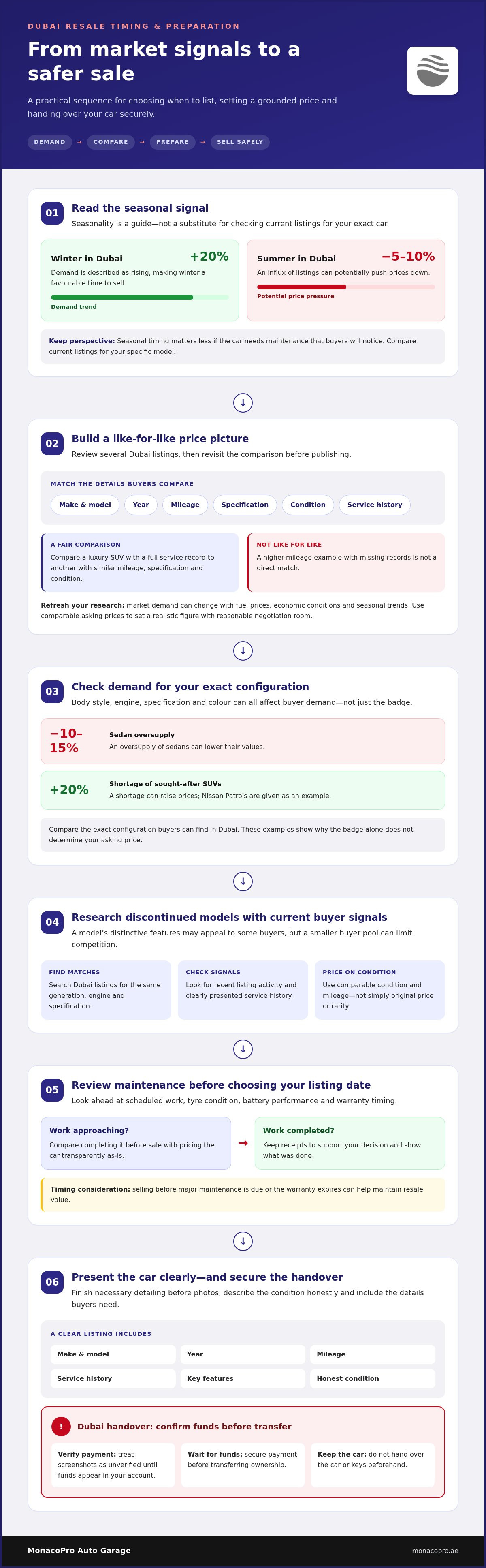
Avoid rushed decisions and suspicious payment arrangements. In Dubai, secure payment before transferring ownership. Treat payment screenshots as unverified until the funds appear in your account, and don’t hand over the car or keys beforehand.
- Track seasonal demand before choosing your listing date. Selling in Dubai during winter is described as favourable, with demand rising by 20%. Summer can bring an influx of listings, potentially pushing prices down by 5-10%. Use these trends as context, then compare current listings for your specific model. Seasonal timing matters less if your car needs maintenance that buyers will notice.
- Compare like-for-like cars and refresh your price research. Review Dubai listings for the same make, model, year, mileage, specification and condition. A luxury SUV with a full service record isn’t directly comparable to a higher-mileage example with missing records. Check several similar cars, note their asking prices, and revisit those comparisons before publishing. Market demand can change with fuel prices, economic conditions and seasonal trends.
- Assess demand for your body style and specification. Demand varies by body style, engine, specification and colour. An oversupply of sedans can lower their values by 10-15%, while a shortage of sought-after SUVs, such as Nissan Patrols, can raise prices by 20%. These examples show why the badge alone doesn’t set your asking price. Compare the exact configuration buyers can find in Dubai.
- Research discontinued models through current buyer signals. A discontinued model may attract buyers who value its particular features, but a smaller pool can also limit competition. Search for comparable Dubai listings with the same generation, engine and specification. Check whether examples have recent activity and whether service history is clearly presented. Price yours against comparable condition and mileage, not simply its original price or rarity.
- Sell before a costly maintenance milestone. Review upcoming scheduled work, tyre condition, battery performance and warranty timing before listing. Selling before major maintenance is due or the warranty expires can help maintain resale value. For example, if the service schedule shows work approaching, compare completing it first with transparently pricing the car as-is. Keep receipts for completed work to support the decision.
- Prepare the car properly, then list it clearly. Complete necessary detailing before taking photos, and describe the condition honestly. Include the make, model, year, mileage, service history and key features. For a discontinued model, explain its exact specification rather than claiming rarity alone creates value. Set a realistic asking price with reasonable negotiation room, then review buyer responses for signs that demand or pricing needs adjustment.
Complete service history and maintenance records
Organize the paperwork that supports your car’s condition and ownership before setting an asking price. In Dubai’s used-car market, a complete service history helps buyers understand how the vehicle was maintained.
Compile Maintenance and Ownership Records
Gather the vehicle registration card, service records, insurance details, warranty documents if available, and accident or repair history. If the car was financed, include its loan clearance certificate. Keep the documents together and check that dates, mileage entries, and ownership details are consistent. Missing papers or unexplained gaps can raise questions during a viewing and give buyers more to negotiate over.
Arrange records chronologically, then separate scheduled servicing from major repairs. Include invoices and receipts to support each entry rather than relying on handwritten notes alone. A clear file helps buyers follow the car’s history and relate completed work to its current condition.
Document Regular Servicing
Collect the service book, workshop invoices, and receipts for scheduled maintenance and replacement parts. Check that each entry identifies the work completed and the vehicle’s mileage at the time. A full service book can add 10-15% to a car’s sale price in Dubai. Present the actual records, and don’t describe the car as fully serviced if the documents show gaps.
For example, keep an invoice for brake repairs with the relevant service entry. Buyers can see what was addressed and when instead of relying on a general claim. Documented records also help distinguish routine maintenance from repairs following damage.
Build a Clear Maintenance Timeline
Turn separate invoices into a simple timeline showing dates, mileage, work completed, and any recommended follow-up. Flag gaps honestly: don’t fill them with estimates or present undocumented work as verified. If the car received agency servicing, include those records alongside work done elsewhere. Consistent entries help buyers assess maintenance, while unexplained mileage changes can distract from the vehicle’s actual condition.
Match each receipt to the relevant timeline entry before sharing copies with interested buyers. Keep the originals safe and provide clear copies at viewings. An organized history makes it easier to answer questions about past maintenance without guessing.
Connect Maintenance to Ownership Costs
Review upcoming scheduled maintenance alongside the records, then explain what is complete and what remains due. Buyers comparing vehicles consider condition as well as likely ownership costs, so itemized evidence is more useful than a broad claim that the car was well maintained. Don’t promise that future repairs won’t be needed.
If the documented history identifies brake or alignment work, keep its paperwork ready. For relevant maintenance, disc and brake service can address braking issues before a sale. Present completed work accurately, with its invoice, so buyers can judge the car using evidence.
🔍 What Affects Resale Value in the UAE?
Inspect the car before selling and address safety, mechanical, electronic, and visible cosmetic issues. An inspection can identify faults. Fix minor problems and document repairs; have major collision repairs handled at an authorized dealership.
Clear outstanding fines and loans, settle any Salik balance, and prepare insurance details for buyers. Secure payment before transferring ownership, and don’t hand over the vehicle until payment is received.
Repair Mechanical and Electronic Issues
Arrange an inspection and use its findings to prioritize faults that affect safe operation or everyday use. A pre-sale inspection can assess components such as the battery, headlamps, and stereo system. Repair issues you can document, then keep receipts and explain any remaining faults honestly. Working features help buyers judge the vehicle, rather than discovering an undisclosed warning light during negotiations.
Check dashboard alerts, lights, windows, air conditioning, and audio controls before listing. If mileage exceeds 100,000 km, condition matters especially: cars above that mileage may lose 25-40% of their value in Dubai. A clear inspection record helps separate age-related wear from a specific repair need.
Clean the Car and Repair Cosmetic Damage
Clean the exterior, interior, wheels, tyres, and undercarriage before photographing the car. Remove accumulated dirt and grime, then inspect paint, trim, lights, upholstery, and alloys in daylight. Visible exterior damage, including faded paint, scratches, or dings, can reduce an asking price in Dubai by 10-20%. Repair worthwhile minor defects, but don’t use cosmetic work to hide damage.
Fix a broken light, loose trim, or worn upholstery when practical. Professional detailing can refresh paint and interior surfaces, while clear photos should represent the vehicle honestly. Kerbed alloys, uneven tyre wear, and mismatched tyres can make a car look neglected, so describe their condition accurately.
Assess Driving Wear and Collision History
Consider how driving conditions show in the car’s current state, including tyre wear, suspension behaviour, and mileage. Dubai traffic, frequent short trips, and high-speed road use can leave different wear patterns. Buyers will assess the evidence, not just the owner’s account. Fuel prices and economic conditions can influence used-car demand, but they don’t erase concerns about condition.
Disclose collision and repair history clearly, then keep supporting documents ready. A major collision can reduce a car’s Dubai value by 10-30%. For major collision repairs, use an authorized dealership and retain its repair documentation, so buyers can understand what work was completed.
Complete Minor Repairs Before Listing
Walk around the vehicle and make a short repair list before selling. Prioritize broken lights, loose trim, small scratches, worn upholstery, and tyres that appear unsafe or uneven. These details can shape a buyer’s impression of how the car was maintained, even when its main systems work properly.
Compare repair needs with the vehicle’s age, mileage, and overall condition. Fix straightforward issues and keep receipts; disclose anything unresolved rather than masking it. A clean, accurately presented car gives buyers a clearer basis for judging the asking price across brands and model years.
Choosing between private sale, online platforms, and trade-ins
Photograph the car clearly, describe it accurately, and choose a sale route that suits your priorities. A practical part of how to increase car resale value in Dubai is deciding whether the potential for a higher private-sale return is worth managing the process yourself.
- Choose the sale method that matches your preferences. A private sale typically offers the highest return, while a dealership trade-in is more convenient but may bring a lower price. Online platforms put your listing in front of potential buyers, but you’ll handle enquiries, viewings, and negotiation. Decide what matters most: convenience, control over asking, or direct access to buyers.
- Assess trade-in offers against comparable listings. Dubai dealers typically offer 10-20% less than an open-market sale price when buying a car as a trade-in. Compare an offer with similar vehicles by model year, mileage, specification, and condition. Consider whether the convenience justifies the difference, especially if you want to avoid arranging private viewings.
- Build a clear, complete online listing. Include the make, model, year, mileage, condition, key features, reason for selling, asking price, and contact details. Use clear photos from multiple angles, and show visible imperfections rather than cropping them out. For example, include a close view of a scratch so buyers can assess it before arranging a viewing.
- Set your asking price with negotiation in mind. Compare similar Dubai listings, then account for your car’s specification, mileage, and condition. Leave reasonable room for negotiation by setting a slightly higher but realistic asking price. Decide your acceptable figure beforehand, and support it with records or documented features instead of unsupported claims about a premium model.
- Consider seasonal supply before publishing. An influx of car listings during summer in Dubai can push prices down by 5-10%. Check the number and asking prices of comparable vehicles, then weigh that competition against your preferred selling timeline. If similar cars are plentiful, accurate details and competitive pricing can help buyers understand why yours merits consideration.
- Prepare for viewings and complete the transaction carefully. Clean and fuel the car, choose a safe test-drive route, carry necessary documents, and accompany the buyer. Secure payment before ownership transfer, clear outstanding fines and loans, and complete the transfer through an authorized center in Dubai. For anyone weighing how to increase car resale value in Dubai, a well-managed sale helps protect the value established through preparation.
Choosing a make and model with strong resale value
If your car is already in your driveway, use resale patterns for its specific model to frame your asking price. Compare exact versions, since demand and depreciation vary across Dubai models.
- Start with the model’s likely buyer pool. Fuel-efficient sedans, reliable Japanese brands, and SUVs with strong service records generally attract demand in Dubai’s used-car market. Compare your car with listings for the same model, year, engine, and specification. Popularity can support interest, but mileage and condition still shape what buyers may offer.
- Use retention figures as context, not a promised price. SUVs in Dubai can retain 70-80% of their original value after three years. Toyota and Lexus cars can retain 75-85% after five years. These figures describe broad patterns, not every model or individual car. Use them to understand depreciation, then compare local examples with similar mileage and history.
- Compare model-specific depreciation before setting your asking figure. The Toyota Land Cruiser depreciates by 15-20% over 3 years in the UAE. Depreciation varies between models, so compare similar vehicles when assessing resale value. A popular nameplate alone doesn’t erase differences in trim, condition, service records, or buyer demand.
- Check comparable models, not just a familiar badge. Depreciation can vary between models, so compare similar vehicles before setting an asking price. The Honda Accord’s expected depreciation is around 28-32% over 3 years. When buying, these comparisons can help assess long-term resale appeal. When listing, they help anchor the price to the relevant model class.
- Assess specification and condition alongside reputation. Demand can vary with body style, engine, specification, and colour. Compare cars with matching features and service history, then account for mileage and visible wear. Professional detailing can improve presentation, but it can’t change a model’s market position or replace maintenance evidence. Keep the listing attractive through accurate photos and clear details.
- Separate demand from short-term asking prices. A limited supply of in-demand SUVs such as Nissan Patrols can raise prices by 20% in Dubai, while sedan oversupply can lower values by 10-15%. Check current listings for your exact model before choosing an asking price. Treat advertised figures as comparisons, then adjust for your car’s specification, mileage, and condition.
MonacoPro Auto Garage: Battery Replacement
MonacoPro Auto Garage helps prepare vehicles for sale with Battery Replacement, Oil Change, Car Computer Diagnostic, and Tyre Replacement. Turn to the garage when a weak battery, dashboard warning, overdue oil change, or worn tyres need attention before buyer viewings. Addressing these concerns can help you present the car’s current condition clearly and keep maintenance records together for prospective buyers.
A Car Computer Diagnostic can help assess electronic concerns, while Battery Replacement addresses a battery that needs replacing. For other pre-sale maintenance, an Oil Change or Tyre Replacement may suit your car’s needs. Keep receipts for completed work and describe it accurately in your listing.
Contact MonacoPro Auto Garage to discuss maintenance for your car before selling.
Make Your Next Sale Decision with Confidence
Turn your plan into a manageable set of actions. Decide what needs attention before listing, what you can document, and which tasks matter most for your car’s current condition. A considered approach to how to increase car resale value in Dubai keeps preparation focused on your vehicle and prospective buyers, rather than on work that won’t support your sale.
If maintenance needs attention, MonacoPro Auto Garage offers Battery Replacement, Oil Change, and Car Computer Diagnostic. These services can address battery, routine maintenance, or electronic concerns as you prepare the vehicle. Keep a record of completed work and use it to explain the car’s condition clearly. For support with your car’s maintenance before selling, contact MonacoPro Auto Garage. Take the next step at a pace that suits your plans, and approach your sale with a clear understanding of the vehicle you’re presenting.
Frequently Asked Questions
Which car features and models have the highest resale value in Dubai?
Reliable, fuel-efficient models and popular SUVs often appeal to Dubai buyers, but the exact specification matters. Compare demand for the same engine, trim, body style, and colour rather than relying on the badge alone. Buyers can verify features such as working equipment and original components, which can help your listing stand out. Keep factory accessories and both keys together, especially if the vehicle has been modified.
How much do mileage, age, condition, and service history affect used car prices in Dubai?
Mileage, age, condition, and service history all influence price, with their relative importance depending on the car. Higher mileage may matter less when maintenance is documented, while an older vehicle in excellent condition may compare favourably with a newer car showing neglect. Review comparable Dubai listings, then adjust your asking price for mileage, visible wear, equipment, and service history. These details help buyers compare likely upkeep with similar options.
Is it worth repainting or detailing a car before resale in Dubai?
Detailing can be worthwhile when dirt, interior wear, or dull paint distracts from an otherwise well-kept car. Repaint only when the finish needs repair, and don’t use cosmetic work to disguise collision damage or defects. Cleaning the interior and polishing paint may improve presentation, while a mismatched panel could raise questions. Weigh each repair against the car’s overall condition and disclose previous paintwork accurately.
How can I check my car’s market value in Dubai using UAE price guides and listings?
Use UAE price guides as a starting point, then compare current Dubai listings for the closest match. Filter by model year, trim, engine, mileage, and condition; a different specification can make a comparison misleading. An advertised asking price isn’t necessarily the final sale price. Note how similar listings are presented and whether their service records or features match yours, then set a realistic price for your vehicle.
When is the best time of year to sell a used car in Dubai?
Winter is generally a favourable selling period in Dubai because used-car demand rises seasonally. Still, timing also depends on your car’s maintenance schedule, current competition, and how quickly you need to sell. Before listing, review comparable vehicles currently advertised and consider whether upcoming maintenance or a warranty expiry could affect buyer interest. A well-prepared listing may matter more than waiting for a particular season.