
What if the choice between car paint protection film and polish depends less on which is “better” and more on what your paint needs? The car paint protection film vs polish decision can be confusing, especially in Dubai, where sun, dust and everyday road exposure can affect a car’s finish. Both options can help care for paint, but they do different jobs: polishing improves the appearance of existing paint, while film adds a physical barrier over selected areas.
If your paint has swirls, light scratches or dullness, polishing may improve its appearance. It is not a protective layer, however, and removing too much clear coat is a valid concern. If you want to reduce the risk of chips and similar impacts, film serves a different purpose, but it will not correct defects already in the paint. This guide explains what each option can and cannot do, how to assess your car’s paint, and how Dubai driving conditions may shape your decision. You’ll also learn when professional polishing is a suitable next step and why an assessment matters before paint correction.
Key Takeaways
- In the car paint protection film vs polish comparison, the right choice depends on whether you want to improve the finish or add a physical barrier to selected panels.
- Inspect the paint for scratches, dullness and signs of previous correction before choosing a service.
- Consider how Dubai’s sun, dust and road exposure affect your priorities, but don’t assume either option prevents every type of damage.
- Polishing can refine the finish, but it removes some clear coat, so the paint’s condition should guide how much correction is appropriate.
- If improving the paint’s appearance is your goal, professional polishing and detailing at MonacoPro Auto Garage in Umm Ramool can be a relevant next step.
Paint Protection Film vs Polish: What Does Each One Actually Do?
Polishing refines the appearance of the paint surface; paint protection film creates a physical barrier over selected areas. That distinction is central to the car paint protection film vs polish decision. One works on the finish already on your car, while the other helps shield covered panels from some surface impacts and abrasion. Neither does the other’s main job, and neither guarantees damage-free paint.
What paint protection film is designed to do
Paint protection film (PPF) is a transparent film applied over painted panels. It is designed to take some of the wear that might otherwise reach the paint underneath. For a neutral overview of the material and its general purpose, see Paint Protection Film.
Coverage depends on which panels are protected and how the film is installed. Film on selected high-exposure areas can only shield those areas; uncovered paint remains exposed. PPF can help reduce the effect of certain surface impacts and abrasion, but it is not an all-purpose barrier against every scratch, chip or other type of damage. It also does not remove marks that were already present before application.
What car polishing changes, and what it does not
Car polishing refines the paint surface using suitable compounds and techniques. Depending on the paint and process, it can reduce the appearance of certain surface defects, such as light swirls or dullness, and improve the finish. It does not add a film or create a permanent physical barrier against future impacts.
Polishing is a form of paint correction, not a way to rebuild missing paint. Results depend on the defect, the paint’s condition and the level of correction used. Some correction removes a very small amount of clear coat, so aggressive polishing is not automatically the right answer for deeper marks. As experienced vehicle service providers like NW Houston Auto Repair and Collision point out, an assessment helps determine what may be improved safely and what is unlikely to polish out.
For example, if a vehicle has visible wash swirls but chips are not the main concern, polishing may better match the goal of improving its appearance. If the paint already looks good and the priority is shielding selected panels from road exposure, PPF addresses a different need. Start with the actual condition of the paint, rather than choosing the option that sounds more protective.
In short, polishing works on the finish; PPF sits over it. A car can benefit from both for different reasons, but one cannot substitute for the other. MonacoPro Auto Garage in Umm Ramool, Dubai provides car polishing and detailing for drivers focused on paint appearance. Next, consider how each process works and how Dubai conditions may shape your choice.
How PPF and Polishing Work on Car Paint in Dubai
The difference becomes clearer when you look at how each process interacts with the paint. Polishing refines the existing finish, while protective film forms a layer over selected panels. Which approach makes sense depends on the paint’s condition, how you use the vehicle and which areas need attention.
How a film layer protects selected painted panels
Film application generally starts with cleaning and preparing the relevant panels so dirt or residue does not interfere with placement. The film is then positioned and fitted to the chosen areas, with finishing work around edges and panel contours. Exact coverage depends on the areas selected and the installation. A panel without film does not have the same film barrier, so protection is limited to the surfaces covered.
How polishing improves the appearance of paint
Dubai conditions are part of the decision, but they do not guarantee a particular type of paint damage. Strong sunlight and heat, airborne dust, and regular road exposure can influence how drivers use and care for their vehicles. For example, frequent driving on exposed roads may make protection for selected panels a priority, while visible light swirls may make the finish the immediate concern. Neither situation alone determines the right choice.
Consider the whole picture before choosing: existing marks, previous correction, the areas exposed to everyday use and the finish you want. A careful inspection helps avoid polishing more than necessary and clarifies whether your goal is correction or added coverage. A car with a sound finish but noticeable marks may need a different approach from one with improved paint that its owner wants to shield in high-exposure areas.
The processes can also be considered in sequence: paint appearance may be assessed and corrected where appropriate before a film layer is applied. The order and suitability depend on the vehicle and the panels involved. If your priority is refining the finish, car polishing and detailing at MonacoPro Auto Garage in Umm Ramool can be a practical next step.
PPF vs Polish: Compare Protection, Finish, and Paint Condition
The right choice depends on the paint’s current condition and whether your priority is improving its appearance or adding protection to selected panels. This is the most useful way to approach the car paint protection film vs polish decision: identify what the car needs, then match the process to that goal.
| Comparison | Paint protection film | Polishing |
|---|---|---|
| Main purpose | Creates a physical barrier over covered painted areas. | Refines the appearance of suitable paint surfaces. |
| Suitable starting condition | Paint condition and any existing defects should be assessed before covering the panels. | Best considered when the paint has marks or dullness that may respond to correction. |
| Coverage | Limited to the panels or areas where film is applied. | Targets paint appearance on the surfaces treated. |
| Practical limitation | Does not correct defects beneath the film, and uncovered panels do not receive its barrier. | Does not add a film barrier or prevent future stone chips and physical impacts. |
When paint protection film may be the better fit
Film may suit drivers who want a physical barrier on selected painted areas that see regular road exposure. Base the choice on which panels need coverage, how you use the car and the paint’s existing condition. Film will not make a scratch or other defect underneath disappear, so assess the surface before application. It is a targeted protection decision, not a paint-correction method or a guarantee against damage.
When polishing may be the better fit
Polishing may be appropriate when the main concern is the finish itself, such as suitable surface marks or a dull appearance. Its purpose is to improve how the paint looks, not to shield it from future physical impacts. If stone chips are the concern, polishing alone will not provide the barrier film is designed to add. MonacoPro Auto Garage provides car polishing and detailing services in Dubai for drivers looking to improve paint appearance.
Let the paint’s condition guide the next step. If the finish needs correction, an assessment can help establish what may be improved with polishing. If the paint is in the condition you want and your goal is added coverage, consider which panels matter most. Neither option is automatically right for every vehicle; the choice depends on the result you want and the condition of the surfaces involved.
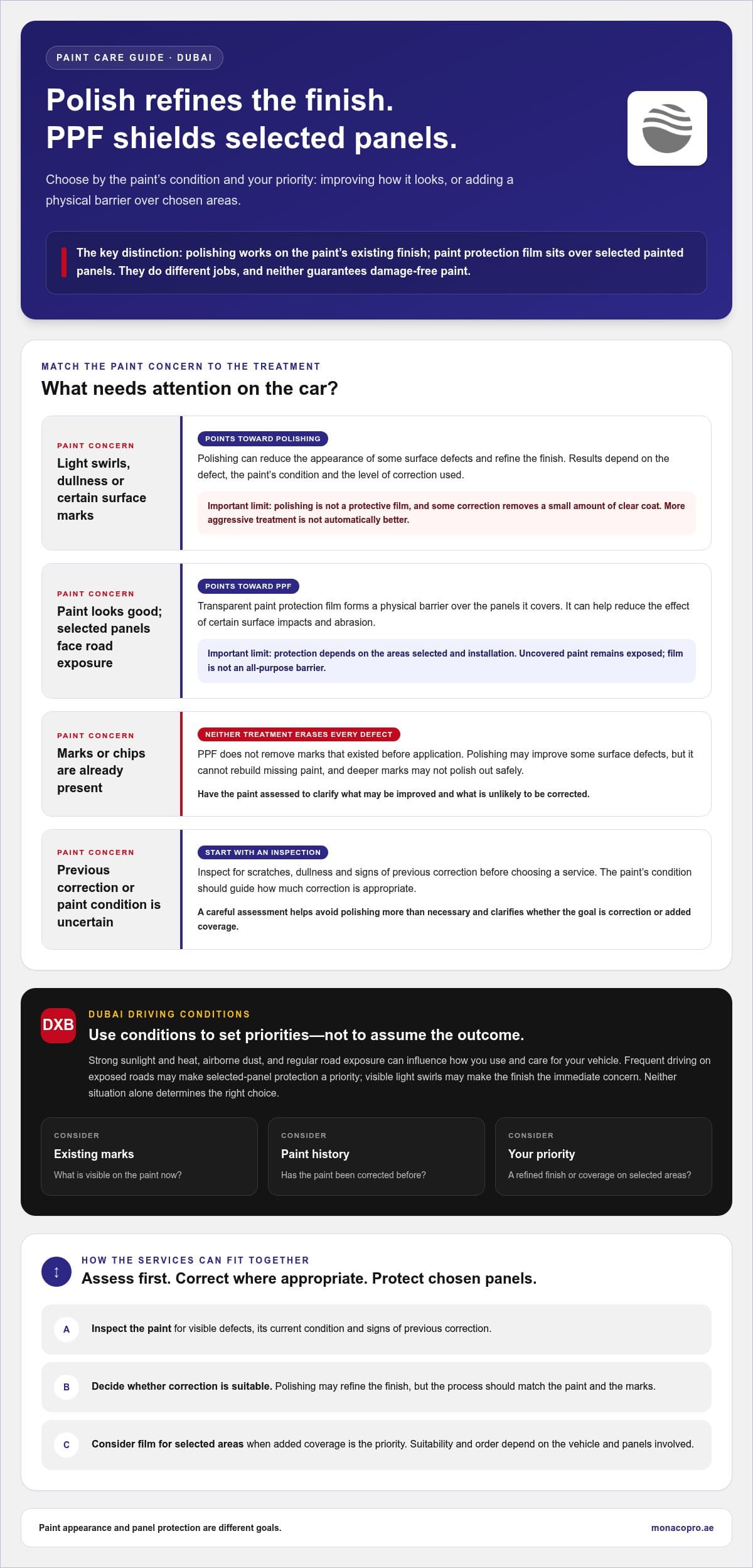
How to Choose Between Paint Protection Film and Polish
Make the decision in order: inspect the paint, define the result you want, then consider how and where you drive. This keeps the car paint protection film vs polish choice grounded in your vehicle’s condition rather than a general rule.
- Inspect the finish. Look for visible swirls, dullness, scratches or chips, and consider whether the paint has been corrected before. Note which panels show concerns. A professional assessment can help distinguish surface marks that may respond to polishing from defects that need a different solution.
- Set your priority. If you want to improve the paint’s current appearance, polishing may be appropriate for defects that can be safely corrected. If the finish is already acceptable and you want a physical barrier against some future surface damage, film may better match that goal on selected panels.
- Consider your driving and coverage needs. Think about the roads you regularly use, how often the car is exposed to dust and sunlight, and which painted areas matter most to protect. Dubai conditions are relevant, but they do not mean damage is inevitable or determine one solution for every vehicle.
Assess the paint before selecting a service
Defect depth and paint condition affect what polishing can achieve. Suitable light surface marks may improve, while deeper damage may remain visible or require a different approach. Previous correction also matters because polishing can remove a small amount of clear coat. Do not assume that every mark can be removed or that more correction will always produce a better result.
Decide whether one approach or a sequence fits your goal
If existing defects affect the finish, paint correction may be considered before film is applied, since film will not correct what lies beneath it. If the paint is already in good condition, the priority may instead be added coverage on selected panels. The appropriate sequence depends on an assessment of the specific vehicle, its paint and the areas being treated.
For more context on appearance-focused care, explore guidance on professional car polishing and waxing benefits. If improving your paint’s appearance is the priority, book car polishing and detailing with MonacoPro Auto Garage in Dubai.
Professional Car Polishing in Dubai: Your Next Step
The choice comes down to your priority: polishing aims to improve paint appearance, while paint protection film adds a physical layer over selected areas. If the finish is what concerns you, professional polishing and detailing may be a practical next step. The outcome depends on the vehicle’s paint condition, the type of marks present and the level of correction that is suitable.
What to expect from a professional polishing assessment
A considered assessment starts with the paint and the finish you want to achieve. The surface is reviewed for visible marks and signs of previous correction, since paint history can affect the appropriate approach. This helps set realistic expectations: some surface defects may improve, while deeper damage may remain. A careful process matches the work to the vehicle rather than assuming every mark should be polished out.
This distinction matters when weighing car paint protection film vs polish. If the existing finish needs attention, correction may be considered before adding a protective layer, because film will not improve defects beneath it. If your main concern is the paint’s appearance, polishing addresses that goal directly, though it does not create a barrier against future impacts. The right order depends on the vehicle and its paint.
Explore car care services in Umm Ramool
MonacoPro Auto Garage provides car polishing and detailing in Umm Ramool, Dubai. If you are unsure whether visible marks are suitable for correction, a professional assessment can help clarify what the paint may respond to and what finish is realistic. The aim is an appropriate approach for your car, not unnecessary correction or an assumed result.
For broader context on caring for your vehicle, you can also explore MonacoPro’s guide to specialised auto care. If improving your car’s paint appearance is the priority, explore MonacoPro’s car polishing and detailing services in Umm Ramool.
Choose the Right Care for Your Paint
The car paint protection film vs polish decision is clearer when you start with the car’s condition and your goal. Polishing focuses on improving the appearance of suitable paint defects, while paint protection film adds a physical barrier to the panels it covers. Neither is a universal fix, and polishing should be guided by the paint’s condition, especially if it has been corrected before.
Consider how you use your car in Dubai, including its exposure to sun, dust and everyday road conditions. These factors can help shape your priorities, but the right choice still depends on the finish you want and the areas you want to protect. If both correction and added coverage are relevant, base the order on an assessment of the vehicle.
If paint appearance is your priority, MonacoPro Auto Garage in Umm Ramool, Dubai provides car polishing and detailing. Explore MonacoPro’s car-care services in Dubai and take a considered next step for your car. Understanding what the paint needs can make caring for its finish simpler.
Frequently Asked Questions
Is paint protection film better than polishing?
Neither is universally better; each addresses a different goal. Paint protection film adds a physical barrier over the panels it covers, while polishing works to improve the appearance of suitable paint defects. If you’re comparing car paint protection film vs polish, first decide whether you want coverage against some future surface impacts or correction of the finish you see now. The paint’s condition and your driving needs help guide the choice.
Can polishing remove scratches from car paint?
Polishing may reduce the appearance of some light surface scratches, but it cannot safely remove every mark. Results depend on the scratch’s depth and the paint’s condition, including any previous correction. Since polishing can remove a small amount of clear coat, deeper scratches should not automatically prompt more aggressive treatment. A paint assessment helps establish which defects may improve and which may remain visible after correction.
Does paint protection film protect against scratches and stone chips?
Paint protection film can help shield covered areas from some everyday surface impacts and abrasion, including certain risks associated with road exposure. It does not guarantee that panels will remain free of scratches or stone chips, and protection is limited to the areas covered. Existing defects are not corrected by placing film over them. Consider which panels you want to protect and assess their condition before deciding on coverage.
Can you polish a car before applying paint protection film?
Yes, polishing may be considered before film application if the paint has suitable defects that need attention. Film will not correct marks underneath it, so assessing the finish first can help determine whether correction is appropriate. Polishing should be matched to the paint’s condition, especially if it has been corrected before. The right order and approach depend on the vehicle and the panels involved.
Which is better for a car driven in Dubai: PPF or polishing?
It depends on your priority, not simply on where you drive. Dubai’s sun, heat, dust and road exposure may influence which areas concern you, but they do not make one option right for every car. Choose polishing if improving the current finish is the goal; consider film if you want a physical barrier on selected panels. The paint’s condition, driving habits and desired result should guide the decision.
How often should a car be polished?
There is no single polishing schedule that suits every car. The appropriate frequency depends on the paint’s condition, how it is maintained and whether it has been corrected before. Since polishing can remove a small amount of clear coat, assess the finish rather than polishing repeatedly by habit. MonacoPro Auto Garage in Umm Ramool, Dubai provides car polishing and detailing to address paint appearance concerns.
Does polishing protect car paint from sun damage?
No. Polishing refines the paint’s appearance; it does not create a physical barrier against sunlight or other future exposure. It may improve the look of suitable surface marks or dullness, but that is different from protection. In Dubai, sun and heat can be considerations in an overall car-care routine, yet polishing alone should not be treated as a protective layer. Choose a method based on whether you need correction or protection.