
A clean exterior can hide costly mechanical trouble. In the UAE, hidden problems in used cars to look for include engine wear, fluid leaks, signs of water or smoke damage, and brake issues such as squealing, pedal vibration or longer stopping distances. Unusual noises, warning lights and uneven tyre wear can also signal problems that need closer inspection.
Look beyond appearance, especially when assessing the brakes: a vehicle that starts and drives smoothly may still have worn pads or other faults. This guide explains what to check in the engine compartment and cabin, how to spot possible damage, and which brake symptoms need attention. You’ll also learn how a professional pre-purchase inspection can help uncover concerns that a visual check or short test drive may miss.
Key Takeaways
- Look beyond a clean engine bay: fluid residue, unusual start-up sounds and signs of cooling-system neglect can reveal wear.
- Check upholstery, cabin odours and electrical details for clues that water or smoke may have affected the interior.
- Have brake pads, rotors and fluid condition assessed, and pay attention to how the car behaves when braking.
- Use a structured inspection to connect visible clues with possible mechanical issues before deciding whether to buy.
1. Inspecting the engine compartment for leaks and wear
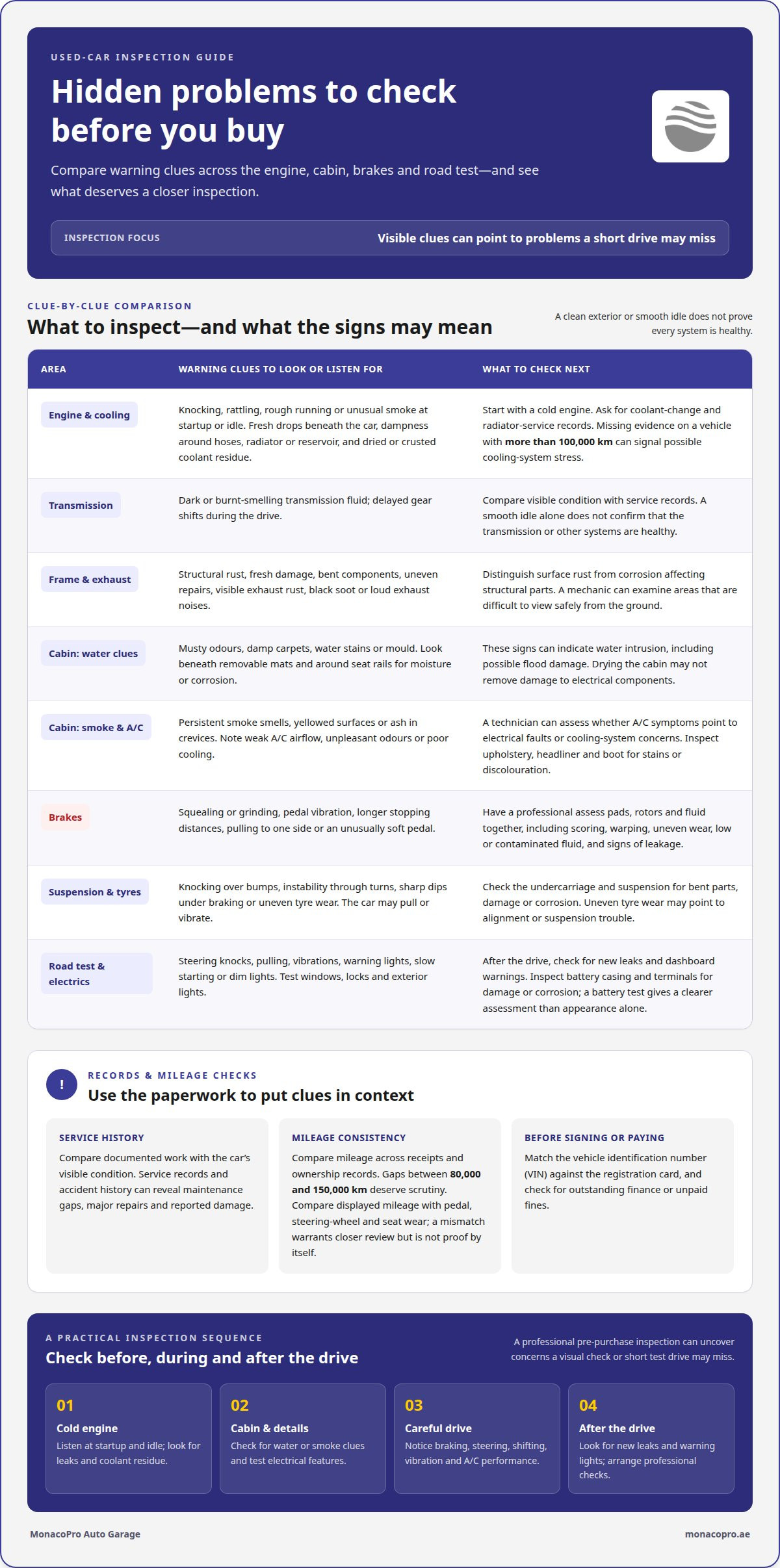
Start with a cold engine, then listen during startup and at idle. Knocking, rattling, rough running or unusual smoke can signal wear beneath a polished engine bay. These are among the hidden problems in used cars to look for before purchase. Check beneath the vehicle for fresh drops, and look around hoses, the radiator and reservoir for dampness or dried coolant residue. Crusted deposits may reveal a leak that dried before the inspection.
Cooling-system history matters in UAE conditions. For a vehicle with more than 100,000 km, missing evidence of coolant changes or radiator service can signal possible cooling-system stress. Ask for service records and compare documented work with visible condition. Dark or burnt-smelling transmission fluid is another warning sign. A smooth idle alone doesn’t prove every system is healthy.
Inspect the undercarriage and frame for structural rust, fresh damage, bent components or uneven repairs. Surface rust is different from corrosion affecting structural parts. Check around the exhaust for visible rust, black soot or loud noises. A mechanic can examine areas that are difficult to view safely from the ground.
During the test drive, watch for vibrations, delayed gear shifts, steering knocks or pulling to one side. Afterward, check for new leaks and dashboard warning lights. Test electrical features such as windows, locks and exterior lights. These checks can reveal issues a stationary inspection may miss.
A mechanical pre-purchase inspection in the UAE assesses the car’s condition; registration and ownership transfer are separate processes. Before signing or paying, match the vehicle identification number (VIN) against the registration card, and check for outstanding finance or unpaid fines.
To spot possible odometer tampering, compare the displayed mileage with wear on the pedals, steering wheel and seats. A mismatch warrants closer review, but isn’t proof by itself.
Service records and accident history can reveal maintenance gaps, major repairs and reported damage. Compare mileage across receipts and ownership records; gaps between 80,000 and 150,000 km deserve scrutiny. A professional inspection can uncover hidden problems in used cars to look for that appearance and a short drive may miss.
2. Inspecting the interior for water or smoke damage
Open every door and inspect the cabin before buying. Musty odours, damp carpets, water stains or mould can indicate water intrusion, including possible flood damage. Check beneath removable floor mats and around seat rails, where moisture or corrosion may be less visible. These are hidden problems in used cars to look for because drying the cabin may not remove damage to electrical components.
Inspect the headliner, upholstery and boot for stains, discolouration or smoke residue. Persistent smoke smells, yellowed surfaces or ash in crevices may indicate past smoke exposure. Test the air-conditioning and note weak airflow, unpleasant odours or poor cooling. A mechanic can assess whether these symptoms point to electrical faults or cooling-system concerns.
Examine the exterior in daylight for uneven paint, colour differences, overspray around trim and rough patches. These clues can indicate repairs after a collision, but need context. Ask about repair records and compare panel gaps on both sides. Misaligned doors or uneven gaps may suggest more substantial damage. Hidden problems in used cars to look for can include repairs that are hard to spot during a quick walk-around.
Check the undercarriage and suspension for bent parts, damage or corrosion. Press each corner of the vehicle and observe whether it settles smoothly. During a careful drive, note knocking, pulling or unusual vibrations, which can point to suspension concerns.
Structural rust or serious water damage can be deal-breakers if they affect safety or leave hidden electrical faults. Repair impact depends on the affected parts and documented work, so there’s no reliable fixed amount to subtract from the asking price.
A pre-purchase inspection can assess visible damage alongside underlying concerns. This helps distinguish cosmetic repairs from problems that may affect safety, reliability or future repair needs.
3. Brake-system wear and fluid condition
Before buying, have a professional inspect the brake pads, rotors and fluid level. Visible pad wear alone won’t show whether rotors are scored, warped or wearing unevenly. Low or contaminated brake fluid can also affect braking performance. A proper assessment checks the whole system, including uneven wear and signs of leakage.
During the test drive, apply the brakes gently in a safe, clear area, then brake more firmly. Squealing or grinding, pedal vibrations and longer stopping distances can indicate faults. Notice whether the vehicle pulls to one side or the pedal feels unusually soft. Don’t dismiss a noise because it disappears after the brakes warm up; note when it occurs while driving.
Suspension condition also affects handling and braking. Listen for knocking over bumps and notice whether the vehicle feels unstable through turns or dips sharply under braking. Poor suspension can reduce control, particularly during an emergency stop. Uneven tyre wear may also point to alignment or suspension trouble, so include it on your inspection checklist.
In the UAE, test the air-conditioning for cooling efficiency, airflow and cabin odours. Weak cooling or unpleasant smells deserve investigation; a technician can assess whether the issue involves the cooling system or another component. Check performance after the vehicle has stood and again during the drive, rather than relying on a brief switch-on.
Heat can contribute to battery wear in UAE vehicles. Check the battery casing and terminals for damage or corrosion, and note slow starting or dim lights. Car batteries typically last three to five years, but age alone doesn’t establish their condition. A battery test gives a clearer assessment than appearance alone.
Arrange a professional inspection before buying, even if the brakes feel normal on a short drive. A disc and brake service can assess pads, rotors and fluid together, while a suspension inspection can help explain handling symptoms. Ask for the findings to be documented so you can weigh safety-related repairs before making a purchase decision.
4. Brake problems
Brake trouble can stay hidden until the car slows under load. During a test drive, listen for squealing, grinding or other repeated noises. Notice pedal vibrations and whether stopping distances feel longer than expected. These warning signs deserve attention even if braking seems normal in lighter use. A seller’s description cannot establish the system’s condition; symptoms need an inspection.
Watch the dashboard as the engine starts and while driving. Note any brake-related warning light, then check whether it stays illuminated. A warning light calls for diagnosis, but doesn’t explain the fault. Ask for a professional review of the pads, rotors, fluid level and visible leaks. Uneven wear may require a broader assessment, rather than a pad replacement alone.
Take a controlled test drive on a clear route, without aggressive braking. Apply the brakes gently, then with firmer pressure where safe. Note pulling, vibration, scraping, delayed response or a pedal that feels different. Repeat after reversing, since changing direction can make noises easier to notice. Stop if braking feels unreliable; don’t use traffic as a test.
Brake symptoms can overlap with other vehicle faults. Note whether vibration occurs only while braking, while steering or during gear changes. That context helps a mechanic distinguish brake symptoms from steering or transmission concerns. Compare symptoms with the service history and test-drive notes. An inspection can clarify whether repairs involve the brakes alone or related components.
Brake defects can be expensive when their cause extends beyond visible pad wear. A professional check should assess pads, rotors, fluid and related components together, then explain the findings. If noises, vibration or stopping changes appear, pause your purchase decision until the condition is understood. Arrange a brake assessment with MonacoPro Auto Garage.
MonacoPro Auto Garage: Upholstery for all cars
MonacoPro Auto Garage can help address interior wear identified during your used-car inspection. Its upholstery service covers all cars, making it a practical option when seats or cabin trim need attention. For suspected electrical faults or warning lights, a car computer diagnostic can help assess vehicle issues. Battery replacement and oil changes are also available when inspection findings point to those maintenance needs.
Choose the service that matches the issue: upholstery for worn interior surfaces, diagnostics for dashboard alerts, or battery replacement if the battery needs attention. These services address specific findings; they don’t replace an assessment of structural flood damage or brake safety. Keep your inspection notes handy so the work can focus on the concern you’ve identified.
For help with your vehicle, contact MonacoPro Auto Garage.
Make your next step a considered one
Use what you’ve learned about the hidden problems in used cars to look for as a decision framework, not a reason to rush or dismiss every vehicle. Separate findings that affect safety or reliability from cosmetic wear, then use an independent inspection report and service records to clarify what needs attention before you commit. If serious faults remain unexplained, pausing the purchase is a practical choice. If the findings are clear, you can make your decision with a better understanding of the vehicle’s condition and the work it may need.
After purchase, keep the inspection findings and maintenance history together. They can help you plan future care and explain concerns clearly when arranging automotive service. For support with your vehicle’s needs, contact MonacoPro Auto Garage today. Take the next step at a pace that feels right, with clear information guiding your decision.
Frequently Asked Questions
What Are Hidden Issues in Used Cars in UAE?
Hidden issues are faults or past damage that aren’t obvious during a quick viewing or short drive. In Dubai, a car can look well-kept while still needing closer mechanical or electrical assessment. Treat the seller’s description, the vehicle’s paperwork and the inspection findings as separate pieces of information. If they conflict, pause your decision and resolve the discrepancy before completing the purchase.
What hidden mechanical problems should I check for when buying a used car?
Look beyond what you can see under the bonnet: an electronic diagnostic scan can reveal stored or pending fault codes, including some that haven’t triggered a dashboard light. Compare scan results with service invoices and the car’s current behaviour. A warning code doesn’t automatically identify the cause, so have a mechanic interpret it alongside the vehicle’s systems and documented repair history.
How can I spot previous accident damage and poor repairs on a used car?
Compare corresponding areas on both sides of the vehicle, such as door edges, trim and underbody components. Differences in finish or replacement parts can prompt questions about repair quality. Ask for available repair invoices and accident records, then compare the dates and described work with the car’s condition. Records may not capture every repair, so a professional assessment can help clarify concerns.
How do I check a used car for flood or water damage?
Check less-exposed areas as well as the visible cabin: lift removable boot flooring and look around the spare-wheel well for dampness, residue or corrosion. Pull seat belts out fully and inspect concealed sections for staining or moisture. Test cabin electronics after starting the car, since inconsistent operation can reveal issues a visual check alone may miss.
How do I inspect a used car’s engine, transmission, brakes, tires, and suspension?
Follow a consistent inspection sequence and record each finding by system. During a professional pre-purchase inspection, ask for the engine and transmission, brake components, tyre condition and suspension behaviour to be assessed together. This helps distinguish one fault from symptoms caused by another system. A diagnostic scan can add information about electronic faults, while a road test shows how the vehicle behaves in motion.
What warning signs should I look for during a used-car test drive?
Choose a quiet route with safe opportunities to turn, accelerate and slow down normally. Note any change in response, vibration, pulling or sound, and record when it happens, such as during a turn or gear change. Check whether dashboard warnings appear before, during or after driving. Don’t attempt sudden stops or risky manoeuvres; ask for a professional assessment if the vehicle feels unsafe.