
A clean-looking seat isn’t necessarily ready for a child or pet. With car fabric seat shampooing in Dubai, the cleaning method and drying process matter: seats usually take 2 to 4 hours to feel dry to the touch when ventilation steps are followed, and child car-seat harness straps shouldn’t be soaked during cleaning.
It’s understandable to want stubborn dust, spills and odours removed without leaving chemical residue or damp upholstery behind. This guide explains how fabric shampooing and hot-water extraction tackle embedded dirt, what to consider when cleaning around children and pets, and how ventilation supports drying.
You’ll also learn why child-seat harness straps need separate care and how fabric type and stains affect the cleaning method. These details can help you choose a practical approach for your family and know what to expect before the seats return to everyday use.
Key Takeaways
- Learn how a fabric-appropriate shampooing process can target stains and embedded soil without relying on steam alone.
- See why removing loose desert dust before wet cleaning helps limit the spread of grit through seat fabric.
- Understand which child and pet safety considerations matter during cleaning, including careful handling of car-seat harnesses.
- Discover how hot-water extraction and cabin ventilation support the cleaning and drying process.
Are car seat cleaning chemicals safe for kids and pets?
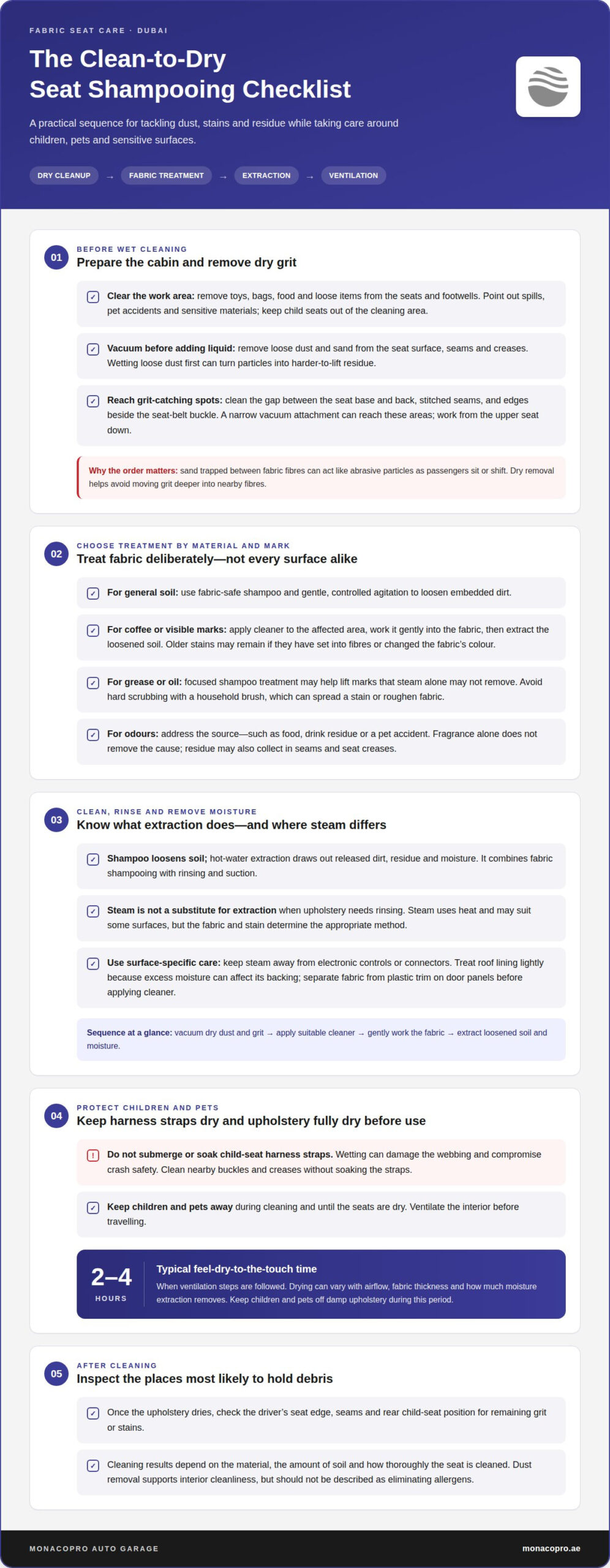
Safety depends on the cleaner, how it’s applied and whether the upholstery dries fully. Keep children and pets away during cleaning and until the seats are dry, then ventilate the interior before travelling. Don’t submerge or soak child-seat harness straps: wetting can damage the webbing and compromise crash safety.
Whether seat cleaning is done at a workshop or another location in Dubai, preparation still matters. Before the appointment, remove toys, bags, food and loose items from the seats and footwells. Point out spills, pet accidents and sensitive materials, and keep child seats out of the cleaning area. This gives the technician room to work on the fabric while avoiding unnecessary contact with personal belongings.
Fabric shampooing and hot-water extraction address dirt differently from steam cleaning. Shampoo loosens stains in the fabric, and extraction draws out moisture and released soil. Steam uses heat and may suit some surfaces, but it does not replace extraction when upholstery needs rinsing. Grease or oil marks may need shampoo treatment rather than steam alone. The fabric and stain determine the suitable method.
Steam needs careful handling around dashboards, screens, switches, vents and wiring. A technician should avoid directing it into electronic controls or connectors. Roof lining also needs a light touch because excess moisture can affect its backing. On door panels, separate fabric from plastic trim before applying cleaner. Use methods suited to each surface rather than applying one product across every material.
For daily drivers in the UAE, regular professional seat shampooing can help keep upholstery clean, though the right interval depends on use and conditions. After cleaning, seats usually take 2 to 4 hours to feel dry to the touch when ventilation steps are followed. Keep children and pets off damp upholstery during that period. Drying time can vary with airflow, fabric thickness and how much moisture extraction removes.
What materials do you use for car seat cleaning in Dubai?
For car fabric seat shampooing in Dubai, cleaners and tools should suit the upholstery, not treat every surface alike. A typical process uses fabric-safe shampoo, gentle agitation and extraction equipment. First, loose dust and particles are removed. Then shampoo loosens embedded soil before extraction draws out residue and moisture. This order helps clean the fabric without pushing dry debris deeper into its fibres.
A coffee spill or visible mark usually calls for targeted stain treatment. Apply cleaner to the affected area, work it gently into the fabric, then extract the loosened soil. This can help restore a more even appearance. Older stains may remain if they have set into the fibres or changed the fabric’s colour.
Grease and oil need focused treatment because they cling to upholstery fibres. Shampooing can help lift tough grease and oil stains that steam alone may not remove. Treat the mark directly, then extract the residue. Hard scrubbing with a household brush can spread a stain or roughen fabric, so controlled agitation is preferable.
Odour removal starts with addressing the source. Food spills, drink residue and pet accidents leave different material behind, so fragrance alone won’t remove the cause. Cleaning and extracting the affected fabric tackles residue more directly. Persistent odours may also need attention in seams or seat creases, where particles can collect.
There isn’t one best-rated car seat cleaning company for every driver; ratings and customer experiences vary across platforms. Compare the cleaning process, including stain treatment and extraction, rather than relying on a rating alone.
Car fabric seat shampooing in Dubai generally focuses on fabric seats, stains and residue removal. The process may include an inspection, fabric-appropriate shampooing, targeted stain treatment and extraction. Knowing these steps helps clarify what the service covers and whether it suits your seats.
Desert dust and abrasive sand in car seat fabric
Dubai’s sandy conditions can leave fine dust and larger grains inside a vehicle. Sand trapped between fabric fibres may act like abrasive particles when passengers sit or shift. A careful cleaning process starts with dry removal: vacuum the seat surface, seams and creases before applying liquid. Wetting dust first can turn loose particles into residue that is harder to lift. This order prepares the upholstery for deeper cleaning.
Pay attention to places where grit collects: the gap between the seat base and back, stitched seams, and the edges beside the seat-belt buckle. A narrow vacuum attachment reaches these areas more effectively than a quick pass over the centre panel. Around a child seat, clean buckles and creases to remove crumbs and visible debris without soaking the harness straps.
After vacuuming, shampooing can loosen soil embedded in the fabric. Extraction then draws out loosened dirt and moisture. This two-stage approach is more useful than rubbing a dry cloth across dusty upholstery, which can move particles into nearby fibres. Dust removal supports interior cleanliness, but shouldn’t be described as eliminating allergens. Results depend on the material, the amount of soil and how thoroughly the seat is cleaned.
Regular detailing helps prevent visible dust from building into a dull layer, especially on frequently used seats and footwells. A practical sequence is to remove loose items, vacuum from the upper seat down, and clean seams before treating marks. Once the upholstery dries, inspect areas such as the driver’s seat edge and rear child-seat position. This helps identify remaining grit or stains and whether further treatment is needed to refresh the interior.
Fabric seat shampooing and hot-water extraction
Hot-water extraction combines fabric shampooing with rinsing and suction. First, vacuum dry dust and grit from the seat surface and seams. Apply cleaner to loosen soil, including residue from a drink spill. Extraction then draws out loosened dirt and moisture, removing more residue from the upholstery than simply brushing cleaner across it.
Heat supports the cleaning process, but it can’t replace the right technique. The technician needs to control how much solution enters the fabric and how thoroughly it is extracted. Excess moisture can prolong drying, while insufficient extraction may leave cleaning solution or loosened soil behind. The seat material, stain type and condition all shape the suitable method.
Shampooing and extraction serve a different purpose from steam cleaning. Shampoo can help treat grease or oil marks that steam alone may not remove. Steam uses heat on suitable surfaces, but it doesn’t provide the same rinse-and-recovery step as extraction. Neither method should be claimed to eliminate bacteria without evidence. Cleaning can remove visible soil and residue, but results depend on the fabric and contamination.
A clear process follows a practical order: vacuum, apply fabric-appropriate shampoo, agitate gently, then extract. Afterward, ventilation helps the cabin dry. The recommended drying support is to run the vehicle’s air-conditioning on recirculation mode for 15 minutes. This step can help move air through the interior; it doesn’t replace extraction or mean the seat is ready while still damp. In cleaning Dubai conditions, airflow and the amount of moisture used affect how quickly upholstery feels dry.
For fabric upholstery care, explore upholstery care as a practical next step.
MonacoPro Auto Garage
MonacoPro Auto Garage in Umm Ramool, Dubai, can help when your car needs attention beyond fabric cleaning. After addressing seat dust and stains, you may also need routine maintenance or help investigating a separate mechanical concern. The garage offers battery replacement, oil changes, car computer diagnostics and tyre replacement, supporting everyday vehicle care alongside your interior-cleaning plans.
For example, a dashboard warning may call for a car computer diagnostic, while a worn tyre may need replacement. These services address separate vehicle needs, not seat-cleaning results. Keeping interior care and essential maintenance in view helps you plan the next task without confusing cleaning methods with mechanical repairs.
For maintenance support in Dubai, contact MonacoPro Auto Garage to arrange a service.
Make your next car-care decision with confidence
Choose a cleaning approach that suits your family’s routine, the seat fabric and the kinds of messes your car encounters. Before arranging service, note which seats need attention and whether spills, pet odours or everyday dust are the main concern. These details help define the task instead of treating every interior the same way.
Car fabric seat shampooing in Dubai can be part of a broader plan to keep your vehicle comfortable for family journeys. MonacoPro Auto Garage also offers battery replacement, oil changes and car computer diagnostics for separate maintenance needs. Keeping interior care and mechanical upkeep distinct makes it easier to address each issue appropriately.
For help with your vehicle’s care, contact MonacoPro Auto Garage. A considered next step can make everyday drives feel more comfortable and manageable.
Frequently Asked Questions
Does the Dubai heat affect the cleaning frequency?
A parked car may feel dry in the heat while moisture remains deeper in the seat padding. Dust, food spills, frequent family use and pet hair are more useful cues for deciding when cleaning is due. After a drink spill, arrange targeted cleaning rather than waiting for a routine session. After cleaning, park in a shaded, ventilated place to support even drying.
How long does it take for car seats to dry after shampooing in Dubai?
Car seats usually take 2 to 4 hours to feel dry to the touch when ventilation steps are followed. Drying varies with fabric thickness, moisture extraction and airflow through the cabin. Don’t judge only by the seat’s surface; seams and padded areas can stay damp longer. Keep children and pets off the upholstery until it feels dry throughout.
How often should I get my car seats cleaned?
For a daily driver in the UAE, professional seat shampooing is recommended every 4 to 6 months. Families may need spot cleaning sooner after spills, muddy shoes or pet accidents. A full shampoo is different from wiping one fresh mark, so match the cleaning to the condition of the fabric. Regular vacuuming between services helps manage loose crumbs and dust.
Is the mobile seat shampooing service as effective as a workshop detailing?
Effectiveness depends on the equipment, cleaning sequence and access to the seats, not simply where the work takes place. A cleaning setup needs to vacuum, apply suitable shampoo and extract moisture thoroughly. A workshop may provide more space for vehicle detailing. Compare the actual process and whether it covers seat creases, seams and the affected areas.
Looking for Car Interior Cleaning Services in Dubai?
For car interior cleaning in Dubai, identify whether you need fabric-seat treatment, stain removal or broader upholstery care. Clear details about the affected seats and the type of mess help define the task. MonacoPro Auto Garage offers upholstery services for all cars, making it a relevant option for interior upholstery needs. Keep mechanical concerns separate from fabric-cleaning requirements.
Ready for a Pristine Interior?
Start by removing loose belongings and noting any stains or odours that need attention. This gives the cleaning process a clear focus and helps protect items left inside the vehicle. For fabric seats, choose a method suited to the upholstery and allow adequate ventilation afterward. A clean, dry interior is more practical for children, pets and everyday family journeys.