
A crooked steering wheel or a car that pulls to one side can signal an alignment issue, not just an annoyance. If you’re wondering how often you should get your wheels aligned, a general guide is to have them checked around every 6,000 miles or at the first sign of misalignment. Rough roads, potholes and bumps against curbs can also affect alignment, so symptoms matter as much as mileage.
Tyre pressure and tread often get the attention, while the angles that help your vehicle track straight are overlooked. This guide explains what wheel alignment does, how to spot warning signs and when to schedule a check, including after fitting new tyres. You’ll also learn how alignment differs from wheel balancing and how your vehicle, driving habits and road conditions affect when to check it. With these points in mind, you can decide what your car needs next.
Key Takeaways
- Watch for uneven tyre wear and changes in steering, as these can point to alignment issues that affect tyre life.
- Include an alignment check when fitting new tyres to help them wear evenly and support a smoother drive.
- Alignment adjusts camber, caster and toe to match the vehicle manufacturer’s specifications.
- Keep alignment and wheel balancing distinct: balancing addresses wheel-and-tyre weight distribution, while alignment corrects wheel angles.
What is Wheel Alignment, and why is it Essential?
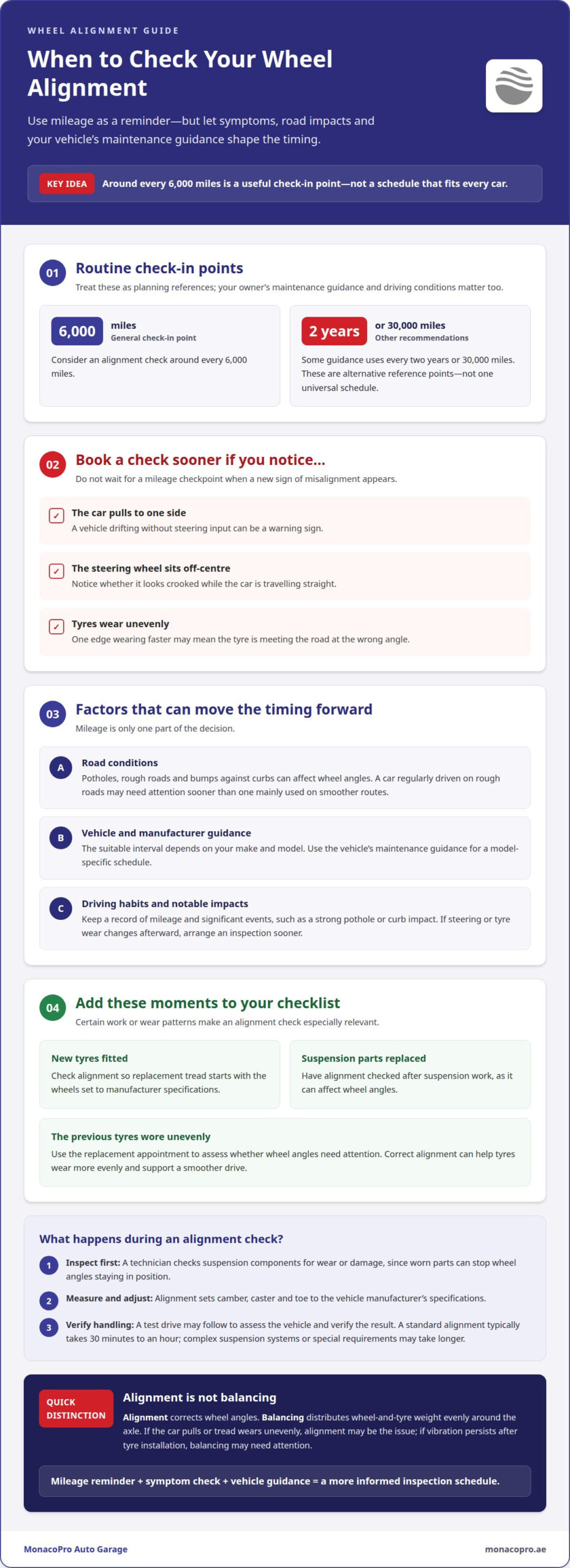
Wheel alignment adjusts wheel angles to match the vehicle manufacturer’s specifications; balancing distributes wheel-and-tyre weight evenly around the axle. A standard alignment typically takes 30 minutes to an hour, though complex suspension systems or special requirements may take longer.
Effects on Tire Life
Misaligned wheels can cause uneven tyre wear and shorten tyre life. One edge may wear faster because the tyre meets the road at the wrong angle, reducing usable tread before the rest of the tyre wears down. Spotting an unusual wear pattern early can help you identify a possible alignment issue and avoid replacing tyres prematurely.
Signs of Wheel Misalignment
Misalignment may cause the vehicle to pull to one side, leave the steering wheel crooked while driving straight, or wear tyres unevenly. These signs can affect how steadily the car tracks and how evenly the tyres meet the road. On a straight road, notice whether the steering wheel sits off-centre or the car drifts without steering input.
Before adjusting alignment, a technician checks suspension components for wear or damage. A test drive may follow to assess handling and verify the result. This matters because worn components can prevent wheel angles from staying in position; an adjustment alone may not address the underlying problem.
Road impacts can change alignment. Hitting a pothole, driving over rough roads or bumping a curb may affect wheel angles. Keeping tyre pressure at the recommended level can help avoid added strain, while slowing down near potholes and curbs can reduce stress on steering and suspension components. Avoid carrying unnecessary heavy items in the trunk, as cargo can affect how the vehicle sits.
Recommended wheel alignment check interval
There isn’t one interval that fits every car. A general recommendation is to check alignment around every 6,000 miles or at the first sign of misalignment. Recommended alignment check intervals can vary, so use your vehicle’s maintenance guidance and driving conditions as a guide. These are different reference points, not a single schedule that applies to all vehicles.
So, how often should you get a wheel alignment? Use around 6,000 miles as a check-in point, and arrange an inspection sooner if steering or tyre wear changes. Your vehicle’s make and model, driving habits, road conditions and manufacturer maintenance recommendations all influence the suitable interval.
Use your vehicle’s maintenance guidance for a model-specific schedule. A car driven regularly on rough roads may need attention sooner than one used mainly on smoother routes. Mileage is a useful reminder, but don’t ignore a new symptom or the manufacturer’s recommended schedule.
Keep a record of mileage and notable driving events between inspections. Note a strong impact with a pothole or curb, for example. If the steering wheel sits off-centre or the car starts pulling, don’t wait for the next routine check. An inspection can determine whether the wheel angles need adjustment.
- Use mileage: Consider an alignment check around every 6,000 miles.
- Use time and distance as guides: Other recommendations use every two years or 30,000 miles.
- Respond to symptoms: Schedule a check at the first sign of misalignment.
These intervals help you plan, while your car’s manual and its actual use guide the decision. If your vehicle reaches a check point, a wheel alignment assessment can help determine whether adjustment is needed.
Benefits of aligning new tyres
New tyres meet the road at angles set by the vehicle’s alignment. If those angles are wrong, fresh tread can start wearing unevenly from the first journeys. An alignment check helps set the wheels to the manufacturer’s specifications, giving replacement tyres a better starting point and helping you use their tread more evenly.
Request an alignment check when you buy new tyres. It’s especially useful when replacing a worn set, as uneven wear on the old tyres can signal that the wheel angles need attention. Correct alignment can help tyres last longer and support a smoother drive. Fuel efficiency may also improve when rolling resistance is reduced.
Should wheel alignment be checked after replacing tyres or suspension parts? Yes. Request an alignment check with new tyres, and have it checked after suspension parts are replaced, as that work can affect wheel angles.
- New tyres: Include an alignment check when fitting replacements, so their tread starts on the right footing.
- Suspension work: Check alignment after replacing suspension parts, which can alter how the wheels sit.
- Uneven wear: If the previous set wore unevenly, use the replacement appointment to assess wheel angles.
- Ride quality: Correct angles can support smoother driving and reduce rolling resistance.
Alignment and balancing solve different problems. Alignment sets wheel angles to the vehicle’s specifications; balancing distributes the wheel-and-tyre weight evenly around the axle. New tyres should be balanced when fitted, with balancing checked again if needed. If vibration persists after installation, balancing may need attention. If the car pulls or new tread wears unevenly, alignment may be the issue. Considering both checks when replacing tyres helps distinguish the two and supports the performance of the new set.
Manufacturer maintenance guidance
Wheel alignment sets wheel angles to the vehicle manufacturer’s specifications. Technicians measure and adjust camber, caster and toe, which affect how each wheel sits and points. The correct settings vary by vehicle, so a generic adjustment may not suit your car. Manufacturer guidance keeps alignment decisions specific to its design and maintenance recommendations.
Start with your vehicle’s maintenance guidance for routine checks, then consider how you drive. Regular use on rough roads can place different stresses on a car than driving mainly on smooth routes. If the steering feels different or the tyres wear unevenly, take those signs into account alongside the scheduled interval.
During an alignment inspection, the technician compares measured angles with the vehicle’s specifications. The process can involve:
- Camber: The inward or outward tilt of a wheel when viewed from the front.
- Caster: The steering-axis angle viewed from the side, which contributes to steering behaviour.
- Toe: Whether the wheels point slightly inward or outward when viewed from above.
- Adjustment: Correcting the measured angles to match the manufacturer’s targets.
These measurements work together. Incorrect toe, for example, can make tyres scrub across the road instead of rolling cleanly. Before adjusting the angles, a technician also checks suspension components for wear or damage, since these can affect alignment. This helps distinguish an adjustment from an underlying component issue.
Build a practical maintenance plan around the manufacturer’s recommendations, mileage, road conditions and changes in handling. Record inspection dates and note any new symptoms before your next service. A clear history helps you spot changes over time instead of relying on a calendar reminder alone.
Arrange a wheel alignment check to have your vehicle’s angles assessed against its specifications.
MonacoPro Auto Garage: Battery Replacement
If an alignment check reveals that your tyres need replacing, MonacoPro Auto Garage can help with tyre replacement. Uneven wear can reduce usable tread, and replacing a worn set is a good opportunity to address the condition of your tyres. The service gives you a practical next step after identifying a tyre issue.
If your tyres are still in good condition, replacement may not be necessary. Use the inspection findings and your vehicle’s maintenance guidance to decide what attention is appropriate. If replacement is needed, MonacoPro Auto Garage’s tyre replacement service can help with the next stage of tyre care.
Contact MonacoPro Auto Garage or visit monacopro.ae to arrange tyre replacement.
Make your next maintenance decision count
Knowing how often you should get your wheels aligned gives you a starting point, but pay attention to what your car is telling you. Keep a simple maintenance record of tyre changes, suspension work and new steering or handling symptoms. This history can help you describe changes clearly and make future inspections more useful.
When an alignment check points to tyre wear or replacement needs, MonacoPro Auto Garage can help with wheel care. The garage also offers Battery Replacement, Oil Change and Car Computer Diagnostic services if those needs arise during routine maintenance.
Choose the next step that fits your car’s condition and maintenance needs. Contact MonacoPro Auto Garage to discuss your vehicle’s wheel care, and keep moving forward with a clearer maintenance plan.
Frequently Asked Questions
What Affects Car Alignment?
Road impacts, suspension condition, driving habits, vehicle design and tyre pressure can all affect alignment. Repeated journeys over rough roads, for instance, may place different stresses on steering and suspension components than mostly smooth driving. Heavy cargo can also affect how a vehicle sits. Consider these factors alongside your car’s maintenance guidance when deciding whether a change in handling or tyre wear needs attention.
What Can I Do to Help Maintain My Alignment?
Keep tyre pressure at the manufacturer’s recommended level, avoid carrying unnecessary heavy items in the trunk, and slow down near potholes and curbs. These habits can reduce avoidable strain on steering and suspension components. Note impacts or changes in steering in your maintenance record, too, so you can describe what happened if the car later feels different.
What Does Tire Wear Mean to My Car’s Alignment?
Uneven tyre wear can point to misalignment, but excessive cargo in the trunk can also contribute. Check the tread across each tyre rather than judging from one small patch. If one edge looks more worn, note which tyre and side show the pattern, then arrange an inspection. This detail can help identify a possible wheel-angle issue or another factor affecting tyre wear.
What mileage interval do car manufacturers recommend for wheel alignment?
There isn’t one mileage interval that applies to every manufacturer or model. General guidance includes an alignment check around every 6,000 miles or at the first sign of misalignment; other recommendations use 30,000 miles or two years. These are broad reference points, not a universal manufacturer schedule. Follow the maintenance recommendations for your vehicle’s make and model, and respond sooner to changed handling.
What are the signs that your wheels need alignment?
Common signs of misalignment include the car pulling to one side, an off-centre steering wheel while driving straight, or uneven tyre wear. On a straight stretch of road, notice how the car behaves and whether the steering wheel stays centred. If the vehicle starts drifting or the tread wears unevenly, arrange an alignment assessment rather than waiting for your next routine maintenance date.
Can hitting a pothole or curb throw off wheel alignment?
Yes. Hitting a pothole, bumping a curb or driving over rough roads can affect wheel alignment. After a noticeable impact, watch for new pulling, a steering wheel that no longer sits straight, or changes in tyre wear. If you notice any of these signs, arrange an inspection so a technician can assess the wheel angles and related suspension components.