
A car that keeps bouncing after a bump may have more than a comfort problem. Worn shocks or struts are a common reason why your car suspension is so bouncy: they can no longer control spring movement effectively, so the body continues to rise and fall. Other worn suspension parts can also make the ride feel loose, noisy, or difficult to control.
It’s understandable to wonder whether the road or tyres are to blame. But persistent bouncing, body float, or a pronounced dip when braking can point to suspension wear. Uneven tyre wear or poor alignment may also make the ride feel rough or unstable.
This guide explains how worn shocks, struts, bushings, ball joints, tie rods, and sway bar links affect how your car moves. You’ll also learn how suspension wear can contribute to brake dive and extra wear on tyres and other components, and which symptoms make a professional inspection a sensible next step.
Key Takeaways
- If your car keeps bouncing after a bump, worn shocks or struts may not be controlling spring movement effectively.
- Notice how the vehicle behaves when braking and cornering; body float or brake dive can help point to suspension wear.
- Uneven tyre wear and a rough, unstable ride can have several causes, so consider suspension, tyre condition, pressure, and alignment together.
- Clunks or imprecise steering may indicate wear in bushings, ball joints, tie rods, or sway bar links, making an inspection a sensible next step.
How suspension wear can contribute to further tire and component wear
Worn suspension parts can affect how evenly each tyre meets the road. A weak shock absorber may let a wheel move excessively after a bump. This repeated movement can disrupt steady tyre contact and contribute to uneven tread wear. A damaged spring or loose mounting point can also change the vehicle’s stance, putting extra stress on tyres and connected suspension components.
Alignment matters because suspension movement and wheel angles work together. If a worn or damaged part lets a wheel shift from its intended position, the tyre may scrub across the road instead of rolling evenly. Uneven wear along one edge may suggest an alignment concern, while patchy tread can have other causes. A bent wheel, uneven tyre balance, or brake issue can also contribute to roughness or shaking.
Don’t assume every worn-looking tyre points to suspension damage. Low tyre pressure, internal tyre damage, and poor alignment can also make a vehicle feel rough or unstable. For example, shaking at speed may point to a tyre or wheel problem, while bouncing after a bump focuses attention on suspension control. These clues can overlap, so consider the full set of symptoms rather than one tread mark.
Check all four tyres for differences in tread depth, wear location, or visible damage. Then note whether the car pulls, shakes, or feels loose over uneven pavement. This helps distinguish a ride complaint from an obvious tyre issue. A professional inspection can assess tyre condition, pressure, wheel balance, alignment, and suspension together. Addressing the cause can prevent one fault from putting extra strain on other components, such as uneven tyre wear continuing while a worn part goes unchecked.
Why Does My Car Feel Rough, Bouncy, and Unstable on The Road?
Worn shocks or struts can let the body keep moving after a bump. Tyres and other suspension parts can produce similar sensations, so compare the symptoms before drawing conclusions.
Worn Shocks and Excessive Bouncing
Shocks and struts control spring movement, helping the car settle after road impacts. When worn, they may allow repeated bouncing over a speed bump or dip. This continued movement can make the vehicle feel unsettled. Shocks or struts are often replaced in pairs on the same axle so both sides respond consistently; the vehicle’s design and condition guide the repair.
There’s no single lifespan for every shock or strut. Road surfaces, vehicle load, driving habits, and component condition all affect wear, so new bouncing or body movement matters more than age alone.
Suspension Problems Versus Tire Causes
Bouncing that continues after a bump points towards shock or strut wear, while vibration tied to speed can also involve tyres or wheels. Compare the symptoms: look for uneven tread wear or visible damage, and note whether the car keeps moving after the road smooths out. This distinction helps clarify what needs attention.
Low pressure, internal tyre damage, and poor alignment can also make a car feel rough or unstable. A professional assessment can consider tyre and suspension causes together.
Safely Testing Shocks and Struts
To check for obvious movement, park on level ground, switch off the engine, and press down firmly on one corner of the car. Release it and see whether the body settles or continues bouncing. Repeat at another corner only if the car is stable and safe to approach. This simple check can reveal a clue, but it can’t diagnose every fault.
Don’t crawl beneath a vehicle supported only by a jack, or test suspected wear in traffic. If bouncing is severe or steering control feels compromised, avoid driving and arrange an inspection. For persistent movement, suspension service can help assess the cause.
Tire Pressure, Damage, and Alignment
Incorrect tyre pressure can change how a tyre absorbs road impacts, while internal damage may cause vibration or an uneven ride. Poor alignment can affect how the wheels track and wear. Check the pressure against the vehicle’s recommended specification, then look for visible damage or uneven tread. These checks can help distinguish tyre-related symptoms from suspension movement.
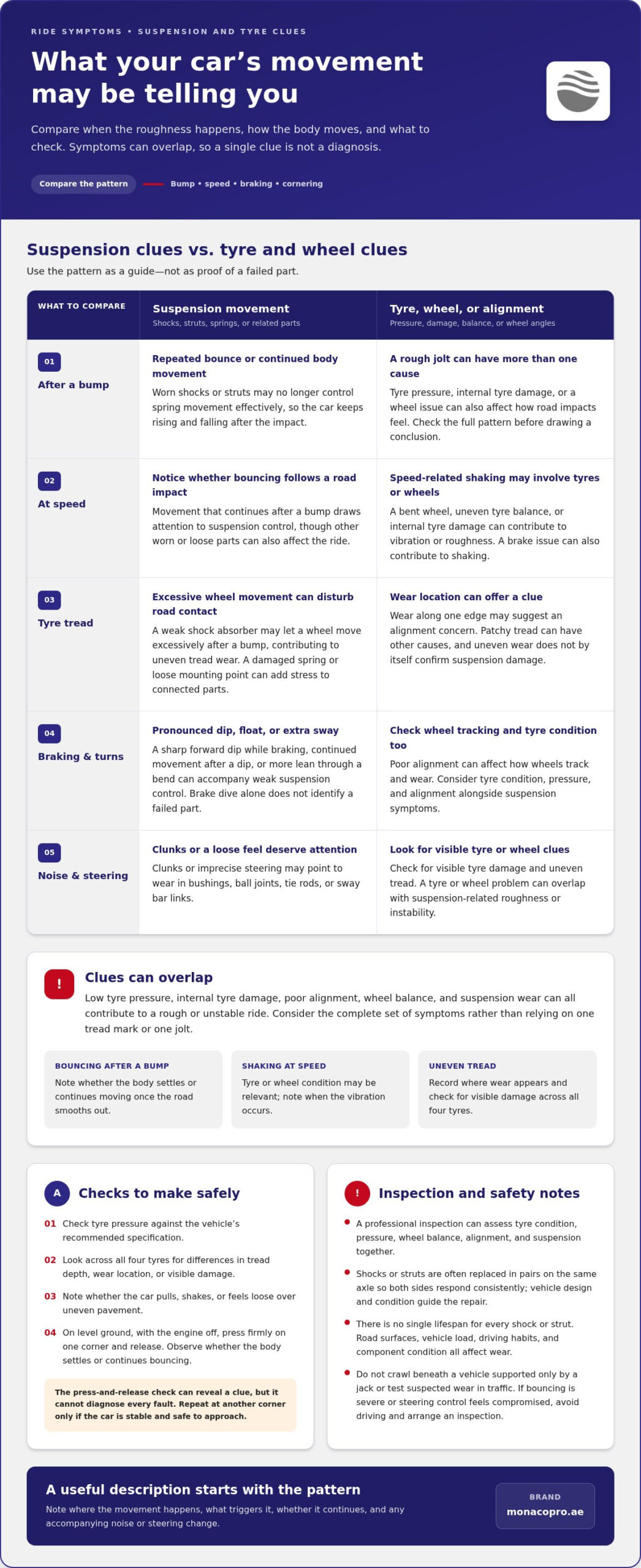
Suspension symptoms such as body float and brake dive
Body float feels like the car keeps moving after the road has settled. For example, the front may rise after a dip and continue moving instead of settling promptly. Worn shocks or struts can allow this repeated motion because they no longer control spring movement effectively. The sensation may become clearer over a series of bumps, as each impact adds movement before the previous one settles.
Brake dive is the noticeable forward pitch of a car as it slows. Some movement under braking is normal, but a pronounced dip can accompany weak suspension control. Watch for a change from familiar braking behaviour, especially if the front drops sharply and rebounds after stopping. Brake dive alone doesn’t identify a failed part; both the braking components and suspension condition matter.
Cornering can reveal another pattern. A car may lean more than usual through a bend, then sway as it straightens. Worn suspension components can make weight shifts feel less controlled, so steering corrections may seem to produce delayed body movement. A loose sensation over uneven pavement followed by continued rocking adds useful context when describing the symptoms.
Compare where and when each movement occurs. Note whether the front dips during braking, the rear bobs over a road dip, or the body sways through a turn. Record whether the movement happens once or continues after the initial road or steering input. These specific observations help distinguish a recurring suspension symptom from a single jolt caused by an uneven patch.
Listen for clunks alongside float or dive, and notice any change in steering response. A noise over a speed bump may point to a different worn or loose suspension connection than the one causing body movement. Persistent bouncing after a bump is a reason to have the vehicle inspected. Describe the road situation, direction of movement, and whether braking or turning triggers the symptom.
Worn bushings, ball joints, tie rods, and sway bar links
These connections help locate the wheels and manage movement between suspension parts. Wear can make steering less precise, increase noise, and affect how the car responds on uneven roads.
Worn Bushings and Ball Joints
A control arm bushing cushions the joint between the arm and chassis. As it wears, the arm may shift more than intended over bumps. That movement can cause clunks and make the car feel less settled. Cracked or deteriorated rubber can be a visible clue during inspection.
Ball joints connect suspension components while allowing them to pivot as the wheels turn and move. Wear can create looseness, noise, or inconsistent wheel movement. For example, a clunk when crossing an uneven road may occur alongside other steering or suspension symptoms. Sound alone doesn’t identify the exact fault, so the surrounding parts also need assessment.
Worn Tie Rods and Sway Bar Links
Tie rods connect steering components to the wheels, helping translate steering input into wheel direction. Wear can make steering feel loose or less precise. You may notice extra play or that the car doesn’t respond as directly as expected. These changes warrant attention because accurate steering depends on secure connections.
Sway bar links connect the stabilizer bar to the suspension. Worn links can make the vehicle noisier, particularly over uneven surfaces, and may affect body control during turns. A clunk when one wheel crosses a bump is useful context to report, but it doesn’t prove which link or joint has worn.
These parts can produce overlapping signs. Note where a sound occurs, whether the steering feels different, and whether symptoms appear over bumps or while turning. An inspection can distinguish wear in bushings, ball joints, tie rods, sway bar links, or mounts. It can also identify whether more than one connection needs attention.
If steering looseness, clunks, or unsettled movement persist, arrange an assessment through suspension service to identify the affected components.
MonacoPro Auto Garage: Battery Replacement
MonacoPro Auto Garage offers battery replacement, but a new battery won’t fix worn suspension or stop a car from bouncing. Battery replacement is relevant when starting problems point to a battery issue. If the ride feels rough and the tyres show damage or uneven wear, tyre replacement may help when worn tyres are the cause. These services address different problems, so matching the service to the symptom matters.
Persistent bouncing after bumps calls for attention to the suspension itself; tyre or battery work won’t repair worn suspension components. If your concern is a weak battery or damaged tyres, contact MonacoPro Auto Garage to discuss the relevant service.
Make Your Next Step Specific
If you’re still asking why your car’s suspension is so bouncy, describe what the vehicle does, not just how it feels. Note whether the symptom appears on a particular road surface, during braking, while turning, or at a certain speed. Record any new noise and whether the sensation is changing. These observations give an inspection a clearer starting point and help focus attention on the concern that matters most to you.
For a persistent unsettled ride, suspension service is the relevant next step. If braking or steering behaviour changes, treat it as more than a comfort issue. MonacoPro Auto Garage can help assess your suspension concern and guide the next step. Contact MonacoPro Auto Garage to discuss your vehicle. A clear description is a practical place to begin, so you can move forward with greater confidence.
Frequently Asked Questions
What causes a car suspension to feel bouncy?
A car can feel bouncy when worn dampers no longer control spring movement effectively. Tyre or wheel problems can also make the ride feel unsettled. If you’re asking, “Why is my car suspension so bouncy?”, note whether the sensation follows one wheel over a pothole or affects the whole car across several road undulations. A corner sitting lower while parked may also point to a spring or load-related issue.
How can worn shocks or struts cause excessive bouncing?
Shocks and struts limit spring oscillation after the wheels encounter a bump. As they wear, the car may continue bobbing after crossing a bridge joint or dipping into a road depression. If you’re wondering, “Why is my car suspension so bouncy?”, compare how quickly the vehicle settles after similar bumps on a familiar route. Dampness around a shock or strut can be a clue, but it doesn’t confirm the cause on its own.
What are signs of bad shocks, struts, springs, or suspension bushings?
Look for repeated bouncing, a corner sitting lower than the others, or a new clunk over uneven pavement. A damaged spring can affect the car’s stance when parked, while worn bushings may add noise or make steering feel less direct. Note when each symptom occurs and whether it comes from one corner. Those details help an inspection distinguish between different suspension parts.
How long do car shocks and struts typically last?
There is no single lifespan for shocks or struts; wear depends on road surfaces, vehicle load, driving habits, and component condition. New bouncing or continued body movement is a more useful warning sign than age alone.