
A silent engine doesn’t automatically mean the starter has failed. If you’re wondering what to check when your car won’t start, begin with the battery and dashboard lights, then consider the starter, alternator, fuel supply, and spark plugs. The sounds you hear, or whether the engine turns over at all, can help narrow down the cause.
It’s frustrating when a car won’t start, especially when the cause isn’t obvious. This guide explains common warning signs and what they may indicate, helping you decide what to do next. We’ll cover the starter and alternator, a discharged battery, fuel-system faults, and spark-plug problems. These checks can help identify a likely issue, but some faults require diagnostic equipment to pinpoint.
Key Takeaways
- Use the sound and behaviour of the engine when you turn the key to help distinguish a starter issue from a weak battery.
- A jump-start may get the car running, but whether the battery holds charge can point to a deeper issue.
- Check fuel level and consider a clogged fuel filter when the engine turns over but won’t start.
- Worn spark plugs can interfere with ignition; the symptoms can help indicate when a closer inspection is needed.
1. Checking the alternator and starter
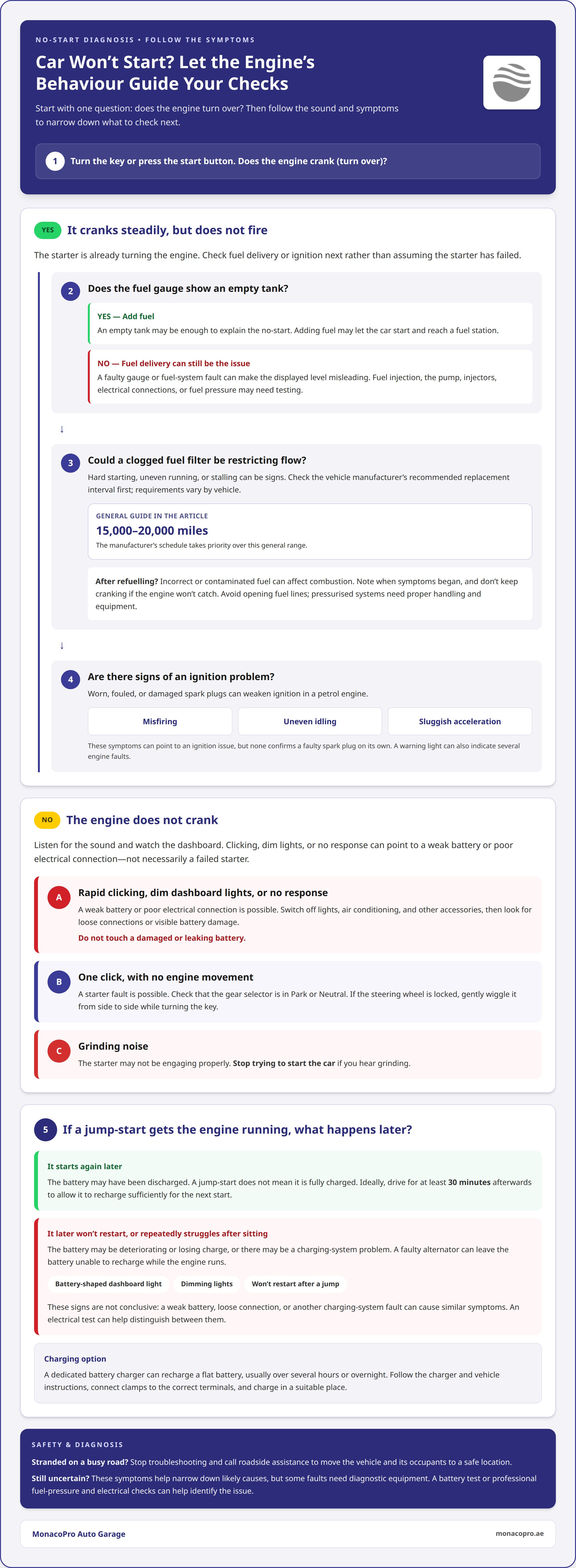
Start by turning the key or pressing the start button and listening. Rapid clicking, dim dashboard lights, or no response can point to a weak battery or poor electrical connection, not necessarily a failed starter. If the engine turns steadily but doesn’t fire, the starter is already turning it. Check possible fuel or ignition issues next, such as faulty spark plugs.
A single click with no engine movement can indicate a starter fault, while grinding may mean the starter isn’t engaging properly. Don’t keep trying if you hear grinding. Check that the gear selector is in Park or Neutral and that the steering wheel isn’t locked. If it is, gently wiggle the wheel from side to side while turning the key.
A faulty alternator may leave the battery unable to recharge while the engine runs. Warning signs can include a battery-shaped dashboard light, dimming lights, or a car that starts after a jump but later won’t restart. These signs aren’t conclusive: a weak battery, loose connection, or another charging-system fault can cause similar symptoms. An electrical test can help distinguish between them.
If the engine cranks but won’t start, fuel delivery or ignition is more likely to be the problem than the starter. If you suspect the engine is flooded, press the accelerator to the floor and try starting briefly for a few seconds. If it starts, let it idle for a few minutes and stay with the vehicle.
Stop troubleshooting if the car is stranded on a busy road. Call roadside assistance to move the vehicle and its occupants to a safe location. When deciding what to check first if your car won’t start, listen to the sound: clicking suggests an electrical or starter issue, while steady cranking points to another system.
2. Can you charge a flat battery?
A discharged battery can often be recharged, but charging won’t fix a battery that can no longer hold power. Slow cranking, dim dashboard lights, or inconsistent electrical accessories may indicate a low battery. First, switch off the lights, air conditioning, and other accessories, then look for loose connections or visible battery damage. Don’t touch a damaged or leaking battery.
How can you tell if the battery is dead or just discharged? If a jump-start gets the engine running and it starts again later, the battery may have been discharged. If it won’t hold a charge or repeatedly leaves the car unable to start, the battery may be faulty, or there may be a charging-system problem.
A dedicated battery charger can recharge a flat battery, usually over several hours or overnight. Follow the charger and vehicle instructions, connect the clamps to the correct terminals, and charge in a suitable place. If you use a jump-start instead, the engine running doesn’t mean the battery is fully charged. Ideally, drive for at least 30 minutes afterwards to allow it to recharge sufficiently for the next start.
Pay attention to what happens after charging. If the car starts normally but struggles again after sitting, the battery may be deteriorating or losing charge. Corroded or loose terminals can also interrupt the connection, so a visual check may reveal an obvious issue. A battery test can assess its condition and help distinguish a weak battery from a charging fault.
Repeated starting trouble is a good reason to arrange a proper battery assessment rather than relying on another jump-start. Battery replacement is the next step when testing shows the battery cannot reliably hold charge. For a focused inspection and battery replacement support, MonacoPro Auto Garage can help address a faulty battery.
3. Fuel problems and blocked fuel filters
Check the fuel gauge before investigating more complex faults. If the tank is empty, add fuel, which may be enough to start the car and reach a fuel station. If the gauge shows fuel but the engine cranks without firing, fuel delivery could still be the problem. A faulty gauge or fuel-system fault can make the displayed level misleading.
Fuel injection delivers fuel to the engine, so a fault in this system can prevent starting even when there’s fuel in the tank. Listen for unusual sounds when you turn the ignition on, such as a change in the pump noise, but don’t treat sound alone as a diagnosis. A technician can test fuel pressure and inspect the pump, injectors, electrical connections, and related components to find a delivery problem.
A clogged fuel filter can restrict flow, causing hard starting, uneven running or an engine that stalls. Check the vehicle manufacturer’s recommended replacement interval first, because filter requirements vary by vehicle. As a general guide, a car’s fuel filter should be changed every 15,000–20,000 miles. The manufacturer’s schedule takes priority over this general range.
Consider whether the engine began struggling soon after refuelling. Incorrect or contaminated fuel can affect combustion and may cause rough running or prevent the car from starting. Don’t keep cranking if the engine won’t catch. Note when the symptoms began and whether they followed a fuel stop, as this information can help narrow down the cause.
Use the symptoms to decide what to check next: confirm the tank level, consider the filter’s service interval, then investigate fuel delivery. If the engine cranks normally but still won’t start after you confirm there’s fuel, a professional test can assess the injection system and fuel pressure. Avoid opening fuel lines yourself: pressurised fuel systems require proper handling and equipment.
4. Worn or faulty spark plugs
In a petrol engine, spark plugs ignite the air-and-fuel mixture inside each cylinder. A worn, fouled, or damaged plug can weaken ignition, causing misfires, rough running, or difficulty starting. If the engine cranks but doesn’t catch, faulty plugs are one possibility, along with fuel-delivery problems or faults in other ignition components.
Notice how the car behaves before deciding what to inspect. Repeated misfiring, uneven idling, or sluggish acceleration can point to an ignition problem, but none of these symptoms confirms a faulty spark plug on its own. A warning light may also appear, though it can indicate several engine faults. Record when the symptoms occur, such as during a cold start or after the engine warms up.
Checking spark plugs involves inspecting their condition and connections, then comparing the findings with the vehicle manufacturer’s specifications. With the engine switched off and cool, look for damaged ceramic, heavy deposits, or worn electrodes. Oil or carbon deposits may point to other engine problems, so replacing a plug alone might not address the cause. Plug gaps and suitable replacement parts vary by vehicle, making the owner’s manual or workshop data important.
Don’t pull ignition components or test for a spark while the engine is running. Modern ignition systems use high voltage, and plugs can be difficult to access in tightly packed engine bays. A technician can inspect the plugs, coils, wiring, and fault codes together to distinguish a defective plug from a related fault. Diesel engines use glow plugs for cold starting, not petrol spark plugs, so confirm which system your vehicle has before assessing the symptoms.
If a spark-plug fault seems likely, a professional assessment can identify whether the plugs or another ignition component needs attention. Arrange a computer diagnostic for engine starting issues to help pinpoint the cause.
MonacoPro Auto Garage
MonacoPro Auto Garage can help diagnose why your car won’t start and identify what needs attention next. If the battery seems weak, the engine cranks without firing, or the cause remains unclear, a battery assessment or car computer diagnostic can help narrow down the fault.
The next step depends on the diagnosis. Battery Replacement addresses a faulty battery, while an Oil Change supports routine maintenance when it’s due. These services won’t resolve every starting fault, so an accurate diagnosis matters before choosing a repair.
Note the symptoms you observed, such as clicking, slow cranking, or normal cranking without ignition. Sharing these details can help focus the inspection. For help diagnosing a starting problem or arranging the appropriate service in Dubai, contact MonacoPro Auto Garage.
Move from symptoms to a clear next step
Knowing what to check when your car won’t start can help you describe the problem clearly, but guessing at a repair can add uncertainty. Before arranging an inspection, note what happens when you try to start the vehicle: whether the engine turns, what sounds you hear, and whether a warning appears on the dashboard. Include when the problem began and whether anything changed beforehand. These details give the technician a useful starting point for diagnosis.
If the car remains immobilised or the cause isn’t clear, a structured assessment can help identify the right next step instead of relying on repeated starting attempts or replacing parts without a diagnosis. Choose a safe course of action, and let a professional investigate persistent starting problems. Contact MonacoPro Auto Garage today to discuss your vehicle’s symptoms and arrange the appropriate assistance.
With a clearer picture of the issue, you can move forward confidently and make an informed decision about your car.
Frequently Asked Questions
Why Won’t My Vehicle Start?
A vehicle may refuse to start because an essential starting condition isn’t met, even when its main components seem normal. For example, an immobiliser may not recognise a key, or an automatic car may not detect Park or Neutral. Try the spare key if available, and confirm the gear selector is fully in Park. If the security indicator stays lit, the key or immobiliser may need diagnosis.
Can you charge a flat battery?
Yes, a discharged battery can often be charged, but don’t connect a physically damaged battery to a charger. Check the casing for cracks, bulging, or leakage, and follow the vehicle and charger instructions. If the battery charges but the starting problem returns, a battery test can help determine whether it holds charge or needs replacement.
Why won’t my car crank or turn over?
If the engine doesn’t turn at all, check whether the vehicle recognises the start command. In an automatic, select Park firmly, then try Neutral; in a manual, press the clutch fully. A keyless car may also fail to detect its fob, so follow the backup-start procedure in the owner’s manual. If these steps make no difference, the starting circuit needs diagnosis.
What are the most common reasons a car won’t start?
Common causes include problems with electrical power, the starting circuit, fuel delivery, or ignition. The symptoms help narrow down the possibilities: no engine movement is different from an engine that turns but doesn’t fire. A security warning, recent refuelling, or dashboard message can provide useful clues. Note what you observe and share it during diagnosis rather than replacing parts based on a single symptom.
What should you check when the car makes clicking noises but won’t start?
Notice whether the clicking is rapid or a single click, and whether the dashboard lights dim when you try to start the car. Then check that the gear selector is fully in Park or Neutral and that the key or fob is recognised. Don’t keep trying if the sound changes or grinding begins. Record the noise and dashboard behaviour, as these details can help distinguish electrical and mechanical faults.
How do you safely jump-start a car with jumper cables?
First, read both vehicles’ owner’s manuals, which specify the approved connection points and procedure. Don’t attempt a jump-start if either manual advises against it, or if the battery is cracked, swollen, or leaking. Use cables in good condition and keep the clamps from touching each other. If the correct terminals or connection sequence aren’t clear, stop and arrange professional assistance instead of guessing.