
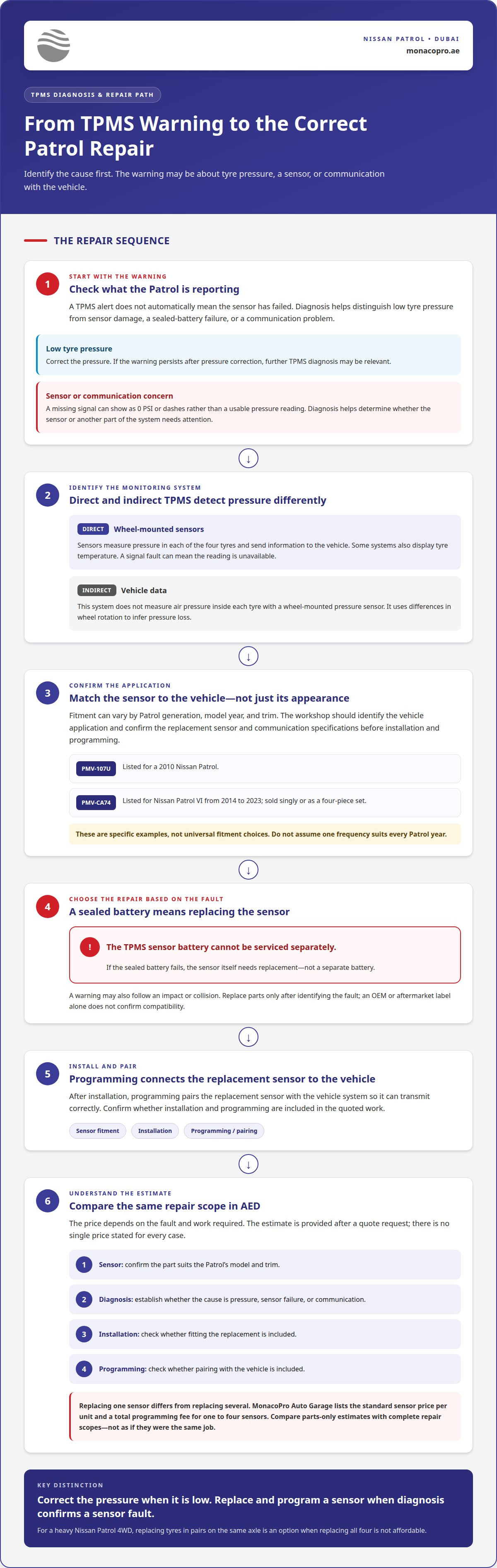
A Nissan Patrol TPMS sensor’s sealed battery cannot be serviced separately. When it fails, the sensor needs replacement. If you need a TPMS sensor for a Nissan Patrol in Dubai, the right fix depends on whether the alert is caused by low tyre pressure or a sensor fault. Diagnosis helps identify the cause instead of relying on a single battery-life estimate.
It’s understandable to want a clear lifespan and price before booking a repair. This guide explains what happens when a sensor battery runs out, how direct and indirect TPMS systems differ, and what affects repair or replacement costs in Dubai. The price depends on the case and is given after a quote request, with the sensor, diagnosis and programming requirements shaping the work.
You’ll also learn how to read common warning signs and what sensor programming involves. That makes it easier to understand the repair and get your Patrol’s tyre-pressure monitoring system working correctly.
Key Takeaways
- A TPMS sensor’s sealed battery isn’t replaced separately; when it fails, the sensor itself needs replacement.
- A warning light can point to low tyre pressure or a sensor or system fault, so identifying the cause is the first step toward the right repair.
- Direct and indirect monitoring systems detect pressure changes differently, which affects how a fault is diagnosed and resolved.
- Replacement costs depend on the sensor and the diagnosis or programming needed; understanding these factors helps you assess the repair estimate.
TPMS sensor repair and replacement prices in Dubai
In Dubai, the cost depends on the fault and the work required. Diagnosis distinguishes low pressure from sensor damage, battery failure or a communication problem.
Sensor Repair, Replacement and Programming
A TPMS warning may follow an impact, collision or dead sensor battery. Because the battery is sealed and not serviceable, battery failure means replacing the sensor, not fitting a separate battery. After installation, programming pairs the replacement sensor with the vehicle system so it can transmit correctly. The price depends on the case and is given after a quote request; cost factors include the sensor, diagnosis, installation and programming. For a trusted repair, the key step is identifying the fault before replacing parts.
Tyre replacement is a separate decision. For a heavy Nissan Patrol 4WD, replacing tyres in pairs on the same axle is an option if replacing all four isn’t affordable.
Model-Year and Trim Fitment
Sensor fitment can vary by Patrol generation, model year and trim, so match the part to the vehicle rather than choosing by appearance. A PMV-107U is listed for a 2010 Nissan Patrol. A PMV-CA74 sensor, sold singly or as a four-piece set, is listed for the Nissan Patrol VI from 2014 to 2023. These examples don’t establish fitment for every year or trim.
Before installation, the workshop should identify the vehicle application and confirm that the replacement sensor fits. This helps avoid fitting a part intended for a different Patrol version.
Sensor Compatibility and Specifications
OEM and aftermarket sensors can work only when the application and communication specifications match the Patrol. Reliability depends on correct fitment and successful pairing, not simply the OEM or aftermarket label. The PMV-107U and PMV-CA74 are specific part-number examples; they aren’t universal choices.
The sensor’s frequency must also match the vehicle’s TPMS system. Since the listed fitment details do not specify a frequency for every Patrol model, do not assume one value suits all years. The correct specification should be identified from the vehicle and sensor information before programming.
Dubai Buying, Workshop and Warranty Options
In Dubai, Nissan Patrol sensors are available through auto-parts sellers and tyre retailers. TPMS-equipped workshops can diagnose warning lights, replace a faulty sensor and program its signal. UAE heat and off-road use can bring pressure-management demands into focus; off-road pressure needs may differ from the vehicle placard. Impacts can also damage a sensor.
Warranty terms depend on the specific sensor and its written coverage. Review what the warranty covers, including sensor failure and any installation conditions. A clear diagnosis helps distinguish a failed sensor from low tyre pressure before parts are replaced.
Asking prices in AED
For a TPMS sensor for a Nissan Patrol in Dubai, the quote depends on the fault and work required. The price is provided after a quote request, with the sensor, diagnosis, installation and programming affecting the total. Ask for the scope in AED, so you can see whether the estimate covers the part alone or the complete repair.
Start by identifying the reason for the warning. Low tyre pressure calls for correcting the pressure, while a failed sensor may need replacement. If its sealed battery has failed, the sensor itself must be replaced. When the display shows a communication issue, diagnosis helps determine whether the sensor or another part of the system needs attention.
Compare estimates by checking what each one includes:
- Sensor: confirm the quoted part suits the Nissan Patrol’s model and trim.
- Diagnosis: establish whether the warning comes from pressure, sensor failure or communication.
- Installation: clarify whether fitting the replacement is included.
- Programming: confirm whether pairing the sensor with the vehicle is part of the quoted work.
The number of sensors also affects the work. Replacing one faulty sensor is different from replacing several, and each additional part changes the job’s scope. MonacoPro Auto Garage lists the standard sensor price per unit and a total programming fee for one to four sensors. Confirm the required sensor and programming before proceeding, rather than comparing a parts-only amount with the cost of a complete repair.
For a TPMS sensor for a Nissan Patrol in Dubai, request an itemised quote naming the sensor, diagnosis, installation and programming. If a warning persists after pressure correction, TPMS sensor programming is a relevant next step to consider.
Direct and indirect TPMS
Direct and indirect TPMS detect tyre-pressure problems differently. A direct system uses sensors mounted at the wheels; an indirect system uses vehicle data to infer pressure loss. Knowing which system the Nissan Patrol uses helps explain what its dashboard can report and how a fault is diagnosed.
Direct monitoring with wheel sensors
A direct TPMS sensor measures pressure in each of the four tyres and sends information to the vehicle. Some systems also display tyre temperature alongside pressure. Because each wheel has a sensor, a dashboard reading can help identify which tyre needs attention. A communication failure may leave an inflated tyre showing 0 PSI or dashes, rather than a usable pressure reading.
A direct system depends on working sensors and their connection with the vehicle. If a sensor signal disappears, the warning may indicate a system fault rather than low pressure. Diagnosis helps distinguish these possibilities before a replacement sensor is considered.
Indirect monitoring from vehicle data
An indirect TPMS does not measure air pressure inside each tyre with a wheel-mounted pressure sensor. Instead, it uses differences in wheel rotation, which can change when a tyre loses pressure. This approach can flag an issue, but it may not display each tyre’s pressure as a direct system does.
Tyre changes or pressure adjustments can affect the comparison used by an indirect system. After correcting pressure, follow the vehicle’s reset procedure if the Patrol’s system requires one. If the warning remains after a reset, have the system diagnosed rather than repeatedly clearing it.
For either system, begin with tyre-pressure checks. A solid TPMS warning light indicates low pressure, while a flashing light indicates a sensor or system fault. The typical Nissan Patrol recommendation is 32-35 PSI, but the door jamb or owner’s manual gives the vehicle’s specified pressure. TPMS is designed to detect under-inflation of 25% or more, so check pressure when the warning appears instead of relying on the alert alone.
Identifying whether the system is direct or indirect is a useful first diagnostic step. The sensor layout, dashboard readings and fault information help determine whether the issue concerns tyre pressure, a wheel sensor or system communication. This distinction guides the next check and avoids treating every warning as the same fault.
Direct and indirect pressure monitoring systems
Direct and indirect TPMS use different inputs, so their displays and diagnosis differ. In direct systems, wheel-mounted transmitters send measured pressure data to a receiver. Indirect systems may use vehicle data to identify changes associated with tyre pressure. The Nissan Patrol’s model and installed system determine which approach applies.
A direct setup can show pressure and temperature for all four tyres. Some dash-mounted receivers can also monitor a full-size spare, but that requires a fifth sensor sold separately. This matters if you expect the spare’s pressure to appear alongside the road tyres. Confirming the system configuration helps explain which readings the display can provide.
Aftermarket kits may use another arrangement. One kit specification lists four wheel-mounted transmitters and a display that can be wired or battery-operated. It is intended for passenger cars and light trucks without factory-installed TPMS, with a 0.453-inch rim hole. These kit details don’t establish fitment for every Nissan Patrol model.
Off-road use adds another consideration. Some TPMS systems are designed for off-road applications where tyre-pressure requirements differ from placard pressure. A driver may adjust pressure for the terrain, while the vehicle’s standard reference remains tied to its placard. The system type and intended use matter when interpreting a warning during or after off-road driving.
For a Patrol with a direct setup, a missing reading from one wheel can point to that sensor’s signal path. With indirect monitoring, the system relies on vehicle data, so a sensor-specific pressure display may not be available. Correctly identifying the setup helps distinguish a system limitation from a fault and guides the appropriate checks across different models.
Correct tyre pressure can support fuel efficiency, handling and even tyre wear. For help with the vehicle’s monitoring setup, arrange a TPMS system assessment and identify the right diagnostic direction.
MonacoPro Auto Garage: TPMS sensor+ programming
Monaco Pro Auto Garage provides TPMS sensor replacement and programming for Nissan Patrol drivers dealing with a warning or replacement sensor. A diagnostic assessment helps distinguish a tyre-pressure issue from a sensor or system fault, while programming pairs a compatible sensor with the vehicle’s monitoring system.
Turn to the garage when the warning persists after tyre pressure is corrected, a sensor has failed, or the dashboard shows missing pressure data. Car computer diagnostics can support fault identification. Battery replacement is for the vehicle battery, not a sensor’s sealed battery, so the recommended work can match the actual cause.
Contact Monaco Pro Auto Garage to discuss TPMS sensor replacement and programming for your Nissan Patrol.
Get your Patrol’s TPMS issue assessed
The next step is to match the warning with the right repair, rather than replacing parts without a clear reason. If you need a TPMS sensor for your Nissan Patrol in Dubai, Monaco Pro Auto Garage can help with sensor programming and related diagnostics. Describe the dashboard warning and any recent tyre or sensor work when arranging an assessment.
Monaco Pro Auto Garage also offers car computer diagnostics for vehicle fault assessment, alongside battery replacement and oil changes for separate maintenance needs. These services address different issues, so the work should match the concern affecting your vehicle.
For practical guidance on the next step, contact MonacoPro Auto Garage about your Patrol’s TPMS concern. You can discuss the warning and the service needed, then move forward with a clearer plan for your vehicle.
Frequently Asked Questions
How Long Does a TPMS Sensor Battery Last?
A TPMS sensor battery lasts until its sealed cell can no longer power the sensor, and its service life varies with use and conditions. The battery cannot be serviced separately. If a Nissan Patrol sensor stops transmitting because its battery has failed, the complete sensor must be replaced. A recurring missing reading from one wheel is a reason to diagnose that sensor rather than repeatedly resetting the dashboard warning.
TPMS Light On After a Tyre Change?
A TPMS light after a tyre change can mean the pressure needs attention, or that a sensor signal was disturbed or is not being recognised. First, compare the tyre pressures with the Nissan Patrol’s door-jamb label or owner’s manual. If the warning remains, note whether it is solid or flashing and whether one wheel shows no reading. Those details help distinguish a pressure issue from a sensor or system fault.
What Is a Tyre Pressure Monitoring System (TPMS)?
A tyre pressure monitoring system alerts the driver when tyre pressure is low or its monitoring system has a fault. Depending on the vehicle’s setup, it may measure pressure at the wheels or infer pressure changes from vehicle data. For example, a direct system can report individual wheel readings, while an indirect setup may warn without displaying each tyre’s pressure. It supports, but does not replace, regular pressure checks.
What is the price of a Nissan Patrol TPMS sensor in Dubai, including installation?
The listed standard TPMS sensor price is د.إ100 per sensor, with a total programming fee of د.إ50 for one to four sensors. This gives the sensor and programming charges, but doesn’t establish an installation-inclusive total. For an installed replacement, the estimate needs to account for the vehicle’s sensor fitment and the work required to remove the tyre, fit the part and program it.
How do you install and program a TPMS sensor on a Nissan Patrol?
A technician fits a compatible sensor inside the wheel, then programs it so the Patrol’s monitoring system can recognise its signal. The process starts by identifying the correct sensor for the vehicle, followed by fitting and programming. A final check confirms that the sensor communicates with the vehicle. Do not treat a sensor swap as complete until the dashboard recognises its information.
Does a Nissan Patrol TPMS sensor need relearning after replacement?
Yes, the vehicle generally needs to recognise the replacement sensor after installation. This may involve programming or a relearn procedure, depending on the Patrol’s system and sensor. Without successful pairing, the new part may not provide a usable reading, and the warning can remain. A technician can complete the required programming and check that the vehicle receives the sensor’s signal before returning it to driving.