
A tyre can need replacing even when only one part of its tread is worn. Replace it when the tread is flush with the wear indicators; the minimum tread depth is 1.6 mm. Understanding uneven tyre wear causes and solutions means looking beyond the tyre itself, since alignment, suspension condition, rotation and pressure can all affect its wear pattern.
It’s natural to focus on visible tyre wear, but its pattern can reveal a problem that needs attention before you fit a replacement. This guide explains what inner-edge, shoulder, centre and patchy wear may indicate, and what to do next. Understanding uneven tyre wear causes and solutions can help you see why replacing a tyre alone may not stop the same pattern from returning.
Key Takeaways
- Read the wear pattern for clues: cupping, feathering and edge wear can point to different tyre, alignment or suspension issues.
- When wear is patchy or uneven, consider the suspension and wheel geometry together; replacing a worn component can help address the cause.
- Diagonal and centre-tread wear can have different causes, so review rotation and tyre pressure rather than assuming one fix suits both.
- Use tread wear indicators and the condition across the tyre to judge when continued use should give way to replacement.
How to correct suspension misalignment?
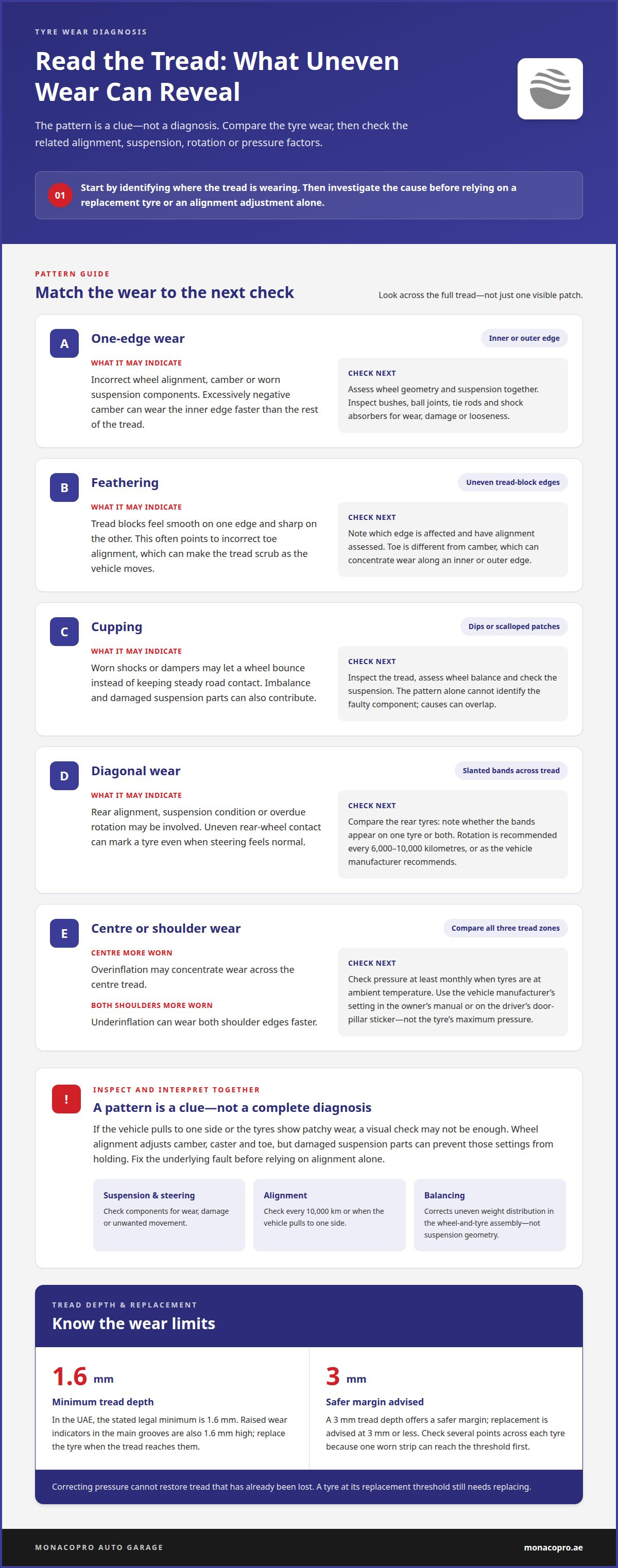
Wear on one side of the tread can indicate incorrect wheel alignment, camber or worn suspension components. Excessively negative camber can make the inner edge wear much faster than the rest of the tread. If the vehicle pulls to one side or the tyres show patchy wear, a visual tyre check may not be enough. Wheel alignment adjusts camber, caster and toe angles, but damaged suspension parts can prevent those settings from holding. Diagnosis should therefore consider both wheel geometry and the suspension that supports it.
Cupping appears as repeated dips or scalloped patches around the tread. Worn shocks or dampers may allow a wheel to bounce instead of maintaining steady road contact. Imbalance can also contribute to uneven contact, while damaged suspension parts may cause excessive movement. These causes can overlap, so the pattern alone cannot identify the faulty component. A technician can inspect the tread, assess wheel balance and check the suspension to narrow down the cause.
An inspection should include bushes, ball joints, tie rods and shock absorbers. Worn bushes can allow unwanted movement, while a damaged ball joint or tie rod can affect how a wheel tracks. Steering faults may also change the wheel’s direction under load and create irregular tread wear. Check for visible damage or looseness, then assess whether the components move as intended. Promptly replacing worn or damaged parts helps maintain suspension geometry and proper alignment.
Fix the underlying fault before relying on alignment alone. If a worn tie rod or ball joint remains in place, wheel angles may shift again and a replacement tyre may develop similar wear. Once damaged components are addressed, wheel alignment can restore the specified camber, caster and toe settings. Balancing serves a different purpose: it corrects uneven weight distribution in the wheel-and-tyre assembly, not suspension geometry. Assessing the suspension, steering, balance and alignment together helps identify the problem and guide the repair.
Diagonal wear from rear alignment, suspension or rotation issues
Diagonal wear forms slanted bands across the tread instead of wearing evenly. Its direction and location can help distinguish a rear alignment issue from suspension movement or overdue tyre rotation.
Diagonal Wear from Rear Alignment Issues
Diagonal wear is a slanted tread pattern that can develop when rear alignment, suspension condition or tyre rotation is an issue. The rear wheels affect how the vehicle tracks, so uneven contact can mark a tyre even when the steering feels normal. Compare the rear tyres for similar angled bands, and note whether the pattern is concentrated on one wheel. This can help show whether the cause may be local or affect both sides.
Alignment, Balancing, and Tyre Rotation
Wheel alignment sets the direction and angles of the wheels; balancing distributes weight around each wheel-and-tyre assembly. Rotation changes which position each tyre occupies, helping manage differences in wear between axles. Tyres should be rotated every 6,000 to 10,000 kilometres, or as recommended by the vehicle manufacturer. Rotation won’t correct incorrect alignment or a balance issue, so a diagonal pattern that persists needs a broader assessment.
Inspection of Alignment and Suspension
Inspection compares the wear across all four tyres with the rear wheel alignment and suspension condition. Check whether diagonal wear appears on one rear tyre or both, and note any pull or change in how the vehicle tracks. Wheel alignment should be checked every 10,000 km or when the vehicle pulls to one side. If the angles are incorrect, inspect suspension components for wear or damage before adjusting alignment; a fault can prevent the setting from holding.
Feathering from Incorrect Toe Alignment
Feathering leaves tread blocks smooth on one edge and sharp on the other, often indicating incorrect toe alignment. Toe describes whether the wheels point slightly inward or outward. An incorrect setting makes the tread scrub as the vehicle moves. Camber is a different angle, and it can concentrate wear on the inner or outer edge. Since these patterns suggest different geometry issues, note which edge is affected and have the alignment assessed rather than treating feathering as ordinary wear.
Centre tread wear from overinflation
If a tyre is more worn in the centre than at both shoulders, overinflation may be the cause. Excess pressure changes the tyre’s contact with the road and concentrates wear across the centre tread. That section can wear faster even if the outer edges appear less affected. Compare the centre with both shoulders instead of judging wear from one visible patch.
Tyre pressure is meaningful only when compared with the vehicle manufacturer’s recommendation. Check it at least once a month when the tyres are at ambient temperature, using a reliable pressure gauge. Find the recommended setting in the owner’s manual or on the sticker on the driver’s door pillar. If the reading is too high, adjust it to the specified level. Don’t use the maximum pressure printed on the tyre in place of the vehicle’s recommended setting.
Underinflation creates a different pattern: both shoulder edges may wear faster, making the tread look rounded rather than flat. Uneven wear can also appear as feathering, cupping or wear concentrated along one edge. A tread-depth gauge helps compare the inner edge, centre and outer edge, revealing differences that may be hard to see. If only the centre is shallower, pressure is a useful clue, but other patterns may point to alignment or suspension problems.
In the UAE, the legal minimum tread depth stated here is 1.6 mm. The raised wear indicators in the main tread grooves are also 1.6 mm high; replace the tyre when the tread reaches them. A 3 mm tread depth offers a safer margin, and replacement is advised at 3 mm or less. Check several points across each tyre, because one worn strip can reach the threshold before the rest. Correcting inflation won’t restore tread already lost, so a tyre at its replacement threshold still needs replacing.
Uneven tyre wear patterns and causes
Inner-edge and outer-edge wear affect opposite sides of the tread. Centre wear runs down the middle, while cupping creates repeated dips. Comparing these patterns across each tyre can help distinguish pressure-related wear from possible alignment or suspension issues.
Inner-Edge and Outer-Edge Wear
Inner-edge wear leaves less tread on the side facing the vehicle, while outer-edge wear affects the tyre’s outside shoulder. Camber describes the wheel’s inward or outward tilt, so incorrect camber can place more load on one edge. Compare both front tyres and both rear tyres. Similar wear on multiple tyres may suggest a shared geometry issue, while wear on one tyre can point to a local fault.
Centre and Cupped Wear Patterns
Centre wear runs along the middle ribs, while cupping appears as alternating shallow and deeper patches around the tread. Overinflation can concentrate wear in the centre; cupping may indicate a wheel-balance issue or worn suspension. Carefully run your hand across the tread to feel whether the surface is smooth or scalloped. The pattern offers a useful clue, but it cannot identify the exact component by itself.
Wear patterns can overlap. A tyre may have a worn shoulder alongside patchy tread, so inspect the full circumference and compare tread depth at the inner edge, centre and outer edge. Feathered blocks, with one edge sharper than the other, can indicate incorrect toe alignment. Gradual, even tread wear differs from these distinct marks and may reflect ordinary use rather than one isolated fault.
Record which wheel shows the pattern and where it appears before deciding what to adjust. Check pressure against the vehicle manual, then assess alignment, balancing and suspension if the wear remains uneven. That sequence helps avoid treating a symptom while another cause continues. For a professional assessment of alignment and balance, book a wheel alignment and balancing service.
MonacoPro Auto Garage: Battery Replacement
MonacoPro Auto Garage offers tyre replacement when uneven tread wear has left a tyre unsuitable for continued use. Before replacing it, note which edge or section is worn and whether the pattern appears on one tyre or several. These details help distinguish a tyre that has simply reached its replacement point from wear linked to an underlying vehicle issue. A new tyre restores usable tread, but it won’t correct a cause such as incorrect inflation or alignment; addressing that cause helps limit repeat wear. If the tyre is damaged or its wear indicators are flush with the tread, replacement is the relevant next step. For tyre replacement, contact MonacoPro Auto Garage or visit monacopro.ae.
Make your next tyre decision with confidence
Understanding uneven tyre wear causes and solutions can help you act before a small patch becomes a bigger concern. Treat the tread pattern as a clue, not a complete diagnosis. Connect what you see with how the vehicle behaves and what needs attention. This can help you decide whether to monitor the wear, address a mechanical issue or replace a tyre.
MonacoPro Auto Garage can help with tyre-related needs, alongside battery replacement, oil changes and car computer diagnostics. Choose the service that matches the issue you’re addressing, and share what you’ve noticed about the tyre’s condition when you get in touch. Clear details make it easier to begin with the right concern.
Contact MonacoPro Auto Garage to discuss your vehicle’s tyre needs and take a practical next step with confidence.
Frequently Asked Questions
When to let go of an unevenly worn tyre and get new ones?
Replace an unevenly worn tyre when its tread reaches the wear indicators or a worn section leaves too little usable tread. Check more than one point across the tyre, since the inner edge may be more worn than the visible outer shoulder. If you find damage or a sharp difference in tread depth, arrange an assessment before deciding whether the tyre can remain in use.
How to avoid excessive centre wear?
Use a reliable pressure gauge and follow the setting recommended in your vehicle manual or on the door-pillar sticker. Don’t judge inflation by appearance alone: a tyre can look normal even when its pressure is too high. Check all tyres under the same conditions and compare the readings with the specified levels. If centre wear continues despite correct pressure, investigate another cause instead of repeatedly lowering inflation.
How to check tires for wear?
Park on level ground and inspect the full circumference of each tyre, including the inner shoulder, centre ribs and outer shoulder. A tread-depth gauge can compare these areas and reveal a worn strip that a quick glance misses. Check both tyres on each axle, then note which positions differ. Repeating the inspection later gives you a useful record of whether the wear is spreading.
What can cause excessive or uneven tyre wear?
Excessive or uneven wear can result from incorrect inflation, poor alignment, worn suspension components, imbalance or driving habits that place extra load on the tread. A tyre worn on one edge presents a different clue from one with scalloped patches, so note the pattern before choosing a remedy. Replacing only the visibly worn tyre may leave an underlying vehicle issue unresolved.
What are the common causes of uneven tyre wear?
Common causes include overinflation, underinflation, incorrect wheel angles, worn suspension parts and delayed tyre rotation. Excessive pressure, for example, may concentrate wear through the centre, while low pressure can affect both shoulders. A feathered tread edge can point to toe alignment. These patterns help narrow down likely causes, but comparing all four tyres gives a clearer picture than inspecting just one.
How can tyre wear patterns identify alignment, inflation, or suspension problems?
Compare the location and shape of the wear: one worn edge suggests a different cause from centre wear, shoulder wear or repeated cupped patches. Feathering can point to toe alignment, while cupping may be associated with balance or suspension concerns. Measure tread depth across the tyre and record which wheel is affected. Taken together, the patterns help identify which system needs closer attention.