
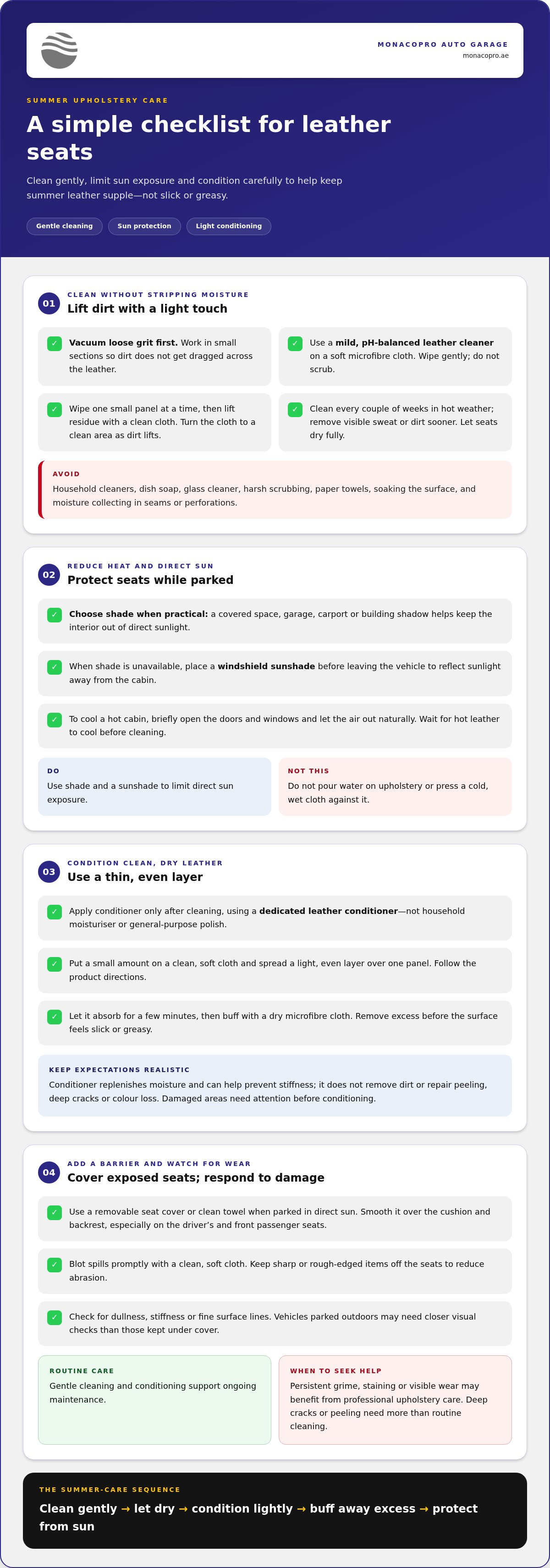
Vacuum loose dirt, wipe the seats with a pH-balanced leather cleaner and a soft microfibre cloth, then apply a dedicated conditioner and buff away excess. When parking in the sun, use a windshield sunshade and cover the seats. This routine explains how to maintain car leather seats in summer without stripping away moisture or leaving a greasy finish.
Cleaning is only part of summer leather care. Hours of heat and sunlight inside a parked car can also affect the seats. Gentle cleaning removes sweat and residue, while shade and seat covers offer practical protection. Read on to learn what can cause fading, dryness and cracking, how to clean and condition seats carefully, and when professional upholstery care may help.
Key Takeaways
- Use a mild, leather-specific cleaner and a soft microfibre cloth to lift dirt without harsh scrubbing.
- Choose shaded parking when possible, and use a windshield sunshade to limit direct sun and heat exposure.
- Condition clean, dry seats with a dedicated leather conditioner, then buff off excess to avoid a greasy surface.
- Cover seats while parked in direct sun to add a practical barrier against heat, moisture and everyday wear.
1. What causes signs of leather ageing or damage?
Dubai’s summer sun can fade leather and leave it dry, stiff or cracked over time. Sweat, dust and skin oils also collect on seats, especially around frequently touched areas such as the driver’s seat bolster. Harsh chemicals may discolour or peel the surface, while moisture trapped against warm leather can contribute to staining or mildew.
Start with a gentle clean. Vacuum loose grit, then use a mild, pH-balanced leather cleaner and a soft microfibre cloth. Work in small sections with light pressure instead of scrubbing. Avoid household cleaners, dish soap and glass cleaner, which may strip the leather’s natural oils. Skip paper towels, too; soft cotton or microfibre is less likely to scratch the finish.
How often should you clean leather car seats in hot weather? Wipe them with a suitable leather cleaner every couple of weeks, and remove visible sweat or dirt sooner. Regular summer cleaning clears residue before it builds up, but too much cleaner or a soaked surface can leave moisture behind.
Cleaner and conditioner serve different purposes. Cleaner lifts grime; a dedicated leather conditioner replenishes moisture after cleaning and can help prevent stiffness. Apply it to clean seats, follow the product directions, and remove excess so the surface does not feel greasy. Conditioner alone will not remove dirt, and residue may remain beneath it.
For persistent grime, staining or visible wear, professional leather cleaning and detailing can help care for the seats. A detailer can address built-up residue more thoroughly than a quick wipe at home. Deep cracks or peeling need more than routine cleaning, so avoid aggressive rubbing that could worsen the damaged finish.
Keep sharp objects and rough-edged items off the seats between cleans. Blot spills promptly with a clean, soft cloth rather than rubbing them across the leather. These habits reduce abrasion and help prevent sweat or liquid from lingering on warm upholstery.
2. How do you clean leather car seats without drying them out?
Clean one small seat section at a time so moisture and cleaner do not linger on warm leather. When learning how to maintain car leather seats in summer, controlled application is key. Put pH-balanced leather cleaner on a soft microfibre cloth instead of heavily spraying the seat. Wipe gently, then lift residue with a clean cloth. Avoid soaking seams and perforations, where moisture can collect.
To cool hot seats before driving, briefly open the car doors and windows to release trapped heat. Let the cabin air out naturally; do not pour water onto the upholstery or press a cold, wet cloth against it. This helps cool the interior without adding moisture to the leather.
Parking in shade helps limit direct sunlight and reduce fading or drying. When practical, choose a covered space, a building’s shadow or another shaded parking area. If shade is unavailable, place a windshield sunshade before leaving the vehicle. It reflects sunlight away from the cabin and helps reduce heat buildup around the dashboard and front seats.
A garage or carport can keep the interior out of direct sunlight for longer. At home, park under cover when possible. Outdoors, use a sunshade and clean gently when dust or spills appear. This is a practical part of knowing how to maintain car leather seats in summer, especially when the car must remain in an exposed spot.
If the leather feels hot, let the cabin cool before cleaning. Work from the centre of each panel towards the edges, turning the cloth to a clean area as dirt lifts. Allow the seats to dry fully before covering them or using the car. This helps prevent residue and moisture from lingering on the surface.
3. Applying leather conditioner
Conditioner works best after cleaning, when dust and oily residue no longer sit between the product and the leather. Choose a dedicated leather conditioner, not household moisturiser or general-purpose polish. Put a small amount on a clean, soft cloth and spread it evenly over one seat panel. A thin layer helps avoid excess product collecting in seams or perforations. Follow the product directions for application and drying.
Let the conditioner absorb for a few minutes, then buff the surface with a dry microfibre cloth to remove excess before it feels slick or greasy. Check contact areas such as the driver’s bolster and seat base, where friction and sun exposure can make dryness more noticeable. If the cloth picks up residue, turn it to a clean side and continue lightly. Do not add another layer just to create shine.
Conditioning supports maintenance, but it will not fix every surface defect. It can replenish moisture and help prevent leather from becoming stiff or cracking, but it will not repair peeling, deep cracks or colour loss. If seats already have cracks, clean and repair the damaged area first. Then condition the whole seat to restore moisture and suppleness, applying the product evenly across panels for a consistent finish.
Set a routine around how the car is used. A vehicle parked outdoors in Dubai sun may need closer visual checks than one kept under cover. Look for dullness, stiffness or fine surface lines. For leased vehicles, monthly conditioning during peak summer months can help keep leather supple. After each application, let the product absorb and buff away residue before sitting down, especially if you are wearing light-coloured clothing.
Apply a light, even layer rather than saturating the upholstery. Follow the conditioner label and let the seat dry before covering it. If a panel still feels greasy after buffing, use a clean cloth to remove the remaining product. This measured approach conditions the leather without leaving a slippery or heavy finish.
4. Covering leather seats when parked in the sun
A removable seat cover or clean towel adds a barrier between direct sunlight and leather upholstery. In Dubai, that extra layer is useful when outdoor parking leaves seats exposed for extended periods. Covers can reduce wear and tear, and removable styles can be taken off for cleaning and washing.
Cover the surfaces that receive the most sun, including the driver’s and front passenger seats. Spread the material smoothly across the cushion and backrest to avoid leaving sections exposed to sunlight. A towel can serve as a temporary cover; position it so it stays in place while the car is parked.
Choose a cover that is easy to remove when you return. Before driving, take off loose towels and covers so they do not shift under you or interfere with your position. If a cover feels damp, remove it and let the cover and leather dry separately. Moisture trapped against warm upholstery can contribute to staining or mildew.
Keep covers clean. Dust, grit or residue on the underside can rub against leather as the car moves or passengers get in and out. Remove the cover carefully, shake off loose debris outdoors, and wash it according to its care instructions. Check the seat surface before replacing the cover, especially after spills or humid conditions.
Seat covers are a practical supplement, not a replacement for cleaning or shade. Pair a cover with covered parking when available, and inspect the leather regularly for dirt, discolouration or wear. This layered approach helps limit direct exposure while keeping the upholstery accessible for routine care.
If your seats show wear that routine cleaning can’t address, explore professional upholstery care for a considered next step.
MonacoPro Auto Garage: Battery Replacement
MonacoPro Auto Garage provides battery replacement when a vehicle’s battery needs attention. Leather-seat care and battery maintenance are separate tasks, so continue using the cleaning, conditioning, shade and seat-cover steps above to protect your upholstery through Dubai’s summer.
If the battery is the concern, MonacoPro Auto Garage can help with replacement. Difficulty starting can indicate a battery issue, while fading or dry leather calls for upholstery care. Keeping those needs distinct helps you choose maintenance that addresses the problem without expecting battery work to fix seat damage.
Contact MonacoPro Auto Garage to discuss battery replacement.
Keep Your Interior Ready for the Season
Make leather care part of your regular vehicle routine instead of waiting for a visible crack or faded patch. A quick look across the seat panels can help you spot changes early and decide whether home care is enough or professional upholstery attention is more suitable. This steady approach helps you manage how to maintain car leather seats in summer while keeping the rest of your vehicle’s upkeep in view.
MonacoPro Auto Garage also offers battery replacement, oil changes and car computer diagnostics for other vehicle maintenance needs. Each service addresses a different concern, so choose the one that matches the issue.
For a next step, contact MonacoPro Auto Garage to discuss your vehicle’s maintenance needs. A considered routine can help you approach summer driving with greater confidence and care.
Frequently Asked Questions
How do you clean leather car seats without drying them out?
Use a cleaner formulated for automotive leather and avoid saturating the seat. Apply it to a cloth first, then test a small, discreet area to see how the finish responds. Follow the product directions, lift residue with a separate dry cloth, and let the upholstery dry naturally. This controlled approach helps prevent cleaner from collecting around seams or perforations.
What causes signs of leather ageing or damage?
Sunlight, heat, friction and residue can contribute to fading, stiffness, cracking or peeling. For example, the outer edge of the driver’s seat often gets repeated contact as people enter and exit. Sweat and dust can also accumulate in creases. Inspect high-contact panels and seams regularly; changes in texture or colour can signal that the surface needs closer attention.
What products do I use?
Choose an automotive leather cleaner, a dedicated leather conditioner and soft microfibre cloths for application and buffing. A vacuum with an upholstery attachment can remove loose grit before wiping. Avoid household sprays, dish soap and glass cleaner, which may be too harsh for leather finishes. Keep products labelled for automotive upholstery separate from general interior cleaners.
How does UAE summer heat and sunlight damage car leather seats?
Sunlight can fade the seat surface, while heat exposure can contribute to dryness and cracking over time. A parked car’s interior also heats up, exposing leather to sustained warmth even when the vehicle is not being driven. This matters especially for seats left in direct sun. Shade, a windshield sunshade and removable seat covers help limit direct exposure.
What cleaner is safe for genuine and synthetic car leather?
Use a cleaner labelled for the specific upholstery material in your vehicle. Genuine and synthetic leather can have different surface finishes, so do not assume the same product suits both. Check the vehicle’s care instructions and the cleaner label before applying it. If the seat material is unclear, test a small, hidden area first and watch for changes in colour or finish.
How to condition leather car seats without making them greasy?
Apply a thin, even layer of dedicated conditioner to clean upholstery with a soft cloth. Let it absorb for the time stated on the product label, then buff the seat with a dry microfibre cloth. Pay attention to seams and perforations, where excess can collect. If the surface still feels slick, remove remaining residue with a clean cloth before driving.