
A vibrating steering wheel doesn’t always mean your wheels need alignment. Finding the right steering wheel vibration fix Dubai drivers need starts with identifying when the vibration happens, not guessing at the repair. Does it appear at a certain speed, when you brake, or even while the car is stationary? Those details help point towards different causes.
It’s understandable to worry that continued driving could make the problem worse. The source might be a tyre, wheel balance, brake, steering component, or suspension part. Wheel balancing and alignment also solve different problems, so one isn’t automatically a substitute for the other. A careful diagnosis helps narrow down the cause before parts or adjustments are recommended.
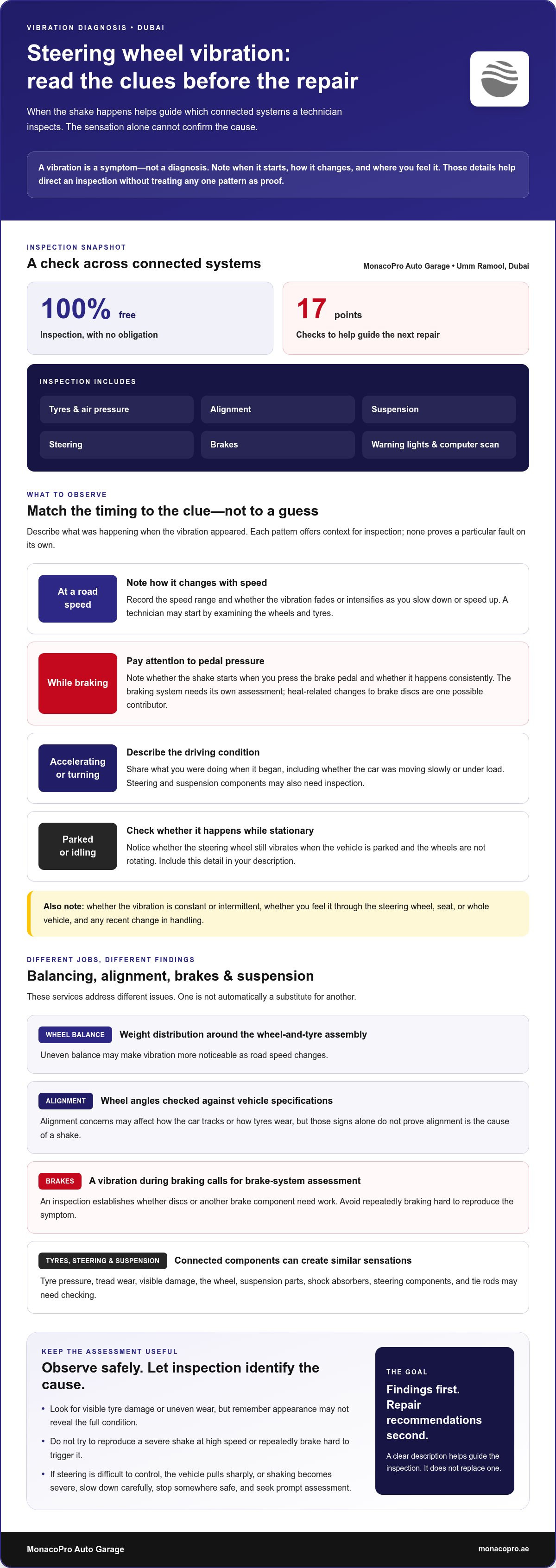
This guide explains common vibration patterns, what symptoms to describe to a technician, and why several connected systems may need inspection. At MonacoPro Auto Garage in Umm Ramool, Dubai, the 100% free 17-point inspection with no obligation includes checks of tyres and air pressure, alignment, suspension, steering, brakes, and warning lights with a computer scan. The findings can help guide the next repair instead of relying on guesswork.
Key Takeaways
- Steering wheel vibration is a symptom, not a diagnosis. Note when it occurs so a technician has useful clues to investigate.
- Wheel balancing, alignment, brake work, and suspension repairs address different issues. A vibration pattern alone can’t confirm which one you need.
- Look for visible tyre damage or uneven wear, but avoid risky road tests or attempting repairs without the right expertise.
- A professional steering wheel vibration fix Dubai diagnosis can assess connected tyre, wheel, brake, steering, and suspension components before recommending a repair.
- At MonacoPro Auto Garage in Umm Ramool, inspection findings can guide the next step, including wheel alignment and balancing, tyre and wheel services, suspension or brake service, and computer scanning.
Steering Wheel Vibration in Dubai: What the Symptom Can Tell You
A steering wheel that shakes is giving you a clue, not naming the faulty part. The movement may come from a tyre or wheel, braking components, steering, suspension, or another issue. The sensation alone can’t confirm the repair. When the vibration occurs and where you feel it help a technician decide which systems to inspect first.
A vibration is the symptom you feel; the underlying mechanical cause is what a proper inspection needs to identify. Before arranging a steering wheel vibration fix Dubai drivers can rely on, note whether the shake occurs while parked, accelerating, cruising at a steady speed, turning, or braking. Record whether it’s constant or intermittent, and whether you feel it through the steering wheel, the seat, or the whole vehicle. These observations help describe the problem without treating any one pattern as proof.
When does steering wheel vibration happen?
Timing matters. A shake that changes with road speed gives the technician a different starting point from one that appears only when you press the brake pedal. Vibration during acceleration, at low-speed manoeuvring, or while the car is parked provides further context. The same steering-wheel symptom can have different explanations depending on when it appears, so don’t assume it calls for balancing or alignment after just one drive.
- At a particular road speed: Note the speed range and whether the vibration fades or intensifies as you slow down or speed up.
- While braking: Record whether the shake starts with pedal pressure and whether it happens consistently.
- During acceleration or turning: Describe what you were doing when it began, including whether the car was moving slowly or under load.
- While parked or idling: Notice whether the steering wheel still vibrates with the vehicle stationary, when the wheels aren’t rotating.
A rapid side-to-side shake is sometimes described as shimmy. Speed wobble (also known as shimmy or death wobble) is a rapid side-to-side shaking of a vehicle’s wheel(s) that occurs at high speeds and can lead to loss of control. Don’t try to reproduce a severe shake at high speed to gather more information. A technician can use your description alongside an inspection.
Why a steering wheel shake deserves attention
Even a mild vibration can make driving less comfortable and may accompany wear or a mechanical fault. Not every shake signals an immediate safety problem, but ignoring a persistent or worsening change leaves the cause unidentified. If the steering feels difficult to control, the vehicle pulls sharply, or the shaking becomes severe, slow down carefully, stop in a safe place, and seek prompt assessment instead of continuing the journey.
For a useful diagnosis, share when the vibration occurs, how it changes, and any recent change in the vehicle’s handling. A clear description helps guide the inspection, but doesn’t replace one.
Common Causes of Steering Wheel Vibration: Tyres, Brakes, and Suspension
Several connected systems can create a similar shake through the steering wheel, so the sensation alone can’t identify the faulty part. Tyres, steering, suspension, and brakes can produce similar sensations, but the timing and inspection findings help distinguish their causes. A vibration that changes with road speed may lead a technician to examine the wheels and tyres. Shaking that occurs during braking calls for a separate assessment of the brake system.
Wheel balance, tyre condition, and alignment
Wheel balancing addresses how weight is distributed around the wheel-and-tyre assembly. If that balance is uneven, vibration may become more noticeable as road speed changes. Alignment is different: it checks wheel angles against the vehicle’s specifications. An alignment concern may affect how the car tracks or how tyres wear, but those signs don’t prove alignment is the cause of a shake.
A technician can inspect tyre pressure, tread wear, visible damage, and the wheel itself. A bulge, cut, uneven tread pattern, or bent wheel needs physical assessment; appearance alone may not reveal its full condition. These checks help determine whether balancing, alignment, tyre or wheel work, or further diagnosis is appropriate. Balancing and alignment are not interchangeable procedures.
Brake, steering, and suspension components
If vibration appears when you press the brake pedal, the braking system deserves attention. Heat-related changes to brake discs are one possible contributor, but only an inspection can establish whether discs or another brake component need work. Avoid repeatedly braking hard to reproduce the symptom. Instead, note when it occurs and share that detail with the technician.
Suspension parts, shock absorbers, steering components, and tie rods work together to support stable handling. Wear or damage in these areas may affect how movement reaches the steering wheel, but a shake alone can’t identify the responsible component. A technician may inspect several connected parts because one visible symptom can have more than one possible source.
- Wheel and tyre checks: Assess pressure, condition, wear, damage, balance, and wheel condition.
- Alignment checks: Measure wheel angles rather than tyre weight distribution.
- Brake checks: Investigate vibration linked to pedal application.
- Steering and suspension checks: Assess related parts such as shock absorbers and tie rods.
The National Highway Traffic Safety Administration (NHTSA) provides general vehicle-safety information in the United States, including road safety resources; it isn’t a UAE vehicle inspection authority. In Dubai, MonacoPro Auto Garage’s 100% free 17-point inspection with no obligation checks tyres and air pressure, alignment, suspension, steering, brakes, and warning lights with a computer scan. These findings can help clarify the next diagnostic step before repair. Explore vehicle inspection and repair services.
Wheel Balancing vs Alignment vs Brake or Suspension Repair in Dubai
Choosing a repair based on a vibration pattern alone can lead to the wrong fix. Wheel balancing, alignment, brake service, and suspension repair address different systems. None should be assumed necessary just because the steering wheel shakes. A technician uses the symptom as a clue, then compares it with inspection findings to identify the appropriate work.
| Service | What it checks or addresses | What it does not establish |
|---|---|---|
| Wheel balancing | Weight distribution around the wheel-and-tyre assembly | Whether wheel angles, brakes, or suspension are in good condition |
| Wheel alignment | Wheel angles relative to vehicle specifications | Whether a vibration comes from imbalance or a brake fault |
| Brake service | Brake components when symptoms or inspection findings point to the braking system | Whether the wheels are balanced or aligned |
| Suspension or steering repair | Related components, such as suspension parts, steering, and tie rods | Whether a tyre or brake issue is the source without those systems being assessed |
What wheel balancing can and cannot address
Balancing corrects uneven weight distribution in the wheel-and-tyre assembly. A vibration that changes with road speed makes it a reasonable area to investigate, but doesn’t prove balancing is needed. The tyre and wheel should also be checked for damage or uneven wear, since balancing alone won’t correct every condition that can cause a shake.
When alignment, brakes, or suspension need assessment
Alignment measures wheel angles; it doesn’t redistribute wheel weight, so it isn’t interchangeable with balancing. If vibration appears specifically while braking, the brake system needs assessment rather than an assumed balancing fix. Suspension and steering checks are appropriate when inspection findings point to those systems. The aim is to match the work to the evidence, not to select a service based on one symptom.
For example, a speed-related shake may lead to checks of tyre condition, wheel balance, and alignment, while vibration during braking directs attention to brake components. If those checks don’t explain the symptom, the inspection may extend to suspension and steering. Findings matter more than the first guess, and more than one system may need assessment before the cause is clear.
For background on related inspection topics, consult a car suspension repair guide or a tyre shop guide. The key distinction is that each service addresses a different part of the vehicle. A professional steering wheel vibration fix Dubai diagnosis should connect the observed symptom with the condition of the relevant components before repair is recommended. Monaco Pro Auto’s 100% free 17-point inspection with no obligation includes checks of tyres, alignment, suspension, steering, and brakes to help inform the next step. Explore vehicle inspection and repair services.
What to Do Before Booking a Steering Wheel Vibration Fix
A few careful observations can make an inspection more focused, but you don’t need to identify the faulty part yourself. Record what you notice, check only what’s safely visible, and let the findings guide the repair. This preparation helps a technician distinguish between a vibration that changes with speed and one linked to braking or turning.
- Record the symptoms. Note when the vibration starts, whether it changes with speed, and if braking, accelerating, or turning affects it. Mention whether it’s constant or intermittent.
- Check visible tyre condition. With the vehicle parked safely, look for obvious cuts, bulges, uneven wear, or a visibly damaged wheel. Don’t crawl under the vehicle or touch hot components.
- Arrange an inspection. Share your observations and any recent tyre changes, impacts with a pothole or kerb, or service work. Avoid risky road tests to recreate the shake.
- Review the findings. Ask which checks relate to the observed symptoms and what the inspection found. The appropriate repair should follow those findings, not a guessed cause.
Information to share with the technician
Be specific without trying to diagnose the car. Describe the speed or driving condition when the vibration begins, whether it changes during braking or turning, and where you feel it. Include any recent tyre replacement, wheel impact, or service work. Mention unusual noises, the vehicle pulling to one side, warning lights, or a change in braking response.
These details help frame the inspection, but don’t prove which part needs repair. For example, a new vibration after a wheel impact is useful context, but it doesn’t confirm wheel damage. Similarly, a shake felt during braking points to a check of the braking system, not an automatic conclusion about its condition.
When to arrange an inspection promptly
Arrange professional assessment promptly if the vibration is worsening or affects your ability to steer. If the vehicle feels difficult to control, stop somewhere safe and don’t continue driving in that condition. Avoid high-speed testing, forceful braking to reproduce the symptom, or repairs that require tools or expertise you don’t have. An inspection is needed to assess the cause and determine suitable next steps.
Monaco Pro Auto General Repairing L.L.C. in Umm Ramool offers a 100% free 17-point vehicle inspection with no obligation. It includes checks of tyres and air pressure, alignment, suspension, steering, brakes, and warning lights with a computer scan. A steering wheel vibration fix Dubai process should consider these findings before recommending relevant wheel, tyre, brake, suspension, or diagnostic work. Arrange a vehicle inspection to start with an assessment rather than a guess.
Steering Wheel Vibration Repair in Dubai at Monaco Pro
At MonacoPro Auto Garage in Umm Ramool, Dubai, steering wheel vibration is approached through inspection rather than an automatic assumption that balancing is the answer. The workshop provides wheel alignment and balancing, tyre and wheel services, suspension and front-end repair, brake service, and computer scanning. The relevant systems can be assessed according to the symptoms and inspection findings.
A useful starting point is the 100% free 17-point vehicle inspection, with no obligation. It includes checks of tyres and air pressure, wheel alignment, suspension and shock absorbers, steering and tie rods, brakes, and warning lights with a computer scan. This broad check can help identify which areas need closer assessment before a repair is considered.
How MonacoPro Auto Garage approaches diagnosis and repair
Technicians assess relevant wheel, tyre, steering, suspension, or brake areas based on the reported vibration and inspection findings. For example, a wheel-related finding may lead to consideration of balancing or tyre and wheel work, while findings in the braking system or suspension point towards different checks. The recommended work follows the evidence; the symptom alone does not predetermine a particular repair.
After the inspection, MonacoPro Auto Garage provides a digital vehicle-health report before work begins, so you can review the findings and understand which system needs attention and why. This helps distinguish a corrective adjustment from a component repair and keeps the next step connected to the diagnosed concern.
Arrange a local inspection in Umm Ramool
The workshop is located at 13th-st Umm Ramool, Dubai, and is open daily from 8:00 AM to 10:30 PM. Before visiting, have a brief description ready: when the vibration occurs, whether braking or turning changes it, and whether you have noticed tyre damage, unusual noises, pulling, or warning lights. These details give the technician useful context, while the inspection determines what should be checked.
If you are looking for a steering wheel vibration fix Dubai drivers can approach with clarity, begin with an assessment rather than guessing at a repair. The no-obligation 17-point inspection provides a way to review tyres, alignment, suspension, steering, brakes, and warning lights before deciding on relevant service. Arrange your free vehicle inspection at MonacoPro Auto Garage in Umm Ramool.
Take the Next Step Towards a Steadier Drive
Don’t let a steering wheel shake leave you guessing about what your car needs. Note when the vibration starts and what changes it, then use those details as a starting point for a professional assessment. The right steering wheel vibration fix Dubai drivers need depends on identifying the cause, not choosing a repair based on a hunch.
A clear inspection can turn uncertainty into a practical plan. Monaco Pro’s 100% free 17-point vehicle inspection comes with no obligation and helps assess connected areas, including tyres, alignment, suspension, steering, brakes, and warning lights. The findings can guide the next step, whether that involves wheel alignment and balancing, tyre and wheel services, suspension or brake work, or computer scanning.
Start with a considered assessment rather than another guess. Arrange your free, no-obligation 17-point vehicle inspection and move towards a confident repair decision. A steadier drive starts with knowing what needs attention.
Frequently Asked Questions
Can wheel balancing fix steering wheel vibration?
Yes, wheel balancing can address vibration if an inspection identifies uneven weight distribution in the wheel-and-tyre assembly. It won’t repair a damaged tyre or correct wheel angles, and it can’t resolve a brake, steering, or suspension concern. If vibration remains after balancing, further checks may be needed. A technician should assess the relevant components and determine whether balancing is suitable before work begins.
Is steering wheel vibration dangerous to drive with?
It depends on the cause and how the vehicle behaves, so don’t dismiss a persistent or worsening shake. If steering control feels compromised, stop somewhere safe rather than continuing to drive. Arrange an inspection promptly if the vibration grows stronger, comes with unusual noises, or coincides with a change in braking. Those signs need professional assessment; they don’t establish a specific fault or allow anyone to confirm the vehicle’s safety remotely.
Why does my steering wheel vibrate when I brake?
Vibration that begins specifically as you brake calls for assessment of the brake system, though other vehicle components may also contribute. Note whether it happens with gentle or firmer braking, whether it occurs at different speeds, and whether it’s becoming more noticeable. Avoid repeated hard stops to test the symptom. Share your observations with a technician, who can examine the vehicle before identifying a cause or recommending brake work.
How do I know if vibration is from wheel balancing or alignment?
You can’t confirm the cause from vibration alone. Balancing corrects weight distribution around the wheel-and-tyre assembly, while alignment checks wheel angles against vehicle specifications. If the car pulls to one side or the tyres show uneven wear, mention it, but treat those details as clues rather than proof. A technician considers the full symptom pattern and inspection findings to determine whether balancing, alignment, or another check is appropriate.
Can a damaged tyre cause the steering wheel to shake?
Yes, tyre condition can be one possible source, but a steering shake may also involve a wheel, brake, steering, or suspension component. Park safely and look for visible cuts, bulges, or uneven tread without reaching under the vehicle. Don’t assume a tyre is sound just because damage isn’t obvious. Arrange a professional inspection if you notice visible problems or the vibration persists, and describe any recent impact or tyre change.
What happens during a steering wheel vibration inspection in Dubai?
An inspection considers when the vibration occurs and checks relevant parts, which may include tyres, wheels, alignment, steering, suspension, and brakes. At Monaco Pro, the 17-point vehicle inspection is 100% free with no obligation. It includes tyre and air-pressure, alignment, suspension, steering and tie-rod, and brake checks, plus a computer scan. This helps inform the next step for a steering wheel vibration fix Dubai drivers are considering, without assuming the repair in advance.