
If you’re asking, “why does my steering wheel shake when braking,” the timing of the vibration is an important clue. A shake that starts when you press the brake pedal can point to a brake issue, but wheel, tyre, steering, or suspension problems can create a similar feeling. The symptom deserves attention, especially if braking or vehicle control has changed.
Notice whether the vibration begins only when braking, continues while cruising, or occurs over bumps. Also note whether you feel it in the steering wheel, brake pedal, or vehicle body, and whether the car pulls to one side or makes unusual noises. These details help describe the problem, but they don’t confirm its cause.
This guide covers common possible causes, signs that call for prompt attention, and what an inspection can assess. MonacoPro Auto Garage in Umm Ramool, Dubai, provides disc and brake service, suspension service, and wheel alignment and balancing to help identify the right next step.
Key Takeaways
- For “why does my steering wheel shake when braking,” note when the vibration starts and whether you feel it in the pedal or vehicle body.
- Brake-disc contact and pad condition are among the factors an inspection can assess, but shaking alone doesn’t confirm the cause.
- Compare braking-only vibration with shaking that continues while cruising to help identify which systems may need attention.
- If braking feels unreliable or the car is difficult to control, stop somewhere safe and arrange professional attention.
- A brake and suspension inspection in Dubai can assess the brakes, wheels, tyres, and suspension together to guide the next step.
Why Does My Steering Wheel Shake When Braking? Start With the Symptom
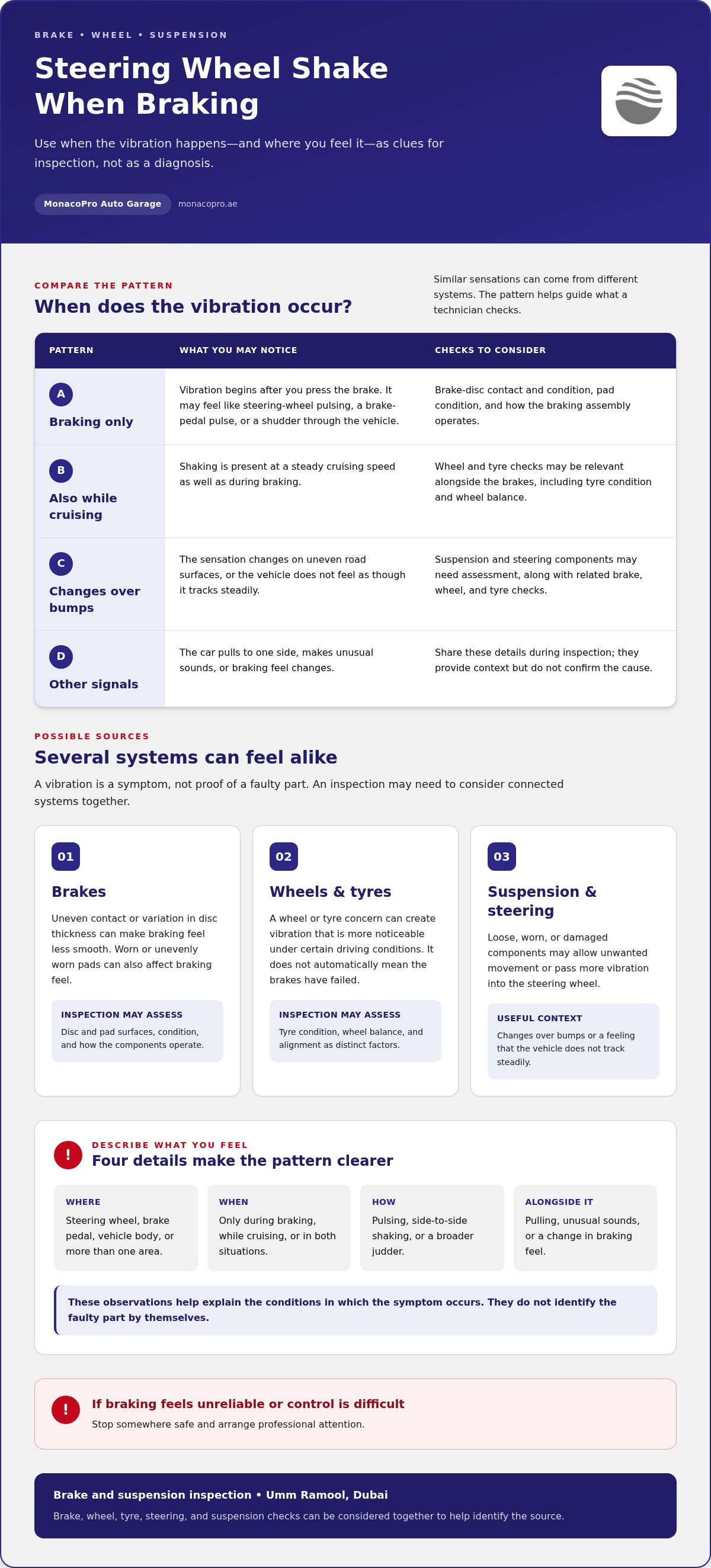
Braking vibration is a symptom, not a diagnosis. If you’re wondering, “why does my steering wheel shake when braking,” the sensation alone can’t identify the faulty part. You might feel movement in the steering wheel, a pulse through the brake pedal, or a shudder through the vehicle body. Where and when it happens are useful clues, but they need to be considered together.
Several systems can contribute to a similar sensation. Brake components create the friction that slows the vehicle, while wheels and tyres rotate beneath it and suspension components help manage their movement. A problem in one area can sometimes be felt elsewhere. An inspection may therefore need to consider brakes, wheels, tyres, steering, and suspension rather than assume a single cause from the first symptom.
What does steering-wheel vibration during braking feel like?
The steering wheel might pulse against your hands, shake from side to side, or judder briefly as you slow down. Some drivers notice a matching pulse in the brake pedal; others feel more of a tremor through the car. The vibration may be mild or pronounced, steady or intermittent, and may vary with speed or braking pressure.
A vibration describes what the car is doing; inspection confirms why.
Why the steering wheel can reveal a front-end issue
The front wheels are connected to the steering system, so movement or vibration around the front of the vehicle can travel through those connections and reach the steering wheel. During braking, that feedback can draw attention to a front-end symptom, but it doesn’t prove which part is responsible. A brake disc is one component of the Disc Brake System, alongside parts such as the pads and caliper.
For example, shaking that appears as the car slows may lead a technician to assess the brakes. Vibration that is also present while cruising makes wheel or tyre checks relevant too. Suspension and steering components can also affect how the vehicle responds. These are possibilities to investigate, not conclusions to draw from the steering-wheel sensation alone.
Before describing the issue for inspection, think about what happens during ordinary driving. Does the vibration begin only after you press the brake, or is it already present at a steady cruising speed? Do you feel it in the pedal as well as the wheel? Does the car pull to one side, or does the sensation change over uneven road surfaces? These details help connect the symptom to the conditions in which it occurs.
- Where: steering wheel, brake pedal, vehicle body, or more than one area.
- When: only during braking, while cruising, or in both situations.
- How: pulsing, side-to-side shaking, or a broader judder.
- Alongside it: pulling, unusual sounds, or a change in braking feel.
Use these observations to explain the pattern, not to diagnose the fault yourself. A professional assessment can check the relevant systems together and determine whether the source is related to braking, the wheels and tyres, or the suspension and steering.
What Can Cause a Steering Wheel to Shake When Braking?
Several issues can create a similar shake, so the symptom shouldn’t lead straight to parts replacement. If you’re asking, “why does my steering wheel shake when braking,” brake discs and pads are important possibilities, but wheel, tyre, suspension, or steering concerns may also contribute. The pattern helps guide an inspection; it doesn’t confirm the cause by itself.
Brake discs and pads: possible sources of judder
As the brake pads press against the discs, uneven contact or variation in disc thickness can make braking feel less smooth. You may feel vibration through the steering wheel or pedal, particularly as the car slows. Disc condition and material specifications are separate considerations; for background on gray iron used in automotive components, see SAE Standards for Brake Rotor Materials.
Worn or unevenly worn pads can also affect how braking feels. However, a visible mark, noise, or vibration alone can’t reliably establish pad wear or disc condition. A technician needs to assess the braking assembly as a whole, including the disc and pad surfaces and how the components operate. This helps distinguish a brake-related cause from a similar sensation originating elsewhere and avoids replacing parts based only on a guess.
Wheels, tyres, and suspension components
A wheel or tyre concern can create vibration that is more noticeable under certain driving conditions. That doesn’t automatically mean the brakes have failed. Tyre condition, wheel balance, and alignment are distinct factors, and each calls for its own check. If the shake also occurs while cruising, tell the technician so wheel and tyre checks can be considered alongside the brakes.
Loose, worn, or damaged suspension and steering components may allow unwanted movement or pass more vibration into the steering wheel. A change in how the car responds over bumps, or a feeling that it doesn’t track steadily, is useful context to share during an inspection. Brake, wheel, and suspension concerns can overlap in how they feel, so checking related systems together can help narrow down the source. For more context on how suspension condition affects ride and handling, explore the guide to car suspension repair in Dubai.
MonacoPro Auto Garage in Umm Ramool assesses brake and suspension concerns alongside wheel and tyre issues. The findings guide whether disc and brake service, suspension service, or another relevant check is appropriate. If you’re noticing a recurring vibration, arrange professional brake and suspension attention rather than assuming which component needs work.
How the Vibration Pattern Helps Narrow Down the Cause
The timing and location of a shake can help a technician decide where to begin checking, but they can’t identify a faulty part on their own. If you’re asking, “why does my steering wheel shake when braking,” note whether the vibration starts as soon as you apply the brakes, appears while cruising, or occurs in both situations. Also describe whether you feel it mainly in the wheel, pedal, or vehicle body.
Does it happen only when you press the brake?
A shake that appears during braking is a reason to assess brake components alongside related wheel and suspension parts. If vibration continues while the brakes aren’t applied, wheel, tyre, steering, or suspension checks may also be relevant. Neither pattern points to one exact component, so treat your observations as clues rather than a diagnosis.
| When it happens | Where you feel it | Systems that may need checking |
|---|---|---|
| Only while braking | Steering wheel, pedal, or both | Brakes, wheels, and related suspension components |
| While cruising without braking | Often through the steering wheel or vehicle body | Wheels, tyres, steering, or suspension |
| While braking and cruising | One or more areas | Brakes plus wheel, tyre, steering, or suspension systems |
| More noticeable at some braking speeds | May vary by location and intensity | Brake and related systems, assessed together |
Braking from different speeds can change how strong or frequent the vibration feels. A shake that seems more noticeable during one slowdown doesn’t, by itself, prove a particular fault. Avoid testing the car with repeated hard stops to compare sensations. Instead, remember the conditions from normal driving and share them during an inspection.
Is the shake felt in the steering wheel, pedal, or whole car?
Steering-wheel feedback can help describe movement felt through the front end. A pedal pulse draws attention to the braking sensation, while vibration through the seat or body may lead the technician to consider a broader set of systems. These differences help organise the inspection, but no location confirms which component is responsible. Note whether the sensation is a steady tremor, a repeated pulse, or a brief judder.
Symptom location sets inspection priorities: wheel feedback, pedal pulsation, and body vibration guide what to assess, but only examination can confirm the cause.
For a useful account, describe when the shake begins, whether it stops when you release the brake, and whether it changes with road speed or braking pressure. Mention any pulling, unusual sound, or change in how the vehicle responds. A professional assessment can use these details to check braking, wheels, tyres, and suspension as relevant, rather than relying on one symptom to select a repair.
What Should You Do If Your Steering Wheel Shakes While Braking?
If you’re asking, “why does my steering wheel shake when braking,” focus first on safety, then on recording the pattern. A light, occasional vibration still deserves attention, while strong shaking, unusual brake noise, or a clear change in stopping response should be taken seriously. Don’t try to diagnose the cause by repeatedly braking hard.
When should you stop driving and seek prompt help?
Stop in a safe place if the brakes feel unreliable, the car becomes difficult to control, or the shaking is severe. A noticeable reduction in braking response, a strong pull, or harsh grinding or scraping sounds also call for prompt attention. Don’t assume the vehicle is safe to keep driving without an inspection. If symptoms worsen, prioritise stopping safely over continuing to a workshop.
For a milder but recurring vibration, arrange a professional inspection rather than waiting for it to become more pronounced. Observing the symptom can help describe it, but continuing to drive with unreliable braking or worsening control can expose you to unnecessary risk. Avoid abrupt stops or unnecessary hard braking while deciding on the next step.
What details should you note before an inspection?
Clear observations help a technician assess the vehicle efficiently. Make a brief note after normal driving, without deliberately recreating the problem. Include whether the shake begins as you brake, continues while cruising, or changes with speed or braking pressure. Record whether you feel it in the steering wheel, pedal, or body, and whether it happens consistently or only at times.
- Timing: when the vibration starts and whether it stops when you release the brake.
- Feel: where you notice it and whether it is a pulse, judder, or strong shake.
- Other signs: unusual noise, pulling, or a change in how the car slows.
- Recent work: note any tyre, brake, or suspension work without assuming it caused the symptom.
If the car also pulls to one side, record when that happens and whether it occurs during braking or at other times. That detail can help distinguish a related handling concern from a braking-only symptom. The guide to car pulling to one side in Dubai explores other possible reasons for that pattern.
MonacoPro Auto Garage in Umm Ramool, Dubai, assesses braking, wheels, tyres, and suspension together when the symptoms call for it. This helps determine whether disc and brake service or attention to another system is appropriate. Arrange a professional brake and suspension inspection to have the vibration assessed.
How a Dubai Brake and Suspension Inspection Can Find the Cause
A steering-wheel shake can be felt through several connected systems, so a useful inspection follows the symptom instead of assuming one part is responsible. Tell the technician when the vibration occurs, where you feel it, and whether it changes with braking or cruising. That context helps focus the assessment on the brakes while keeping related wheel, tyre, and suspension concerns in view.
What systems may be checked during diagnosis?
The inspection can assess the condition of brake discs and pads alongside relevant wheel, tyre, steering, and suspension components. The findings help show whether the vibration is associated with braking or whether another system may be contributing. Wheel alignment or balancing may also be considered if the symptom pattern makes those areas relevant.
These checks are connected, but they address different concerns. Brake components affect how the vehicle slows; tyre and wheel condition can influence how smoothly it travels; suspension parts affect how the vehicle responds to road movement. A symptom felt at the steering wheel can involve more than one of these areas, so an assessment should take the reported pattern into account.
- Brakes: assess disc and pad condition in relation to the braking sensation.
- Wheels and tyres: consider their condition and whether balancing or alignment checks are relevant.
- Suspension and steering: assess related components if movement or feedback suggests they may contribute.
This doesn’t mean every system requires repair. It directs attention according to the symptoms and inspection findings, rather than replacing a part based on a guess. The appropriate next step may be disc and brake service or attention to another system, depending on what the assessment identifies.
Why a complete assessment is better than guessing
Similar vibrations can have different sources, and separate issues can sometimes produce overlapping feedback. For example, a shake felt during braking makes brake components a priority to assess, while vibration that also occurs during cruising can make wheel or tyre checks relevant. Neither description, by itself, confirms the fault.
A methodical assessment connects what you noticed with the condition of the relevant components. It can also help avoid focusing narrowly on one part before considering related systems. The result is a clearer basis for deciding whether brake service, suspension attention, or another repair is appropriate. For vehicle owners seeking dependable maintenance guidance and mechanical care, full-service automotive centers such as Eagle Transmission & Auto Repair provide thorough inspections across all critical car and truck systems.
MonacoPro Auto Garage in Umm Ramool, Dubai, provides disc and brake service, suspension service, and wheel alignment and balancing. If braking vibration has you concerned, arrange professional brake and suspension attention in Dubai so the relevant systems can be assessed and the next step guided by the findings.
Take the Next Step With Confidence
Uncertainty about a braking vibration can make every stop feel concerning. Rather than trying to identify a fault from steering-wheel movement alone, use what you’ve noticed to guide a professional assessment. A clear account of when the shake occurs and how the car responds gives the technician a practical starting point.
If you’re still wondering, “why does my steering wheel shake when braking,” remember that the answer comes from assessing the vehicle, not guessing at a part. Have the relevant systems checked, especially if the vibration is worsening or braking feels different. For motorists seeking trusted local repair options, services such as My Auto Shop help drivers easily connect with verified mechanics for brake and suspension inspections. The inspection findings can help you make an informed decision about the attention your car needs.
MonacoPro Auto Garage provides disc and brake service, suspension service, tyre replacement, and wheel alignment and balancing in Umm Ramool. Arrange a professional brake and suspension inspection in Dubai to have the vibration assessed and take a considered next step.
Frequently Asked Questions
Can warped brake discs make the steering wheel shake?
Yes, uneven disc surfaces or thickness variation can contribute to judder during braking, but “warped discs” is often used broadly to describe different vibration symptoms. A similar sensation may involve pads, wheels, tyres, or suspension rather than the discs alone. Don’t decide on replacement based only on how the shake feels or what a visual check seems to show. Have the discs and related components inspected before choosing a repair.
Can I keep driving if my steering wheel shakes when braking?
Whether it’s safe to continue depends on the severity and how well the car brakes, so an online description can’t confirm that driving is safe. Strong or worsening vibration, unusual brake noises, reduced stopping response, or difficulty controlling the vehicle call for stopping somewhere safe and seeking prompt assistance. Don’t dismiss the symptom just because it comes and goes. If braking feels unreliable, avoid continuing the journey.
Why does my steering wheel shake only when braking at high speeds?
Higher speed may make an existing vibration easier to notice, but it doesn’t identify a specific faulty part. Brake condition may need checking, while wheel, tyre, or suspension issues can also be relevant. If you’re asking “why does my steering wheel shake when braking” at higher speeds, note the circumstances from normal driving, including whether it happens with light or firmer braking. Avoid repeated high-speed tests to reproduce it.
Why does my steering wheel shake after my car has been parked?
A shake noticed after parking doesn’t confirm a brake fault; several issues can produce a similar sensation. Pay attention to whether it appears during the first application of the brakes, changes after ordinary driving, or returns consistently whenever you brake. Don’t deliberately repeat stops to test it. If the vibration persists, you hear unusual noises, or the car’s stopping response changes, arrange a professional assessment rather than relying on the timing alone.
Could wheel alignment cause shaking when I brake?
Alignment can be relevant to handling, but braking-only steering vibration shouldn’t automatically be blamed on wheel alignment. Tyre condition, wheel balance, brakes, and suspension may also warrant attention. For example, a car that pulls while travelling straight presents a different symptom from one that shakes only as the brakes are applied. A technician can assess the pattern and decide whether alignment or another service is appropriate, instead of treating alignment as a universal fix.
Is a brief brake pedal pulse the same as steering-wheel shaking?
No, they’re different sensations, although they can occur together. A pulse underfoot describes feedback through the brake pedal; steering-wheel movement is felt through the steering system. Neither sensation alone identifies a fault. Note whether they happen at the same time, only during a particular type of stop, or separately. If either persists during ordinary braking or the car feels different to control, have the braking system assessed.